Search
Geographic Foci: Russia
97 Results
Soviet identity and Jewish Emigration on KVN
An excerpt from the 1992 season of the amateur variety improv competition show, KVN, in which an Israeli team of recent Russian émigrés competes against former compatriots in Moscow
Loss of the Soviet Nation at KVN
The Winter 1992 opening broadcast of the amateur variety and improv contest show KVN, filmed just a few months after the dissolution of the USSR, with former Soviet university teams lamenting the rise of national borders around them
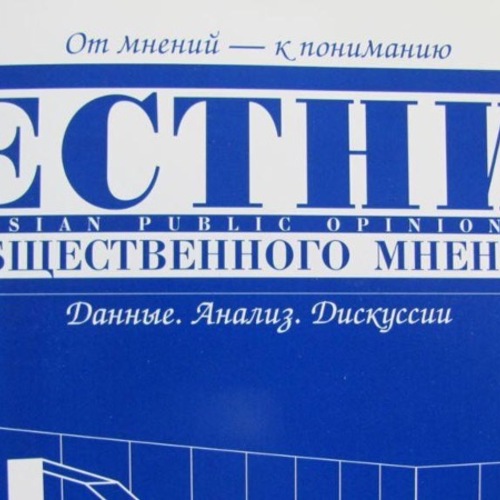
The Rise of Public Opinion Polling
Monitoring Obshchestvennogo Mneniia, the monthly publication of the All Russian Center for the Study of Public Opinion (VTsIOM).
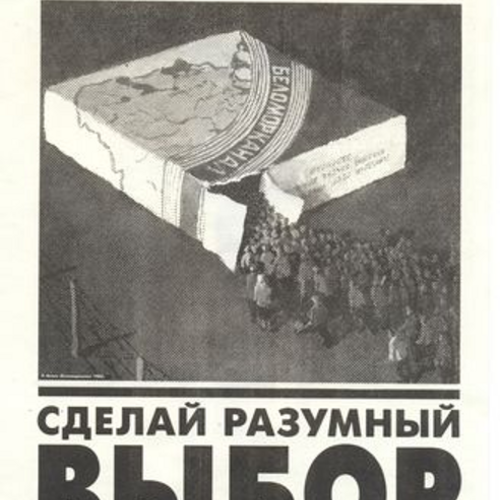
Election poster for the Democratic Choice of Russia--United Democrats 1995 campaign for the Duma.
Poster depicting a stream of people entering a giant pack of Belomor Canal cigarettes to promote the Democratic Choice of Russia--United Democrats Party.
Soviet Homosexuals: Yesterday, Today, Tomorrow
Essay by gay former Soviet inmate published in journal Gay, славяне!
Evgenia Debryanskaya: I Don't Give a Damn about Public Opinon
Interview with LGBTQ activist Evgenia Debryanskaya in the newspaper Аргументы и факты
K Chitateliu
A letter to readers from the editor of a regional newspaper (from the Ural region of Russia), Гей диалог
Homosexuality in Soviet Prisons and Camps
An article by Russian LGBTQ activist Slava Mogutin and American LGBTQ activist Sonja Franeta on the history of homosexuality in the Soviet penal system
The Future of Crimea
Campaign documents surrounding the 1991–92 referenda on the independence of Crimea.
"New Russians" at Kommersant
Series of articles from the nascent Kommersant Daily in late 1992-early 1993, assessing and explaining the nature of its target audience, the “New Russians”
Parfenov’s Namedni as memory-work in the 1990s
Namedni [Recently], Parfenov's project about recent history, was one of the most successful shows of the 1990s. Eschewing big narrative arcs, the show highlighted the past as a collection of memory sites– in this case, the origin of the New Russian in 1991.
"A Way Out of the Dead End"
The open letter that became known as the Letter of the 13, signed by thirteen of post-Soviet Russia’s most powerful businessmen ahead of the 1996 election, was as much as anything a manifesto of the power of capital in post-Soviet politics.
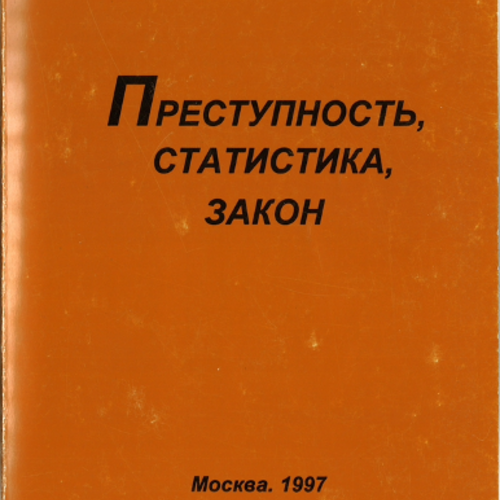
Russian Crime Statistics, 1980–1996
Nothing characterized the everyday experience of the urban Russian 1990s like crime; as shown in this first comprehensive statistical study of the 1990s, crime was just as bad as everyone had known. But the numbers also reveal some unexpected trends.
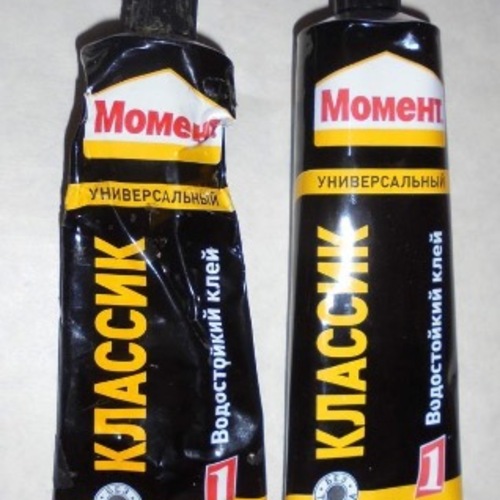
Klei-Moment
Made by the German Henkel company, Moment glue was a staple of post-Soviet hobbyists. It also became one of the prefered drugs among the post-Soviet youth. The brand name became synonymous with huffing itself.

Lada 110-series
The first post-Soviet Lada model, the VAZ-2110 appeared in 1995 and sold for between $5,000 and $8,000. Targeted at the emerging middle class, the car represented the hopes that Russian manufacturing and Russian consumer power could come together to build a domestic market that would move the economy beyond raw materials extraction and imported consumer goods.
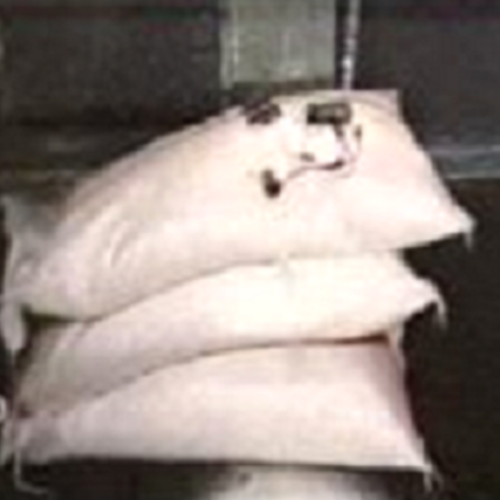
Ryazan Sugar (Hexogen)
Released at the very end of the Soviet Union, Nol's album, Songs of Unrequited Love for the Motherland, gave the group several hits that carried them into the 1990s. The song Chelovek i koshka in particular became an anthem of drug culture as it spread through Russia in the post-Soviet years.
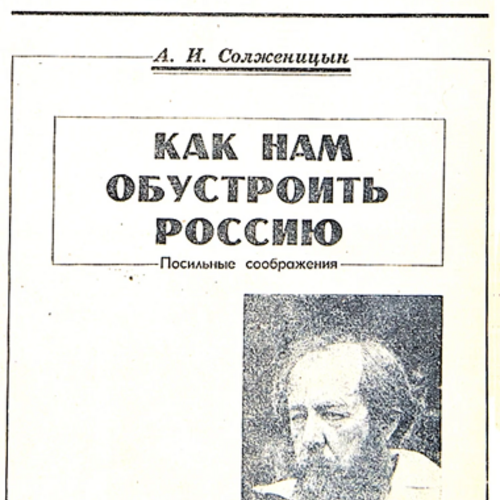
Rebuilding Russia
Alexander Solzhenitsyn's traditionalist prescription for pulling Russia out of its difficulties was seen by many as out of touch with the times, but many of the ideas he expounded in 1991 have become part of Russia's neo-revanchism in recent years.
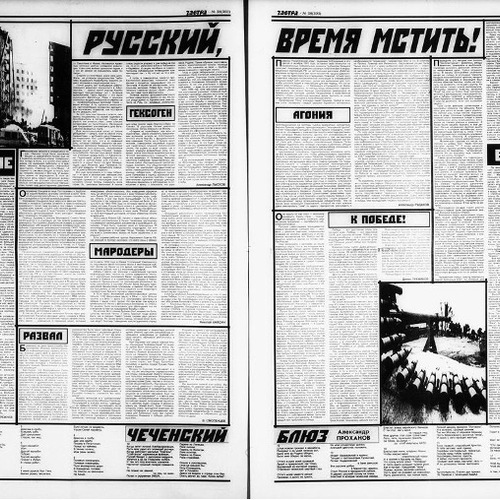
"Russian, It's Time For Revenge!"
In the weeks leading up to the Second Chechen War, Russia’s right wing publications reminded their audiences of the humiliation of the First Chechen War, and called for—nationalist, racist, brutal—revenge.
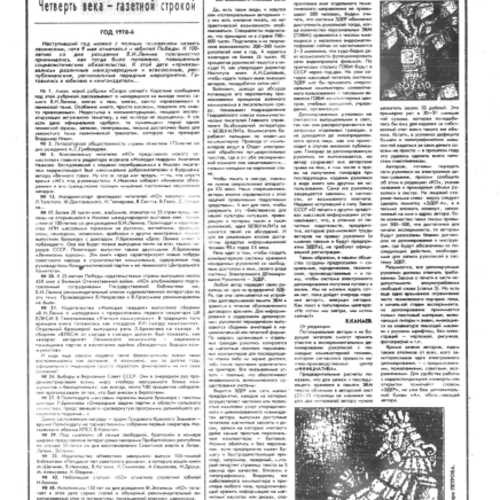
Long Live PaperLessLit
Soviet paper shortages, new computer technologies, and the lifting of censorship come together in an unexpected way in this proposal to preserve manuscripts of unpublished authors for posterity.
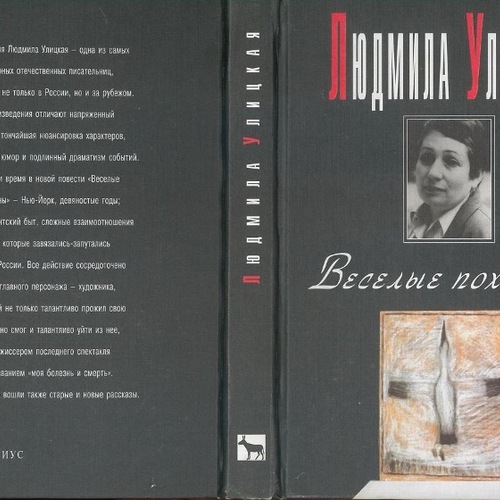
The Black Series from Vagrius
The book series “Contemporary Russian Prose” or the “Black Series,” published by Vagrius, one of post-Soviet Russia’s most successful commercial publishers, made bestsellers out of literary prose.
One on One with Vladimir Zhirinovskii and Boris Nemtsov
Aleksandr Liubimov’s talk show One on One staged debates between public figures who disagreed strongly with each other. When nationalist provocateur Vladimir Zhirinovskii and liberal reformer Boris Nemtsov met on air in as the First Chechen War was just beginning, sparks—and piece of the set—flew.
Vladimir Putin's 1999 Vision for Russia
Just before assuming the presidency, Prime Minister Vladimir Putin published an essay that outlined his vision for Russia. He saw it as a post-industrial society that could successfully integrate into the new world order only with a strong central government.
Front page of Komsomol'skaia pravda in new format
Front page of KP when the format of the printed version changed to adjust to 1990s print media reading habits and financial constraints
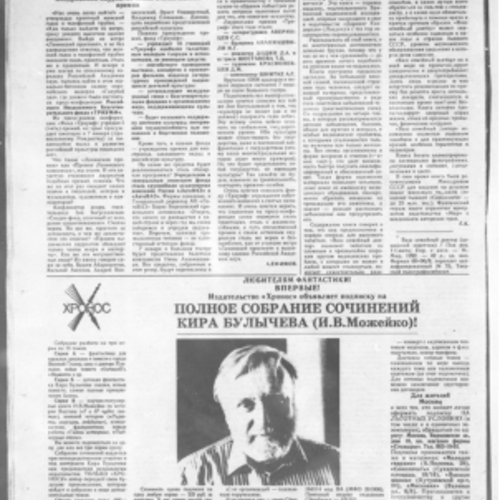
The Triumph Prize
Launched at the same time as the Russian Booker and funded by the newly minted oligarch Boris Berezovsky, the Triumph Prize promised an even broader program of cultural guardianship and philanthropy.
The Russian (Extreme Version of) MTV
Selection from the music TV show Drëma, which aired on TV-6 in 1997-98 before being shut down because of its provocative content. Hosted by Vladimir Epifantsev and Anfisa Chekhova. An early (quite experimental) example of pop culture in post-Soviet Russia.
A Conservative Revolutionary Avant-Garde
“The New against the Old,” a programmatic article by Aleksandr Dugin from the first issue of Limonka, the official newspaper of Eduard Limonov’s National Bolshevik Party (NBP), radical political organization/countercultural movement.
An Armed Paradise
An article by Aleksey Tsvetkov, anarchist writer and associate director of Limonka who temporarily turned the newspaper to a postmodern art project of sorts.
“Rise, you cursed people!”: The Aesthetics of Limonka
A cover of Limonka from 1997 displaying a collage by Aleksandr Lebedev-Frontov.
The Making of an Anti-Bourgeois Hero
Excerpt from an early episode (the second) of a new version of the popular talk show Vzgliad, co-hosted by Aleksandr Liubimov and Sergey Bodrov Jr., which aired weekly on the TV channel ORT in 1996-1999.
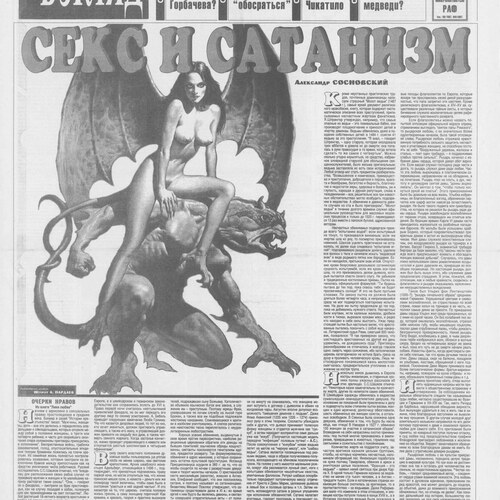
Novyi Vzgliad: Violence, Political Irony, and National Pride
Novyi Vzgliad authors write some of the most scandalous and incendiary political commentaries of the 1990s, producing new forms of political irony. Iaroslav Mogutin and Eduard Limonov turn violence into a paradoxical source of identity. The main artifact here–an article by Mogutin–exemplifies this process.
Romantics and Fascists
Kuryokhin explains his definition of fascism and his distinction between mainstream postmodernism and a postmodernism of protest.
"What is Concealed Will Be Revealed." Kuryokhin's and Dugin's Post-Ironic Political Campaign in Saint Petersburg
An episode from Dugin's political campaign in Saint Petersburg, in which Sergey Kuryokhin and Aleksandr Dugin make fun of liberal democracy (and Yeltsin’s referendum) on Russian TV.
"Only the Wildest and Craziest": Kurekhin's Neo-Avant-Garde on Radio-1, Petrograd
An episode of Kuryokhin’s radio program “Vasha liubimaia sobaka” (aka “Nasha malenkaia rybka,” aka “Russkii liudoed”).
Limonov Becomes a Post-Soviet Nationalist Rock Star
During an “encounter” with the émigré writer Eduard Limonov broadcasted from the concert hall in the Ostankino TV studios in Moscow (a common genre during perestroika), a young neformal in the audience suggests to create a subculture made up of young “limonovians.”
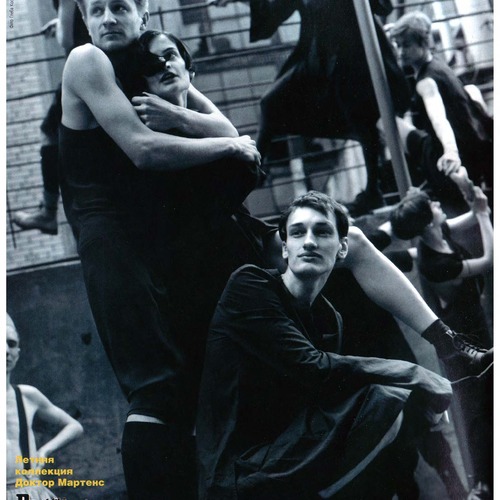
Fascist Fashion Between Counterculture and Mainstream
Images from a photo shoot from the Polushkin Brothers’ collection Fash-Fashion–alluding to both queer and fascist aesthetics–is used as an ad for the popular brand Dr. Martens in the lifestyle magazine Ptiuch and as a model for a nascent National Bolshevik countercultural aesthetics in the pages of the newly founded political newspaper Limonka.
"The Mysteries of the Century": Post-Truth and Mystical Nazism on Russian TV
An episode from the TV program “Tainy veka” (The mysteries of the century), hosted by Iurii Vorobevskii and Aleksandr Dugin. One of the first examples of post-truth on Russian television.
The World Made of Plastic Has Won
Egor Letov performs his song “Moia oborona” (My defense), during his “concert in the hero city Leningrad,” part of Grazhdanskaia oborona’s 1994 tour Russkii proryv (Russian breakthrough).
Let's Go To War!
The model, writer, singer, and TV personality Natalia Medvedeva (Limonov’s third wife) performs her song “Poedem na voinu!” (Let’s go to war!), a countercultural hymn romanticizing war, violence, and rebellion.
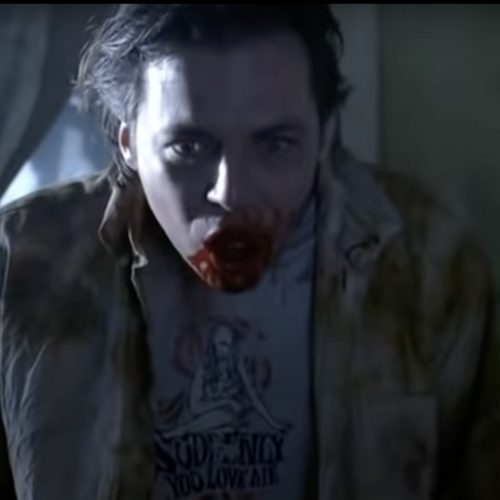
Mumiy Troll's Breakthrough “Utekai” (Take Off) Becomes the Song of the Year 1997
Video and lyrics of Mumiy Troll’s 1997 breakthrough song “Utekai” (Beat it) displaying the combination of surrealism, dark humor, and provincial romanticism that comes to shape the band’s trademark style.
"Stalin, Beria, Gulag!": the Natsboly Go Against Gaidar and Mikhalkov
Two of the early direct actions organized by the young members of the NBP that combined self-martyrdom and totalitarian styob.
Transilvania is Bothering You (On Radio 101 FM)
The cult radio program Transilvania bespokoit (Transilvania is bothering you) creates an alternative musical canon and produces a new nationalist counterpublic.

Novikov's New Russian Classicism: Pop Culture, Fashion, and Totalitarianism
Timur Novikov’s essay and manifesto “The New Russian Classicism.”
Lenin Was a Mushroom
An excerpt from the famous episode of the TV show Piatoe koleso in which the experimental musician and performer Sergey Kuryokhin argued and almost convinced Soviet audiences that "Lenin was a mushroom."
Svetlana Baskova captures the surreal, deeply violent, and grotesque essence of the 1990s and the Chechen wars in her cult trash movie, Zelenyi slonik (The little green elephant, 1999).
An excerpt from Svetlana Baskova’s film Zelenyi slonik (The little green elephant, 1999).
Stalin, Beria, Gulag: Natsboly against Gaidar and Mikhalkov
Two of the early direct actions organized by the young members of the NBP that combined self-martyrdom and totalitarian styob.
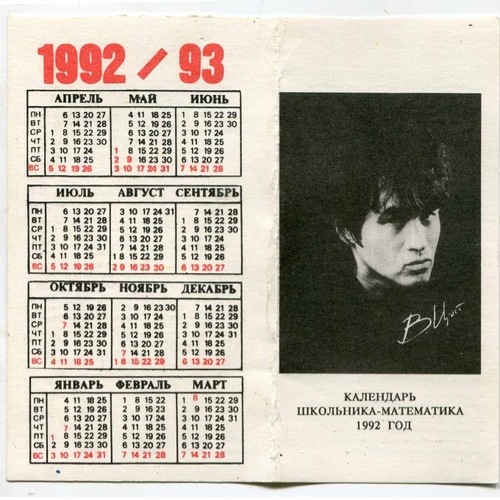
1992-1993 Math calendar intended for a secondary school student with a photograph of Viktor Tsoi, frontman of the rock band Kino on its front cover.
Serving as a testament to the meteoric rise in popularity and the widespread influence of rock music culture on the everyday lives of the newly post-Soviet citizens, this 1992/1993 math calendar, intended for schoolchildren set to master the concepts of algebra and geometry, cements the shift of public opinion about the position and status of rock musicians in Soviet/post-Soviet society from that of ideologically nefarious loafers to newly minted fallen heroes and teenage idols. The recently deceased Tsoi is inscribed in this artifact as an officially sanctioned role model for Russian youth, whose death is emblematic of the fading old regime, and whose music is a fully commercialized consumer product.
Brother 2. Motion Picture. Dir. Aleksei Balabanov (Excerpts)
A sequel of the original Brother, which is partially set in the United States, where national hero Danila Bagrov avenges his friend's death, while reflecting Russo-American cultural differences
Interview with Sergei Bodrov Jr. (1997) (selections)
Interview with actor Sergei Bodrov Jr., who famously played the loveable gangster Danila Bagrov in Aleksei Balabanov’s films Brother and Brother 2, becoming a post-Soviet cultural icon.
Eduard Limonov: It’s Me, Eddy, Glagol Press.
Glagol Press (Moscow) 1991 edition of Eduard Limonov’s It’s Me, Eddy.
Revisiting Tchaikovsky's Supposed Suicide: Rebuttal
Article disputing accounts of Tchaikovsky’s suicide in the face of having his homosexuality broadly divulged.
Egoist
Music video for Boris Moiseev's song "Egoist"
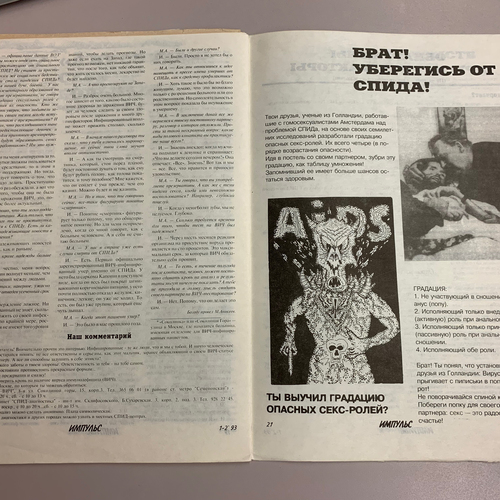
Protect Yourself against AIDS, Brother!
AIDS prevention public service announcement in the gay magazine Импульс
Show Me a Happy Homosexual and I'll Show You a Gay Corpse
Pseudoscientific article on cures or treatments for homosexuality.
A Man Who Keeps Up with the Times
A piece on David Bowie, focusing on the star’s bisexuality, in the glossy color gay magazine Мальчишник
Lesbian Masha Attacks the Bureaucrats
An article on the early 1990s LGBTQ activism of Masha Gessen in Russia
The Chechen Knot: 13 theses.
Infamous article on the Chechen war by controversial gay journalist Slava Mogutin
Love is Nasty, It Can Make you Fall in Love with An Asshole
Item in Правда about Slava Mogutin’s attempt to register marriage to partner Robert Filipini
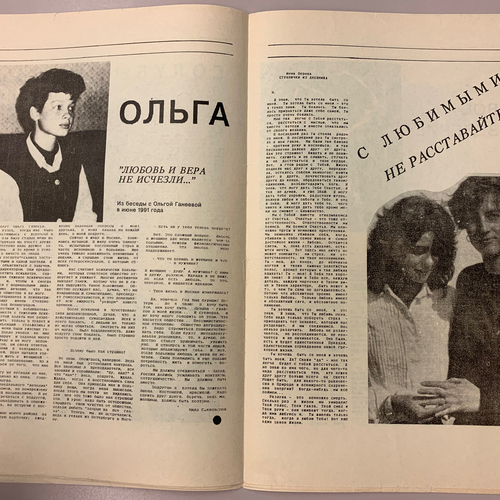
Olga. Love and Faith Are Not Dead
Profile of a post-Soviet lesbian survivor of Soviet-era anti-LGBTQ repressions
Valerii Pereleshin
Piece on the gay Russian émigré poet Valerii Pereleshin with excerpts from his verse cycle “Ariel” in gay newspaper Shans
Tsvetaeva and Parnok
Article on the affair between poets Marina Tsvetaeva and Sophia Parnok in LGBTQ magazine Риск
Gays and Lefties: Comrades in Misfortune
Interview of gay activist
The View from the Other Side
LGBTQ activist Yaroslav “Slava” Mogutin’s response to another article on gay men in post-Soviet Russia (by Aelita Efimova) in the magazine Совершенно секретно.
Gay Dawn (Light-Blue Dawn)
A piece in the monthly magazine Совершенно секретно in which a (presumably) heterosexual female journalist responds to the emergence of a gay subculture in early post-Soviet Russia
"Pro Eto." Male Prostitution
A clip from the talk show "Pro Eto" with Elena Khanga, episode on male prostitution.
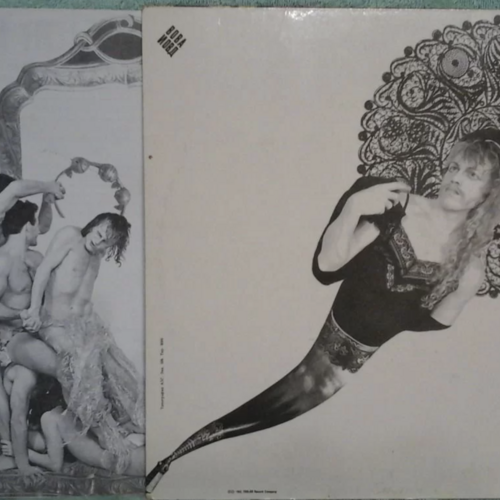
Impossible Love
LP (represented here by album cover and artwork) Impossible Love (Невозможная любовь) By Vova and the Organ of Internal Affairs (Вова и орган вунтренных дел)
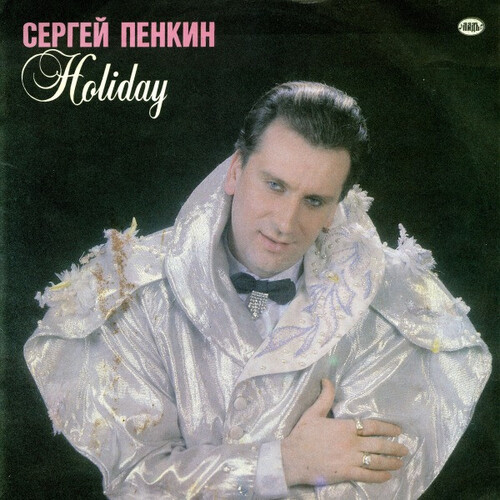
Sergei Penkin: "Holiday" Album Cover
Cover art for an album by pop-music artist Sergei Penkin.
Two Lives, Two Destinies. Sketch of S.E. Esenin and N. Kliuev
Article about the love affair between and the literary destinies of the poets Sergei Esenin and Nikolai Kliuev in the literary supplement to the gay newspaper 1/10
AIDS: More Questions than Answers
Late-Soviet mainstream-press article about the AIDS epidemic (from the newspaper Литературная газета)
Elena Bonner: Nothing Interests Me Less than This Problem
Masha Gessen interview with Elena Bonner, published in the LGBTQ magazine Тема
The Unknown Diaghilev
Russian translation of an article by American scholar Simon Karlinsky on Sergei Diaghilev, published in the LGBTQ magazine Тема
Raid at Shans. Gays triumph.
Item about a police raid at a gay nightclub from the LGBTQ community bulletin Центр треугольник информационный бюллетень
The Creation of Adam (1993, dir. Iu. Pavlov)
Scene from 1993 Russian feature film with gay themes
"Politburo" versus the specter of communism, during the 1993 political crisis
A clip from "Politburo," a weekly commentary show from Aleksandr Politkovsky (a Vzgliad alum). This show takes place just prior to May 1, and just after the 1993 Referendum, as well as Rutskoi's first salvo in the "Kompromat Wars," regarding 11 suitcases of materials documenting Yeltsin's corruption. Here, Politkovsky is happy to return the favor to Rutskoy. The show ends with anti-communist chiastushki for Mayday.
Boris Moiseev: Egoist
Music video for song by pop-music artist Boris Moiseev
Oligarchs collude for Yeltsin in 1996
"Vyiti iz tupika [To Get Out of the Impasse]," an op-ed coauthered by Berezovsky, Gusinsky and other prominent 'oligarchs,' in which they announce their intention to use all media resources at their disposal to sink Ziuganov's chances of beating Yeltsin in the 1996 election.
Petrovich the Soviet everyman survives post-Soviet Russia at Kommersant
A collection of "Petrovich" cartoons at Russia’s ‘first business newspaper,’ Kommersant, drawn by Andrei Bil’zho. They depict a hapless and repulsive comic personage, born and raised in the Soviet era and now trying to get used to the realia of post-Soviet capitalism.
"Tema" Talk Show- Racism in Russia
A clip from the talk show "Tema [Theme]," List'ev's major post-Soviet project after the 1991 end of Vzgliad. This particular episode is dedicated to the theme of racism in Russia. Includes Dzheims Lloidovich Patterson, the grown up boy from the classic Stalin-era film, "Circus"
Referendum 1993: the "Yes Yes No Yes" campaign
Da, Da, Net, Da- Agitational propaganda for the 1993 referndum, "Yes, yes, no, yes"- note the slogan at the end, "we are building a new Russia!"
The Glasnost Booth on the last October Revolution anniversary in the USSR
“Glas naroda [The People’s Voice]”– a booth installed in the middle of town, into which random people can enter and speak their minds. Episode from the Kremlin, on USSR’s last anniversary of the October Revolution, in 1991.
Soviet Nostalgia– Old Songs About the Most important
The most popular Soviet nostalgia project of the 1990s- "Starye pesni o glavnom [Old Songs About the Most Important"
The post-Soviet people’s show, Pole Chudes
A clip from the most-watched entertainment show of the 1990s, "Pole Chudes [Field of Miracles],” which renders the post-Soviet narod of regular folks, engaged in a free-flowing relationship with capitalism and Russia’s central television
Konstantin Ernst's "Matador"
A clip from the art show "Matador," created by VID's junior partner, Konstantin Ernst, in 1990, and then remained his project as Ernst rose up and took VID's helm. This particular clip is from the show on Contemporary Art. It has a remarkably joyously elitist feel that is consistent with the "new Russian" ethos of ViD.
List'ev's Russian Liberals on "Chas Pik"
An excerpt from a compilation of most memorable moments with Vladislav LIst'ev and his Russian liberal guests on "Chas Pik," aired in the week after his murder
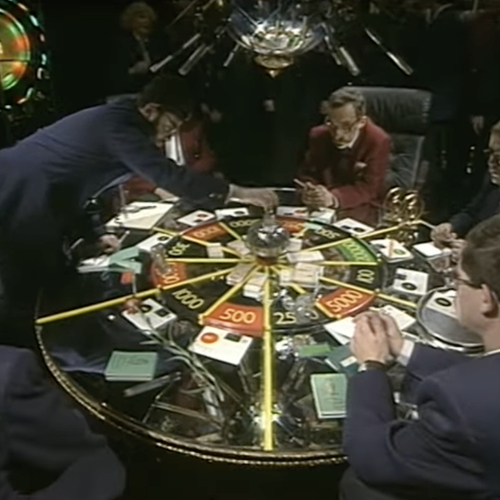
The Raspberry blazer as the uniform of the New Russian
The origins and the meaning of the raspberry blazer as the iconic dresscode of New Russians in the early 1990s
Ernst’s “Russian Project” as cultural therapy for the post-Soviet Russian masses
Konstantin Ernst’s series of social advertisements extolling Russia’s shared values and national identity at a time of seeming social crisis in the mid-1990s
Soviet Engineers become Post-Soviet Aristocrats on TV
Chto? Gde? Kogda? (What? Where? When?) goes through an aristocratic overhaul and becomes an "intellectual casino'
Top Secret: Investigative Journalism and True Crime During Perestroika
Sovershenno sekretno, the first privately owned periodical in Soviet Russia since 1917, showcased a combination of transparency and sensationalism that became a distinguishing feature of journalistic writing in the post-Soviet period.
The First Article on Prostitution in the Soviet Union
"The White Dance" by Evgeny Dodolev broke a major taboo of Soviet press, by doing a report on the existence of foreign-currency prostitutes in the USSR. Dodolev would then go on to be a part of the Vzgliad team, as well as the creator of 1990s "Novyi vzgliad"
"Moscovskii komsomolets," 19-21 November, 1986
Alexei Uchitel's 1992 documentary film Posldenii Geroi.
Made with the collaboration of Tsoi's widow Marianna Tsoi, the film includes scenes from Viktor Tsoi's funeral and chronicles the mass mourning of the late musician, and the perestroika era by proxy.
Lyube "Stop Fooling Around, America!" (Ne Valiai Duraka, Amerika!) music video
Music video for the fourth track on Lyube’s second studio album Who Said We Lived Poorly? (Kto skazal, chto my plokho zhili?), which was released in 1992. Written from the perspective of the Russo-Soviet “common man,” while using folk vernacular, the song explores questions of Alaska’s historical and territorial integrity – lamenting its sale to the United States and demanding its return while celebrating Russia’s national character.
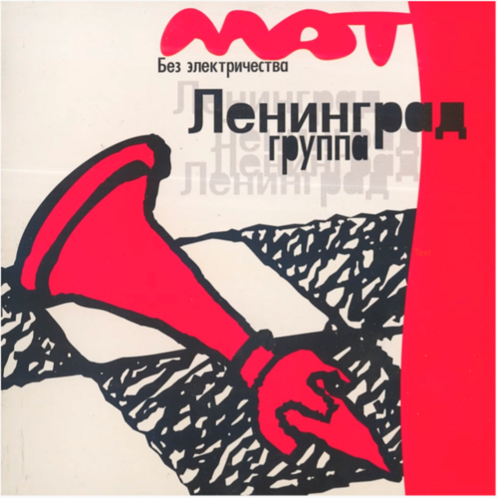
Mat bez elektrichestva. (Profanity without electricity). A ska-punk-rock album by Leningrad. (Cover art and excerpts)
The second studio rock/ska album by the legendary St. Petersburg band Leningrad. With its heavy use of profanity, the album etablished Sergei Shnurov as the band's unequivocal frontman and placed Leningrad on the map as a new and influential direction in post-Soviet rock music.
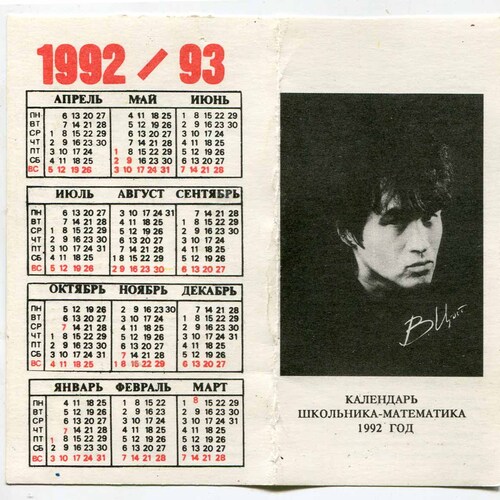
1992-1993 School math calendar
1992-1993 Math calendar intended for a secondary school student with a photograph of Viktor Tsoi, leader of the rock band Kino on its front cover.

OMON Uniform
Though the police special forces unit known as OMON was introduced before the fall of the Soviet Union, their now-ubiquitous light blue camouflage was only introduced in 1994, when OMON began to be deployed as part of the first Chechen War. OMON (and its light blue camouflage) has since been associated with street intimidation, market clearings, and protest quashing especially in the capitals.
"Our boys" fight against "fascist" Baltic independence
"Nashi [Our Boys]"- Alexander Nevzorov's propagandistic documentary of the Latvian and Lithuanian Soviet OMON, fighting off the local independence movement in early 1991
Interview with Victor Pelevin
After the launch of Victor Pelevin’s hit novel Generation ‘P’, the author set out on a publicity tour in which he behaved poorly, much like his protagonist. And much like his protagonist, he proved that in post-Soviet Russia, bad behavior sells.
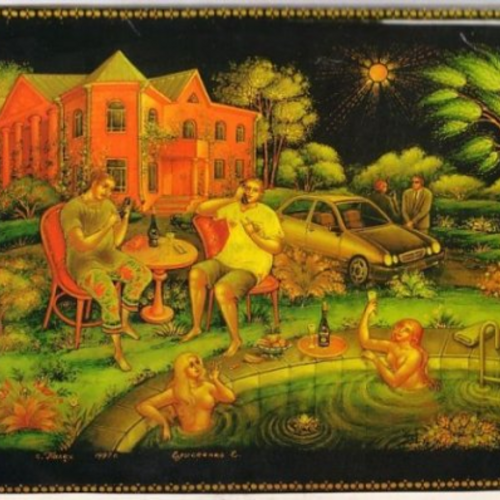
The World of New Russians store, Palekh-style tray
A World of New Russians lacquered tray depicts several wealthy criminal businessmen, their bodyguards and their nude female companions enjoying luxury living in a private pool, near a private mansion, all depicted in the style of Russian folk art.
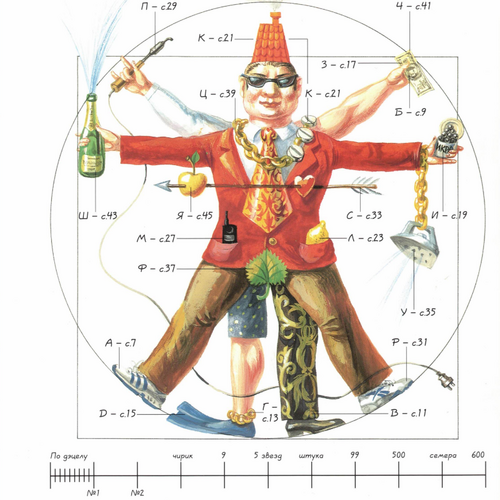
World of New Russians Dictionary
Page from the "World of New Russians Dictionary" with a mocking Vitruvian man.