Journalism (Print)
The Rise of Public Opinion Polling
Monitoring Obshchestvennogo Mneniia, the monthly publication of the All Russian Center for the Study of Public Opinion (VTsIOM).
The Russian Booker - Scandals
A series of five articles scandalously decrying the new literary prize, imported from England, the Russian Booker.
"A Way Out of the Dead End"
The open letter that became known as the Letter of the 13, signed by thirteen of post-Soviet Russia’s most powerful businessmen ahead of the 1996 election, was as much as anything a manifesto of the power of capital in post-Soviet politics.
The Miracle of Evgenii
A Russian soldier during the first Chechen War, Rodionov was captured outside of Grozny and reputedly executed for refusing to renounce his Orthodox faith. His image has since served as the inspiration for several of post-Soviet Orthodoxy's most popular new icons.
Russian Crime Statistics, 1980–1996
Nothing characterized the everyday experience of the urban Russian 1990s like crime; as shown in this first comprehensive statistical study of the 1990s, crime was just as bad as everyone had known. But the numbers also reveal some unexpected trends.
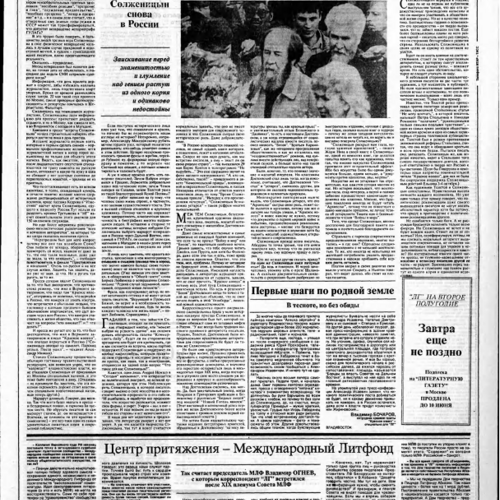
Solzhenitsyn's Return
In 1994, Alexander Solzhenitsyn staged a theatrical return to Russia, flying from America to Magadan, and then returning by train from Vladivostok to Moscow. The journey and the salvific importance Solzhenitsyn attached to it soon became the target of much derision, as well as some praise.
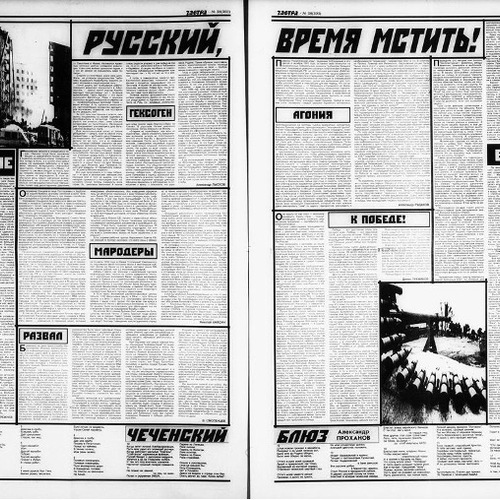
"Russian, It's Time For Revenge!"
In the weeks leading up to the Second Chechen War, Russia’s right wing publications reminded their audiences of the humiliation of the First Chechen War, and called for—nationalist, racist, brutal—revenge.
Evgenia Debryanskaya: I Don't Give a Damn about Public Opinon
Interview with LGBTQ activist Evgenia Debryanskaya in the newspaper Аргументы и факты
Tsvetaeva and Parnok
Article on the affair between poets Marina Tsvetaeva and Sophia Parnok in LGBTQ magazine Риск
The Unknown Diaghilev
Russian translation of an article by American scholar Simon Karlinsky on Sergei Diaghilev, published in the LGBTQ magazine Тема
Elena Bonner: Nothing Interests Me Less than This Problem
Masha Gessen interview with Elena Bonner, published in the LGBTQ magazine Тема
Raid at Shans. Gays triumph.
Item about a police raid at a gay nightclub from the LGBTQ community bulletin Центр треугольник информационный бюллетень
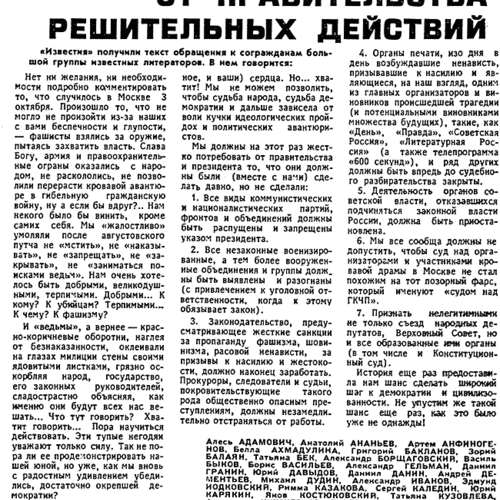
Writers demand a Yeltsin coup ("Letter of the 42")
"Pisateli trebuiut ot pravitel’stva reshitel’nykh deistvii [Writers demand decisive actions from the government].” A letter signed by prominent intelligentsia during the 1993 Parliamentary crisis, in which the liberals urge Yeltsin to use lethal force to destroy the Communist-led parliamentary opposition.
Oligarchs collude for Yeltsin in 1996
"Vyiti iz tupika [To Get Out of the Impasse]," an op-ed coauthered by Berezovsky, Gusinsky and other prominent 'oligarchs,' in which they announce their intention to use all media resources at their disposal to sink Ziuganov's chances of beating Yeltsin in the 1996 election.
Petrovich the Soviet everyman survives post-Soviet Russia at Kommersant
A collection of "Petrovich" cartoons at Russia’s ‘first business newspaper,’ Kommersant, drawn by Andrei Bil’zho. They depict a hapless and repulsive comic personage, born and raised in the Soviet era and now trying to get used to the realia of post-Soviet capitalism.
"New Russians" at Kommersant
Series of articles from the nascent Kommersant Daily in late 1992-early 1993, assessing and explaining the nature of its target audience, the “New Russians”
The View from the Other Side
LGBTQ activist Yaroslav “Slava” Mogutin’s response to another article on gay men in post-Soviet Russia (by Aelita Efimova) in the magazine Совершенно секретно.
AIDS: More Questions than Answers
Late-Soviet mainstream-press article about the AIDS epidemic (from the newspaper Литературная газета)
Two Lives, Two Destinies. Sketch of S.E. Esenin and N. Kliuev
Article about the love affair between and the literary destinies of the poets Sergei Esenin and Nikolai Kliuev in the literary supplement to the gay newspaper 1/10
The Chechen Knot: 13 theses.
Infamous article on the Chechen war by controversial gay journalist Slava Mogutin
Lesbian Masha Attacks the Bureaucrats
An article on the early 1990s LGBTQ activism of Masha Gessen in Russia
Gay Dawn (Light-Blue Dawn)
A piece in the monthly magazine Совершенно секретно in which a (presumably) heterosexual female journalist responds to the emergence of a gay subculture in early post-Soviet Russia
K Chitateliu
A letter to readers from the editor of a regional newspaper (from the Ural region of Russia), Гей диалог
Kitchen Diary by S. Piskunov, sent to Komsomol’skaia pravda, October-November 1990
Excerpt of Kitchen Diary written by Piskunov and sent to KP
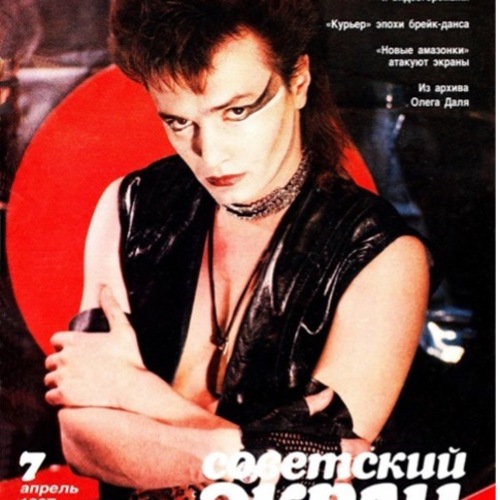
Sovetskii Ekran with K. Kinchev on the cover
Popular film magazines like Soviet Screen (Sovetskii Ekran), were instrumental in establishing rock musicians as cultural icons. Volume 7 (1987) publication places Konstantin Kinchev, frontman of the Leningrad band Alisa, on the cover of its “youth issue” (molodezhnyi vypusk) in an effort to promote the Valerii Ogorodnikov’s film The Burglar (Vzlomshchik, 1987) in which Kinchev plays the lead role.
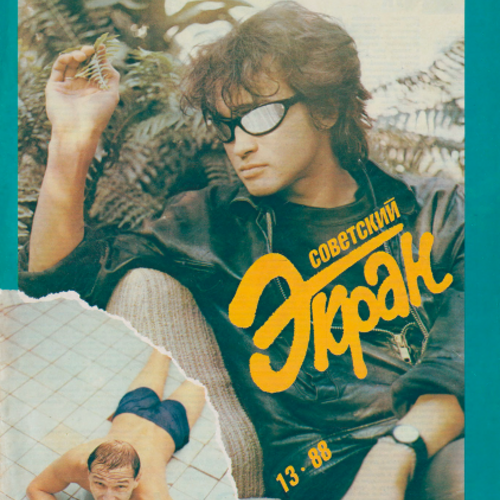
Sovetskii Ekran with Tsoi on cover
The cover image from volume 13 (1988) depicts Viktor Tsoi of Kino and Petr Mamonov of the Moscow-based rockband Zvuki Mu. Both artists appeared in Rashid Nugmanov 1988 film The Needle (Igla, 1988), which cemented Tsoi’s rock stardom and firmly established
Mamonov as a serious actor. He went on to star in Pavel Lungin’s drama Taxi Blues (Taksi Bliuz, 1990), which was released to international acclaim and became one of the classic examples of the perestroika-era chernukha aesthetic.
Roksi Music Journal (Samizdat) (Vol. 15, 1990.)
The final print issue of the Leningrad-based samizdat rock journal Roksi, which was
founded in 1977 by members of the rock band Aquarium and the future president
of the Leningrad Rock Club. Considered to be the first rock publication in the
Soviet Union, which was subject to raids by the KGB, Roksi eventually
became the official newsletter of the LRC, and thus legitimized by the state
apparatus.
Artifact 00002
Tatiana Samolis, "Ochishchenie," Pravda
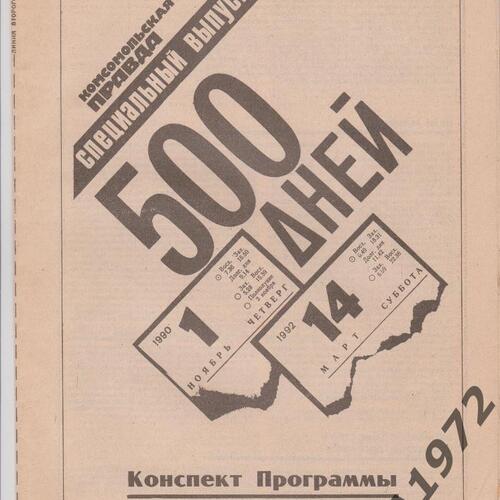
“500 Days: Program Summary,” a special issue of Komsomol’skaya Pravda, 29 September 1990
Komsomol'skaya pravda "500 days" special issue
Artifact 00013
"Power to the Fourth Estate," Izvestiia
Gorbachev speaks with state media leaders
Gorbachev’s Speech before a Gathering of State Media Leaders, March 14, 1986
Front page of Komsomol'skaia pravda in new format
Front page of KP when the format of the printed version changed to adjust to 1990s print media reading habits and financial constraints
"Radost' so slezami na glazakh: obsuzhdaem proekt zakona o pechati"
Newspaper discussion of Press Law of 1990, Knizhnoe obozrenie, 30 March 1990
"The Current Moment and Our Tasks"
Andreeva's speech opening the first meeting of the All-Union COmmunist Party of Bolsheviks, 8 November 1991
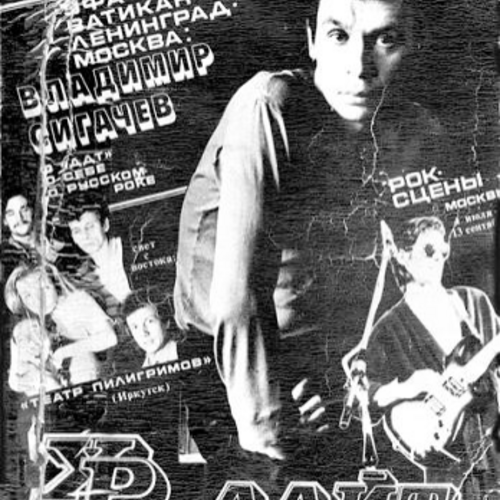
Urlait Music Journal (Samizdat) 1985-1992
Moscow's samizdat music journal, which followed in the footsteps of Lenigrad's Roksi while forging a new journalistic style. The journal positioned itself to in many ways reject the Leningrad scene. Despite Moscow-based bands generally leaning towards a more avant-garde, art-rock aesthetic, Urlait made a point to promote so-called "national rock." According to Urlait's founder I. Smirnov, bands like DDT, DK, and Oblachnyi Krai (Yuri Loza) were said to be "oriented towards national problems, in opposition to estrada and the confluence of Western and domestic cultural traditions."
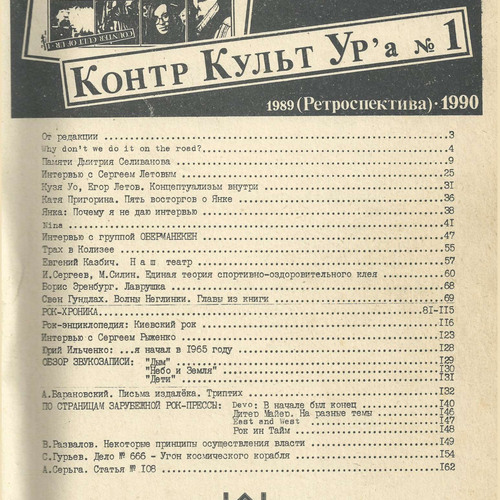
Kontr Kult Ur'a Music Journal (Samizdat) 1989-1991
Kontr Kult Ur'a was envisioned as an ideological reincarnation of Urlait, which was deemed by the new editorial board as "cult-like" and "radically positioned." The journal also was one of the first samizdat rock zines in Moscow and Leningrad to prominently feature and promote Siberian punk rock, including Egor Letov, Civil Defence, and Yanka.
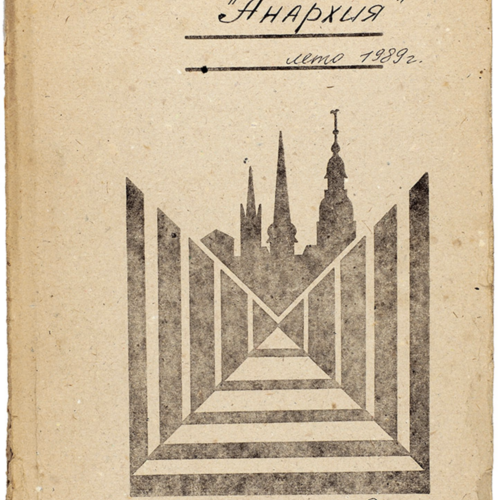
Anarkhia Music Journal (Samizdat)
According to rock historican Alexander Kushnir, Tiumen's samizdat music zine Anarkhia served as "the Bible of western Siberian punk rock," standing in opposition to the other Soviet rock samizdat publications with its strict affinity to punk as its central aesthetic ideology.
Band Survey from the Leningrad Rock Club completed by Sergei Kuryokhin of Pop Mekhanika
An official rock club survey in which Sergei Kuryokhin utlilizes the late-Soviet aesthetic of stiob and performative socialism to underscore the club's dependence on the KGB
Interview with V. Boldyrev, head of GlavLit
"Bol'she demokratii, men'she tain," article/interview in Izvestiia
Homosexuality in Soviet Prisons and Camps
An article by Russian LGBTQ activist Slava Mogutin and American LGBTQ activist Sonja Franeta on the history of homosexuality in the Soviet penal system
Homosexuality in Soviet Prisons and Camps
An article by Russian LGBTQ activist Slava Mogutin and American LGBTQ activist Sonja Franeta on the history of homosexuality in the Soviet penal system
You Can't Teach the Lefthanded to Be Righthanded
An article from Argumenty i fakty from 1990 in which w journalists seek comment from Igor Kon on the topic of homosexuality
Valerii Pereleshin
Piece on the gay Russian émigré poet Valerii Pereleshin with excerpts from his verse cycle “Ariel” in gay newspaper Shans
"I cannot forsake my principles"
Nina Andreeva's letter published in Sovetskaia Rossiia
Soviet Homosexuals: Yesterday, Today, Tomorrow
Essay by gay former Soviet inmate published in journal Gay, славяне!
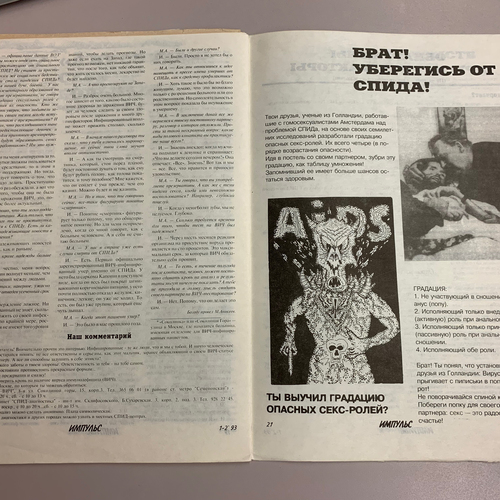
Protect Yourself against AIDS, Brother!
AIDS prevention public service announcement in the gay magazine Импульс
Love is Nasty, It Can Make you Fall in Love with An Asshole
Item in Правда about Slava Mogutin’s attempt to register marriage to partner Robert Filipini
A Conservative Revolutionary Avant-Garde
“The New against the Old,” a programmatic article by Aleksandr Dugin from the first issue of Limonka, the official newspaper of Eduard Limonov’s National Bolshevik Party (NBP), radical political organization/countercultural movement.
An Armed Paradise
An article by Aleksey Tsvetkov, anarchist writer and associate director of Limonka who temporarily turned the newspaper to a postmodern art project of sorts.
“Rise, you cursed people!”: The Aesthetics of Limonka
A cover of Limonka from 1997 displaying a collage by Aleksandr Lebedev-Frontov.
Top Secret: Investigative Journalism and True Crime During Perestroika
Sovershenno sekretno, the first privately owned periodical in Soviet Russia since 1917, showcased a combination of transparency and sensationalism that became a distinguishing feature of journalistic writing in the post-Soviet period.
The First Article on Prostitution in the Soviet Union
"The White Dance" by Evgeny Dodolev broke a major taboo of Soviet press, by doing a report on the existence of foreign-currency prostitutes in the USSR. Dodolev would then go on to be a part of the Vzgliad team, as well as the creator of 1990s "Novyi vzgliad"
"Moscovskii komsomolets," 19-21 November, 1986
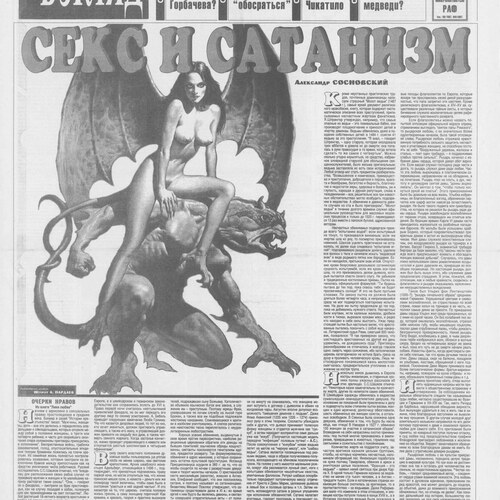
Novyi Vzgliad: Violence, Political Irony, and National Pride
Novyi Vzgliad authors write some of the most scandalous and incendiary political commentaries of the 1990s, producing new forms of political irony. Iaroslav Mogutin and Eduard Limonov turn violence into a paradoxical source of identity. The main artifact here–an article by Mogutin–exemplifies this process.
Romantics and Fascists
Kuryokhin explains his definition of fascism and his distinction between mainstream postmodernism and a postmodernism of protest.
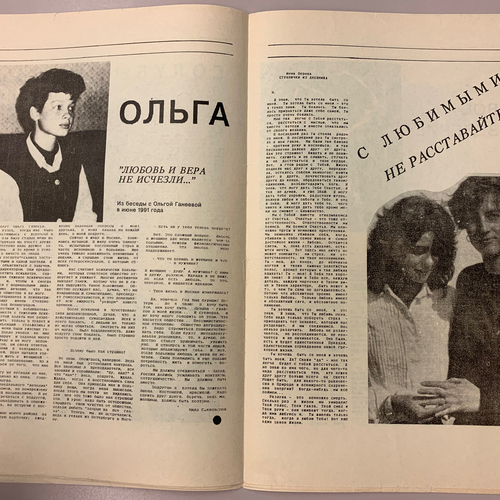
Olga. Love and Faith Are Not Dead
Profile of a post-Soviet lesbian survivor of Soviet-era anti-LGBTQ repressions
Eduard Limonov: It’s Me, Eddy, Glagol Press.
Glagol Press (Moscow) 1991 edition of Eduard Limonov’s It’s Me, Eddy.
Revisiting Tchaikovsky's Supposed Suicide: Rebuttal
Article disputing accounts of Tchaikovsky’s suicide in the face of having his homosexuality broadly divulged.
Show Me a Happy Homosexual and I'll Show You a Gay Corpse
Pseudoscientific article on cures or treatments for homosexuality.
Gays and Lefties: Comrades in Misfortune
Interview of gay activist
Gorbachev is Man of the Year
Cover of Time Magazine, 1987
The Future of Crimea
Campaign documents surrounding the 1991–92 referenda on the independence of Crimea.
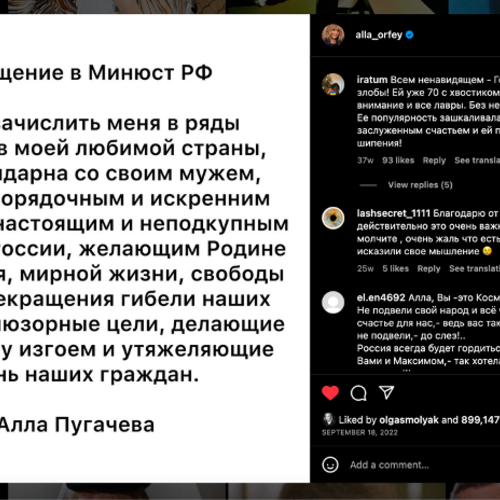
Alla Pugacheva — Post-Soviet Diva
The most famous woman in the Soviet Union transformed into a successful post-Soviet star.
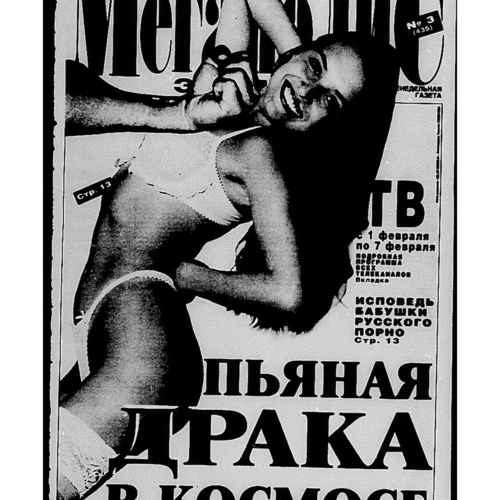
Megapolis-Ekspress: Urban Exoticism and National Pride
Igor Dudinsky takes over the magazine Megapolis-ekspress and turns it into an extreme and surreal parody of the lowest and most excessively sensationalist forms of Western tabloids.
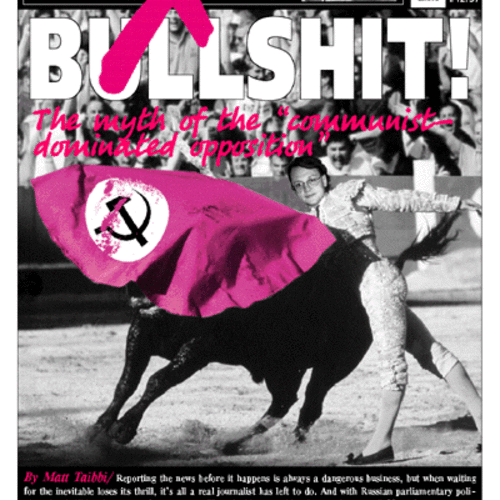
the eXile: Bespredel for Expats
A selection of articles from the English-language magazine the eXile, which combined gonzo journalism and styob and provided unique reporting on post-Soviet Russia, while at the same time fetishizing the 1990s lawlessness or bespredel and the Westerners’ exploitation of Russia (sexual and otherwise) that it itself denounced and condemned.