Literature (Print)
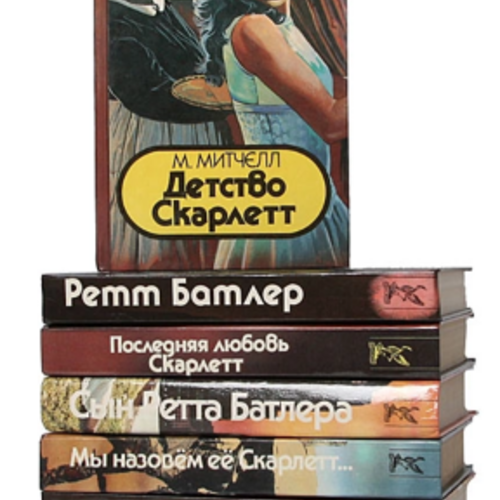
Gone with the Wind - The post-Soviet Sequels
Series of five collectively authored sequels to Margaret Mitchell's bestselling Gone with the Wind. Writing in Minsk, the anonymous authors published under the pseudonym Dzhuliia Khilpatrik and released titles like We'll Call Her Scarlett, Rhett Butler's Son, and Scarlett's Last Love.
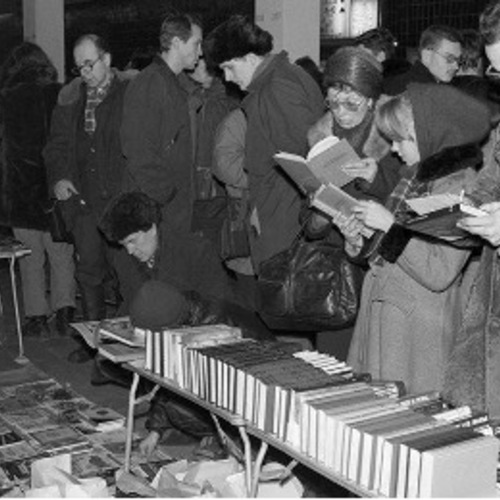
Olympic Stadium Book Market
The center of the post-Soviet book trade made its home in the corridors of the enormous stadium built for the 1980s summer games in Moscow. It was chaotic, even dangerous, and an embarrassment of riches.
Proekt OGI
A literary club opened by the United Humanitarian Publishers (OGI) in 1998 in the apartment of Dmitrii Ol'shanskii, Proekt OGI represented one of the more successful attempts to reclaim the late-Soviet underground in the new post-Soviet, capitalist world.
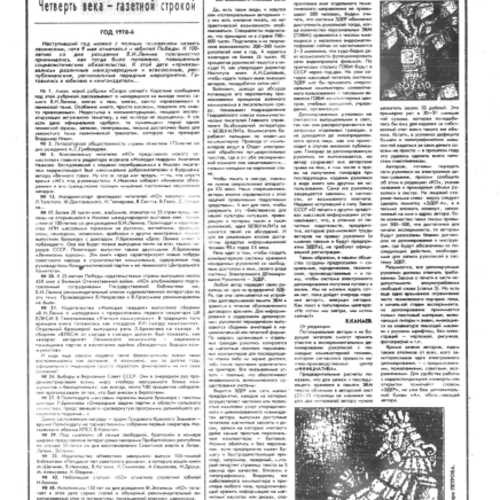
Long Live PaperLessLit
Soviet paper shortages, new computer technologies, and the lifting of censorship come together in an unexpected way in this proposal to preserve manuscripts of unpublished authors for posterity.
“Dictatorship of Conscience”
Play by Mikhail Shatrov that opened at the Lenin Komsomol Theather in Moscow, Feb. 1986
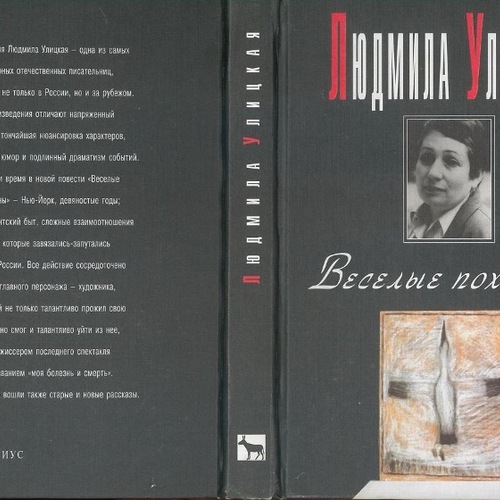
The Black Series from Vagrius
The book series “Contemporary Russian Prose” or the “Black Series,” published by Vagrius, one of post-Soviet Russia’s most successful commercial publishers, made bestsellers out of literary prose.
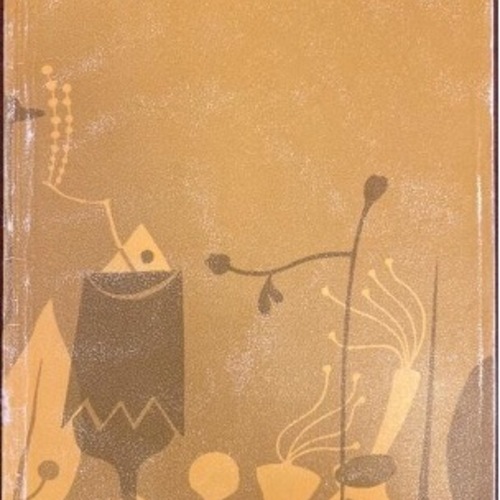
Philosophy on the Margins
Series of philosophical and theoretical texts from Russian and international authors published by Ad Marginem and meant to bring the latest in global thought into newly opened post-Soviet minds.
Interview with Victor Pelevin
After the launch of Victor Pelevin’s hit novel Generation ‘P’, the author set out on a publicity tour in which he behaved poorly, much like his protagonist. And much like his protagonist, he proved that in post-Soviet Russia, bad behavior sells.
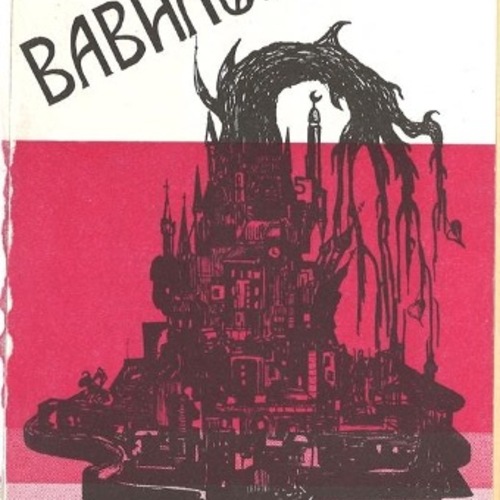
Babylon (online) Vavilon (.ru)
Vavilon, or Babylon, began as a loose group of young poets brought together by Dmitry Kuz'min in 1988. In the post-Soviet years, the group's almanac and then webside became a driving forces behind some of the most innovative poetry of the 1990s.
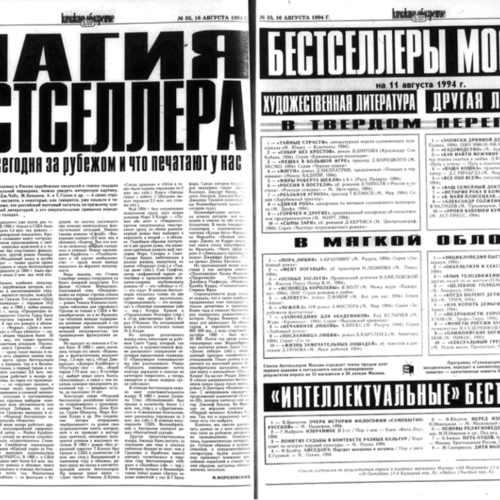
Bestsellers of Moscow
Post-Soviet Russia's first bestseller lists, compiled by the weekly industry newspaper Knizhnoe obozrenie and published from late 1993 through 1998.
The Triumph Prize
Launched at the same time as the Russian Booker and funded by the newly minted oligarch Boris Berezovsky, the Triumph Prize promised an even broader program of cultural guardianship and philanthropy.