Babylon (online) Vavilon (.ru)

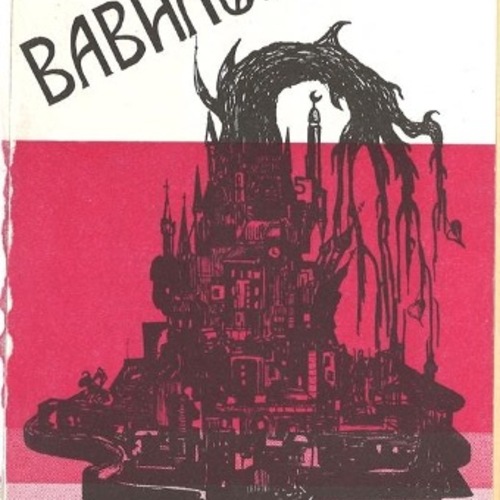
Cover of the first post-Soviet Babylon almanac (1992)
Source
Vavilon. Vestnik molodykh literatorov. Moscow, 1992–1999; vavilon.ru
Description
Vavilon, or Babylon, began as a loose group of young poets brought together by Dmitry Kuz'min in 1988. In the post-Soviet years, the group's almanac and then webside became a driving forces behind some of the most innovative poetry of the 1990s.
Era
Post-Soviet
Date
1992-1999
Annotation
In 1989 five young poets and writers from Moscow came together to form the group Vavilon (Babylon), which soon put out a samizdat journal under the title “Babylon, or Permission to Breathe” (Vavilon, ili razreshenie dyshat’). All the Babylonians were under 25 years old, but they had little else in common, aesthetically or ideologically. Instead of focusing on one kind of writing or thinking, the group wanted to create “an integrated cultural space, based—for starters—on the idea of a literary generation.” “A literary generation,” the group’s leader Dmitry Kuz’min explained, “is a cultural whole that exists inasmuch as young writers come into their art at the same time, in one and the same literary, cultural, spiritual situation, no matter how differently they might express themselves in that situation.” All young authors were Babylonians, not only because the Babylonian captivity seemed to be an appropriate metaphor for the situation of contemporary literature at the end of the Soviet years, but also because “anyone who was going anywhere must be going in the same direction.”
In 1990, the group held a nation-wide competition of young writers, the 72 winners of which joined the original five members to form the Youth Union of Writers “Babylon,” which was officially recognized during the last months of the Soviet Union. When the Union finally fell, the group began putting out an almanac, now officially printed and subtitled “Review of Young Literature.” The almanac became a central clearinghouse for young authors and poets who approached literature in the way Kuz’min described as “professionally,” that is, with careful attention to language as a medium. By the mid-1990s, Kuz’min put Babylon at the forefront of a battle between what he called literary “professionals” and “marginals,” or those who wrote attractive literature by combining genre cliches and playing on readers’ cheapest emotions and who populated the growing market for pulp fiction. With particular alarm, Kuz’min saw the ever-expanding internet as the bailiwick of marginals and in 1997, he launched Babylon’s online arm. Vavilon.ru was to be “the plenipotent Internet representative of professional literature” and it soon became one of the central internet outposts for serious poetry and fiction with high literary aspirations. Both Vavilon.ru and Babylon more broadly significantly shaped the notion of post-Soviet literature and its relationship to the growing phenomenon of capitalist mass culture.
Associated People
Kuzmin, Dmitry
Geography: Place Of Focus
Moscow
Bibliographic Reference
Vavilon. Vestnik molodykh literatorov. Moscow, 1992–1999; vavilon.ru
Explore Related Artifacts