Arts or design (Material culture)
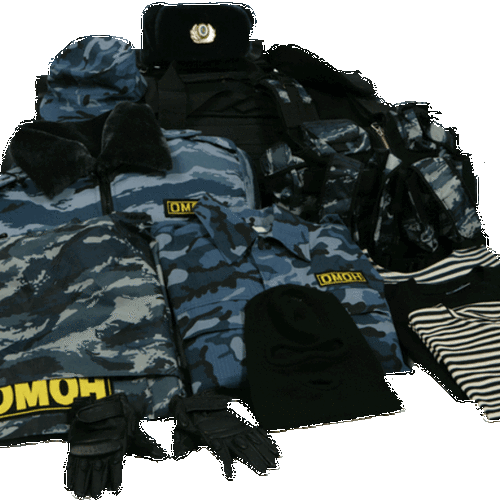
OMON Uniform
Though the police special forces unit known as OMON was introduced before the fall of the Soviet Union, their now-ubiquitous light blue camouflage was only introduced in 1994, when OMON began to be deployed as part of the first Chechen War. OMON (and its light blue camouflage) has since been associated with street intimidation, market clearings, and protest quashing especially in the capitals.
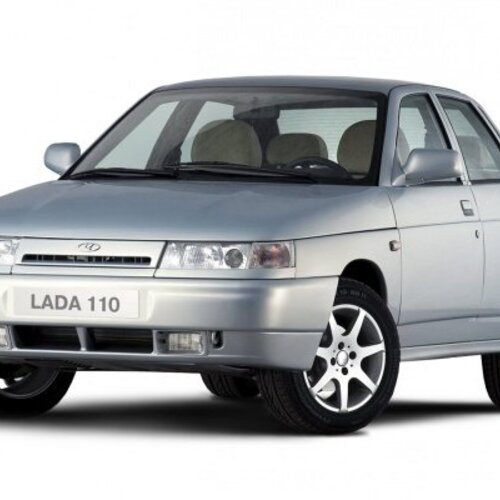
Lada 110-series
The first post-Soviet Lada model, the VAZ-2110 appeared in 1995 and sold for between $5,000 and $8,000. Targeted at the emerging middle class, the car represented the hopes that Russian manufacturing and Russian consumer power could come together to build a domestic market that would move the economy beyond raw materials extraction and imported consumer goods.
Ryazan Sugar (Hexogen)
Released at the very end of the Soviet Union, Nol's album, Songs of Unrequited Love for the Motherland, gave the group several hits that carried them into the 1990s. The song Chelovek i koshka in particular became an anthem of drug culture as it spread through Russia in the post-Soviet years.
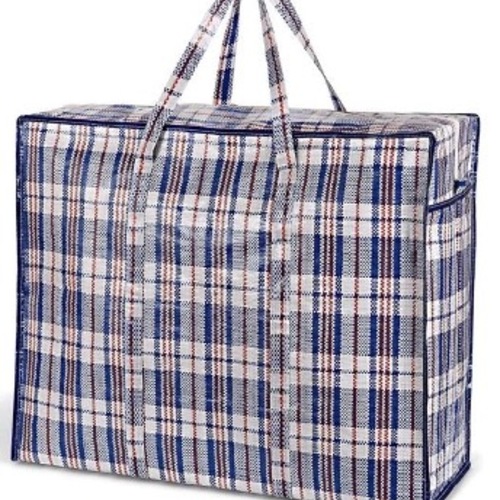
Kletchataia sumka, Chelnoki, and Ostap Bender
An entry in Argumenty i fakty's occasional column "Ugolok O. Bendera," gave advice to beginning "chelnoki," or small trade merchants who would travel—some across international borders—to find cheap items and sell them at markups back home. The checkered bag became a symbol of these petty merchants and of the hand-to-mouth trade of the 1990s
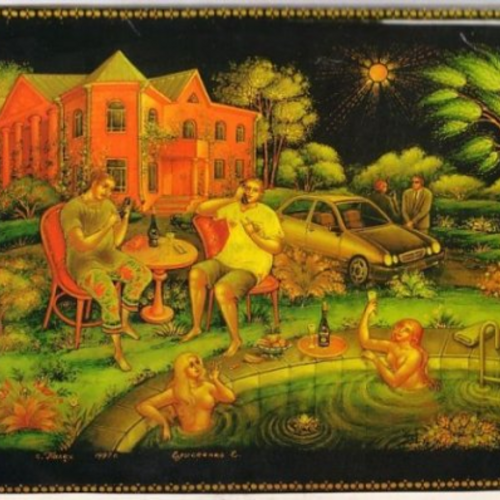
The World of New Russians store, Palekh-style tray
A World of New Russians lacquered tray depicts several wealthy criminal businessmen, their bodyguards and their nude female companions enjoying luxury living in a private pool, near a private mansion, all depicted in the style of Russian folk art.
Letter department workers process mail from citizens writing about the upcoming 26th Party Conference
Photograph of letter department workers at the Soviet Union's TV Guide
Human chain
Photograph of human chain across Baltics, 23 august 1989
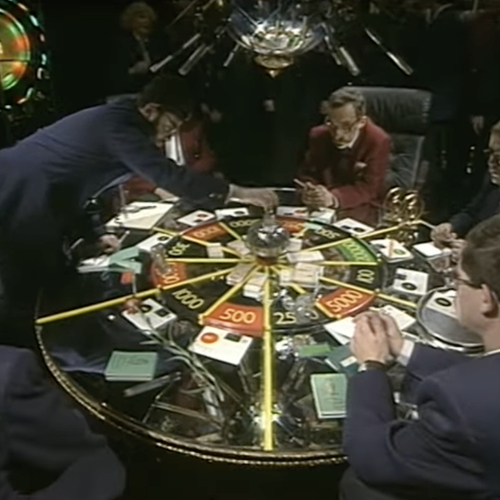
The Raspberry blazer as the uniform of the New Russian
The origins and the meaning of the raspberry blazer as the iconic dresscode of New Russians in the early 1990s
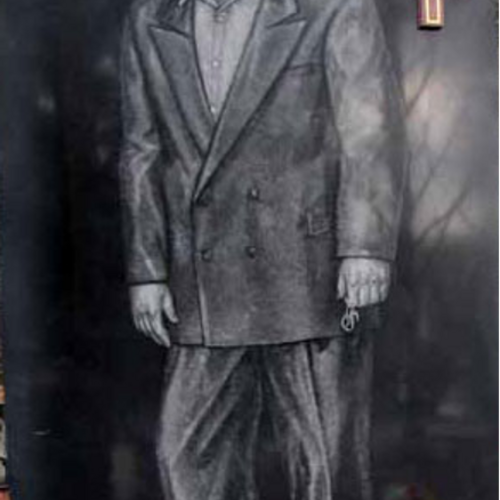
Mikhail Kuchin’s gravestone
Photograph of Mikhail Kuchin's funerary portrait with mercedes keys, gravestone, 1994. Shirokorechenskoy Cemetery.
Leningrad Club of Friends of "Ogonek"
Program and Statues of the Leningrad Club of Friends of Ogonek (KDO), April 1988
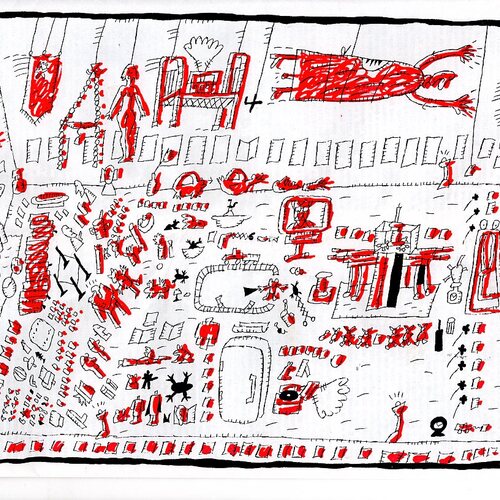
Ivan Zhaba: Russian Superman
A major installation artwork by Alexander Shaburov engaged with the Western Superhero genre through a multimedia hagiography of a Russian superman.
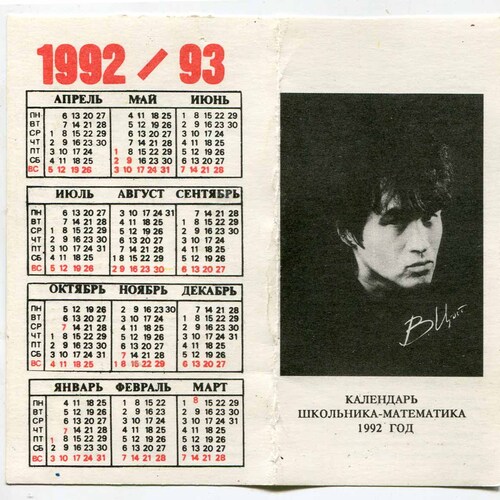
1992-1993 School math calendar
1992-1993 Math calendar intended for a secondary school student with a photograph of Viktor Tsoi, leader of the rock band Kino on its front cover.