Search
Thematic Tags: Literature
11 Results
Eduard Limonov: It’s Me, Eddy, Glagol Press.
Glagol Press (Moscow) 1991 edition of Eduard Limonov’s It’s Me, Eddy.
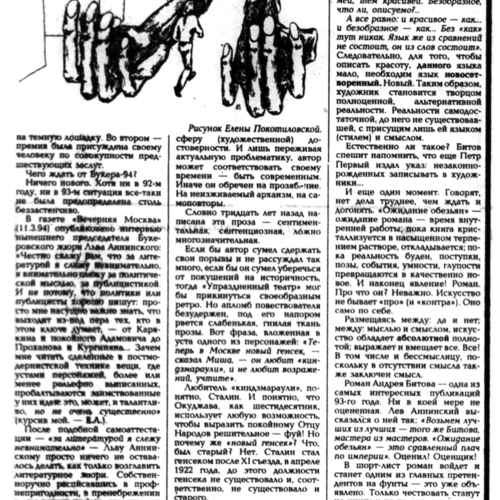
The Russian Booker - Scandals
A series of five articles scandalously decrying the new literary prize, imported from England, the Russian Booker.
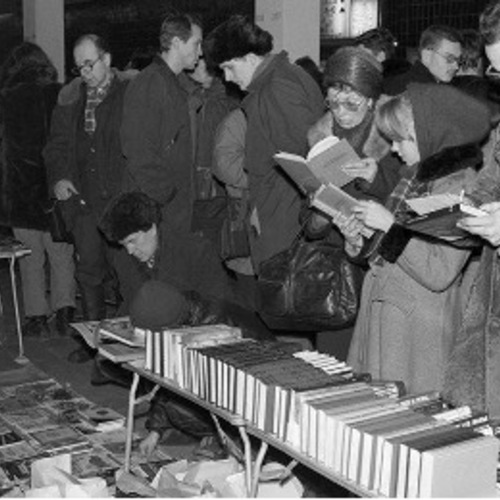
Olympic Stadium Book Market
The center of the post-Soviet book trade made its home in the corridors of the enormous stadium built for the 1980s summer games in Moscow. It was chaotic, even dangerous, and an embarrassment of riches.
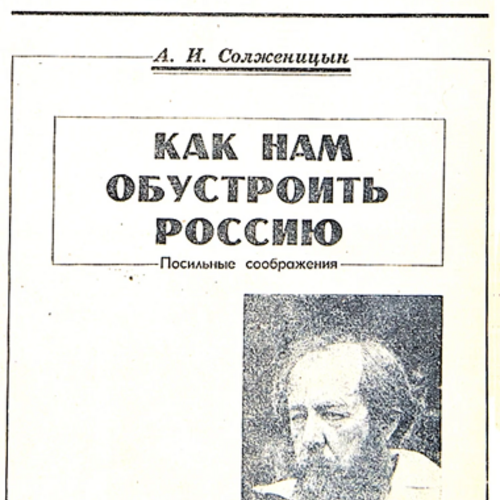
Rebuilding Russia
Alexander Solzhenitsyn's traditionalist prescription for pulling Russia out of its difficulties was seen by many as out of touch with the times, but many of the ideas he expounded in 1991 have become part of Russia's neo-revanchism in recent years.
Proekt OGI
A literary club opened by the United Humanitarian Publishers (OGI) in 1998 in the apartment of Dmitrii Ol'shanskii, Proekt OGI represented one of the more successful attempts to reclaim the late-Soviet underground in the new post-Soviet, capitalist world.
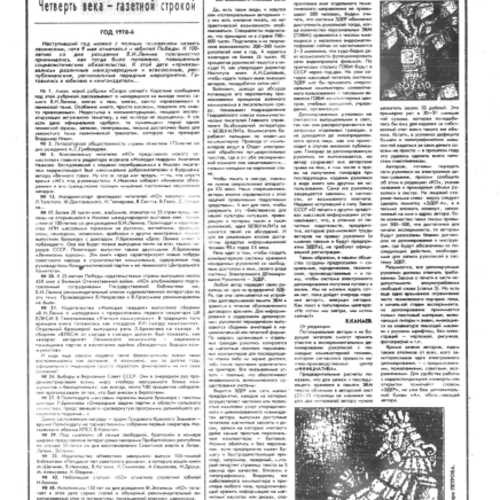
Long Live PaperLessLit
Soviet paper shortages, new computer technologies, and the lifting of censorship come together in an unexpected way in this proposal to preserve manuscripts of unpublished authors for posterity.
Two Lives, Two Destinies. Sketch of S.E. Esenin and N. Kliuev
Article about the love affair between and the literary destinies of the poets Sergei Esenin and Nikolai Kliuev in the literary supplement to the gay newspaper 1/10
Interview with Victor Pelevin
After the launch of Victor Pelevin’s hit novel Generation ‘P’, the author set out on a publicity tour in which he behaved poorly, much like his protagonist. And much like his protagonist, he proved that in post-Soviet Russia, bad behavior sells.
Valerii Pereleshin
Piece on the gay Russian émigré poet Valerii Pereleshin with excerpts from his verse cycle “Ariel” in gay newspaper Shans
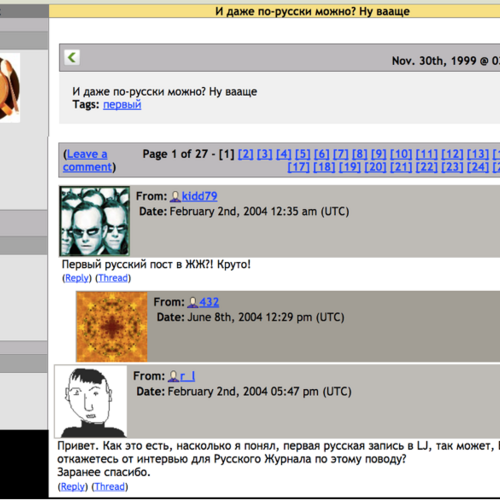
First LiveJournal Post
A post in 1999 demonstrates that LiveJournal processes Cyrillic encoding, leading to the Russian internet's most pervasive and influential early social media site. LiveJournal, soon known simply as ZhZh in Russian, became a platform for poets, writers, political activists, essayists and graphomaniacs. It launched or catalyzed several literary and political careers, and fed the budding market for conspiratorial thinking in late 1990s Russia.
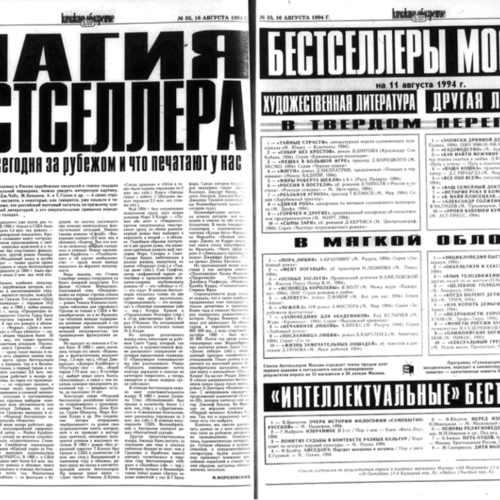
Bestsellers of Moscow
Post-Soviet Russia's first bestseller lists, compiled by the weekly industry newspaper Knizhnoe obozrenie and published from late 1993 through 1998.