Search
Events: 1993 Constitutional Crisis
18 Results
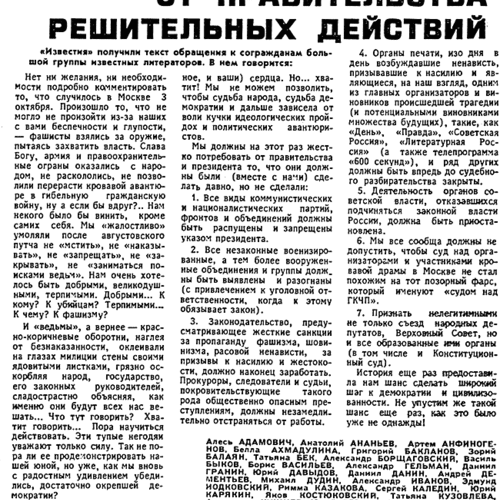
Writers demand a Yeltsin coup ("Letter of the 42")
"Pisateli trebuiut ot pravitel’stva reshitel’nykh deistvii [Writers demand decisive actions from the government].” A letter signed by prominent intelligentsia during the 1993 Parliamentary crisis, in which the liberals urge Yeltsin to use lethal force to destroy the Communist-led parliamentary opposition.
Referendum 1993: the "Yes Yes No Yes" campaign
Da, Da, Net, Da- Agitational propaganda for the 1993 referndum, "Yes, yes, no, yes"- note the slogan at the end, "we are building a new Russia!"
"We Are Building Communism! / We Are Building a New Russia!"
Billboard for Peresvet Trading Firm in Moscow, playing off of an existing Soviet billboard just above it
"Politburo" versus the specter of communism, during the 1993 political crisis
A clip from "Politburo," a weekly commentary show from Aleksandr Politkovsky (a Vzgliad alum). This show takes place just prior to May 1, and just after the 1993 Referendum, as well as Rutskoi's first salvo in the "Kompromat Wars," regarding 11 suitcases of materials documenting Yeltsin's corruption. Here, Politkovsky is happy to return the favor to Rutskoy. The show ends with anti-communist chiastushki for Mayday.
A Conservative Revolutionary Avant-Garde
“The New against the Old,” a programmatic article by Aleksandr Dugin from the first issue of Limonka, the official newspaper of Eduard Limonov’s National Bolshevik Party (NBP), radical political organization/countercultural movement.
An Armed Paradise
An article by Aleksey Tsvetkov, anarchist writer and associate director of Limonka who temporarily turned the newspaper to a postmodern art project of sorts.
“Rise, you cursed people!”: The Aesthetics of Limonka
A cover of Limonka from 1997 displaying a collage by Aleksandr Lebedev-Frontov.
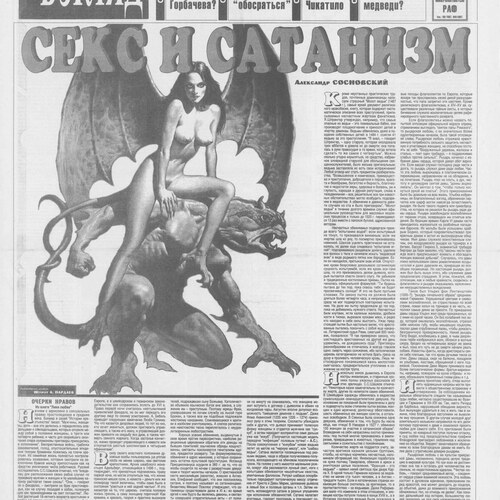
Novyi Vzgliad: Violence, Political Irony, and National Pride
Novyi Vzgliad authors write some of the most scandalous and incendiary political commentaries of the 1990s, producing new forms of political irony. Iaroslav Mogutin and Eduard Limonov turn violence into a paradoxical source of identity. The main artifact here–an article by Mogutin–exemplifies this process.
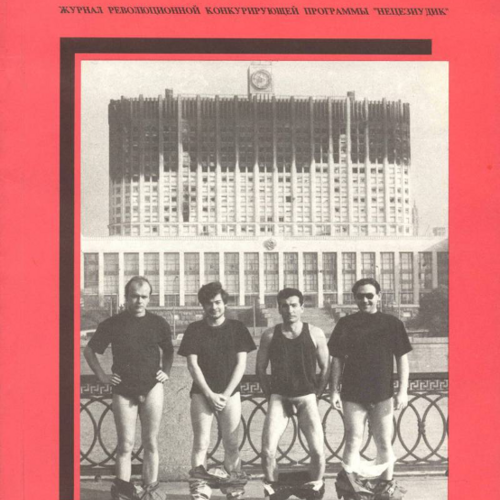
Issue #1 of “Radek”, 1994
Cover of "Radek" featuring four denuded men in front of the burned White house.
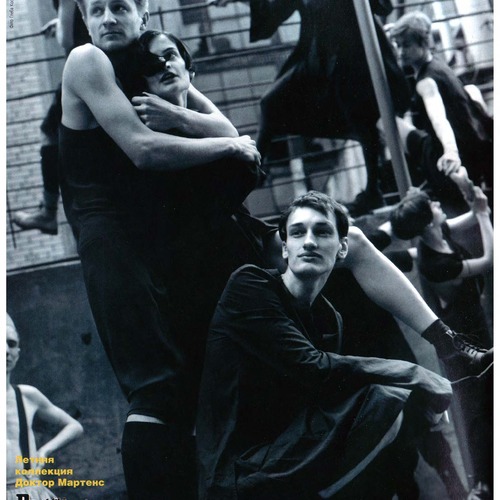
Fascist Fashion Between Counterculture and Mainstream
Images from a photo shoot from the Polushkin Brothers’ collection Fash-Fashion–alluding to both queer and fascist aesthetics–is used as an ad for the popular brand Dr. Martens in the lifestyle magazine Ptiuch and as a model for a nascent National Bolshevik countercultural aesthetics in the pages of the newly founded political newspaper Limonka.
The World Made of Plastic Has Won
Egor Letov performs his song “Moia oborona” (My defense), during his “concert in the hero city Leningrad,” part of Grazhdanskaia oborona’s 1994 tour Russkii proryv (Russian breakthrough).
Let's Go To War!
The model, writer, singer, and TV personality Natalia Medvedeva (Limonov’s third wife) performs her song “Poedem na voinu!” (Let’s go to war!), a countercultural hymn romanticizing war, violence, and rebellion.
"Stalin, Beria, Gulag!": the Natsboly Go Against Gaidar and Mikhalkov
Two of the early direct actions organized by the young members of the NBP that combined self-martyrdom and totalitarian styob.
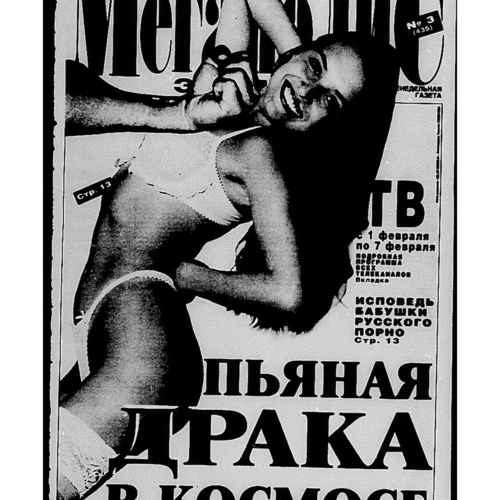
Megapolis-Ekspress: Urban Exoticism and National Pride
Igor Dudinsky takes over the magazine Megapolis-ekspress and turns it into an extreme and surreal parody of the lowest and most excessively sensationalist forms of Western tabloids.
Transilvania is Bothering You (On Radio 101 FM)
The cult radio program Transilvania bespokoit (Transilvania is bothering you) creates an alternative musical canon and produces a new nationalist counterpublic.
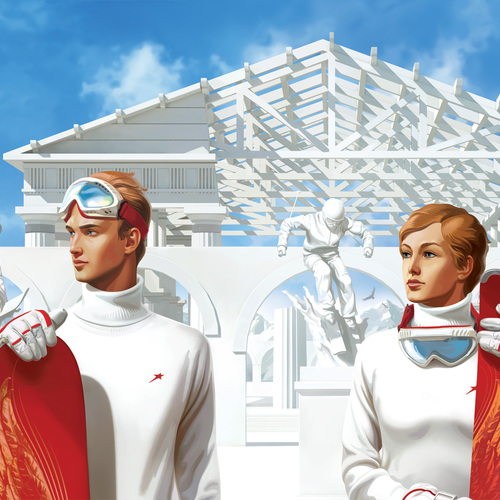
Novikov's New Russian Classicism: Pop Culture, Fashion, and Totalitarianism
Timur Novikov’s essay and manifesto “The New Russian Classicism.”
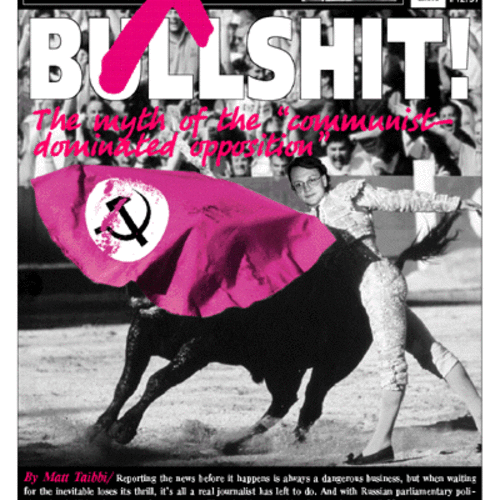
the eXile: Bespredel for Expats
A selection of articles from the English-language magazine the eXile, which combined gonzo journalism and styob and provided unique reporting on post-Soviet Russia, while at the same time fetishizing the 1990s lawlessness or bespredel and the Westerners’ exploitation of Russia (sexual and otherwise) that it itself denounced and condemned.
Stalin, Beria, Gulag: Natsboly against Gaidar and Mikhalkov
Two of the early direct actions organized by the young members of the NBP that combined self-martyrdom and totalitarian styob.