Search
Thematic Tags: Underground
24 Results
Yahha, documentary film
Rashid Nugmanov's course project for Sergei Solov'ev's workshop at VGIK, which included some of the first film footage of the everyday life of the Leningrad rock music scene.
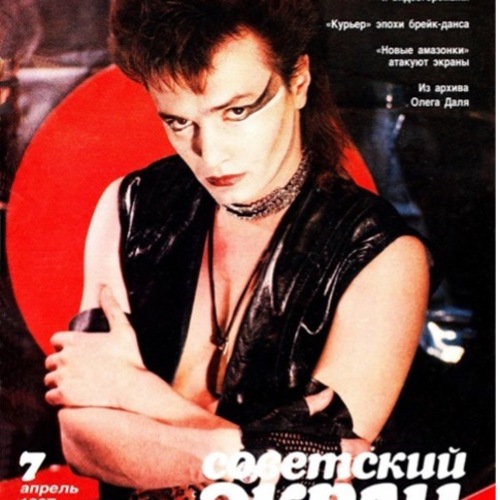
Sovetskii Ekran with K. Kinchev on the cover
Popular film magazines like Soviet Screen (Sovetskii Ekran), were instrumental in establishing rock musicians as cultural icons. Volume 7 (1987) publication places Konstantin Kinchev, frontman of the Leningrad band Alisa, on the cover of its “youth issue” (molodezhnyi vypusk) in an effort to promote the Valerii Ogorodnikov’s film The Burglar (Vzlomshchik, 1987) in which Kinchev plays the lead role.

TaMtAm Rock Club documentary by German television (1993)
The first and until 1994 the only Western-style rock club in Russia, which was founded in 1991 by cellist Vsevolod (Seva) Gakkel (Akvarium) after he visited the famous music club CBGB in New York. The club specialized in punk rock specifically, providing the budding underground punk scene in Russia a much-needed performance venue and cultural legitimacy. Some have accused Gakkel's establishment for breeding far-right nationalist sentiments among Russia's youth subcultures (or at least providing them with a physical organizational platform) in the early 1990s. The fact that a German television production company took interest in TaMtAm is also a testament to punk as a truly transnational movement after fall of the Berlin Wall.
Auktsyon’s performance at the 8th Leningrad Rock Club Festival
Live performance of the rock band Auktsyon at the Leningrad Rock Club. As an art-jazz-rock collective, Auktsyon was a genre-blending musical and performance phenomenon within the Leningrad underground, which distinguished itself from other bands with both its longevity and stylistic variation, gradually increasing antiestablishment content in its music throughout the post-Soviet period, while maintaining a layer of ideological ambiguity.
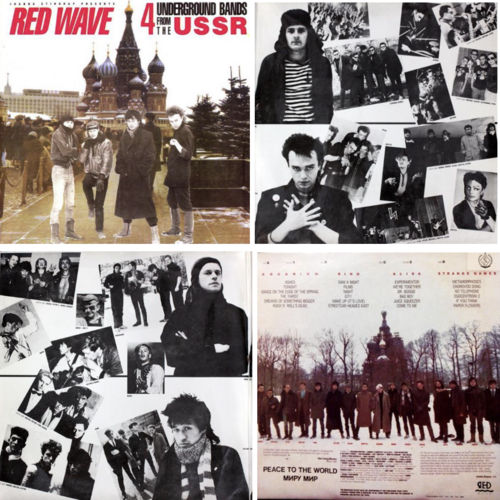
Red Wave: 4 Underground Bands from the USSR
A split double album, recorded and produced by Joanna Stingray, which was the first release of Russian rock music in the west. The album, totaling 15,000 copies, features compositions from four Leningrad-based rock bands: Aquarium, Kino, Alisa, and Strange Games (Strannye Igry). Stingray hoped to popularize Soviet rock music in the West in a direct affront to existing Cold War policies.
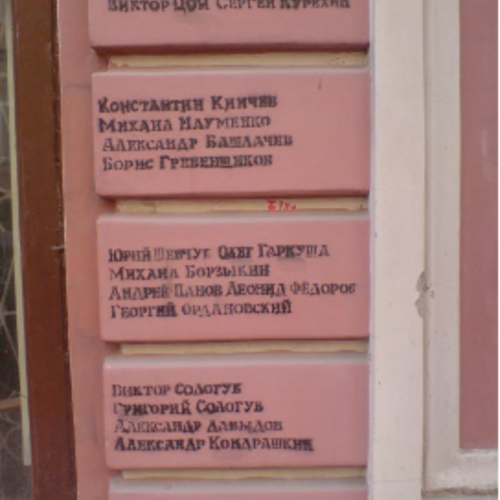
Leningrad Rock Club
A wall of graffiti in the courtyard of the Leningrad Rock Club (1981-1991) on 13 Rubinshteyna Street in Leningrad (St. Petersburg), which featured fan street art dedicated to USSR's most revered rock-music collectives. When the wall was painted over in 2010 by the bulding's new proprietor, this caused a public outcry from both rock fans and the many surviving musicians from that era, who sought to preserve the LRC's legacy and designmate the wall and the building a historical landmark.
Proekt OGI
A literary club opened by the United Humanitarian Publishers (OGI) in 1998 in the apartment of Dmitrii Ol'shanskii, Proekt OGI represented one of the more successful attempts to reclaim the late-Soviet underground in the new post-Soviet, capitalist world.
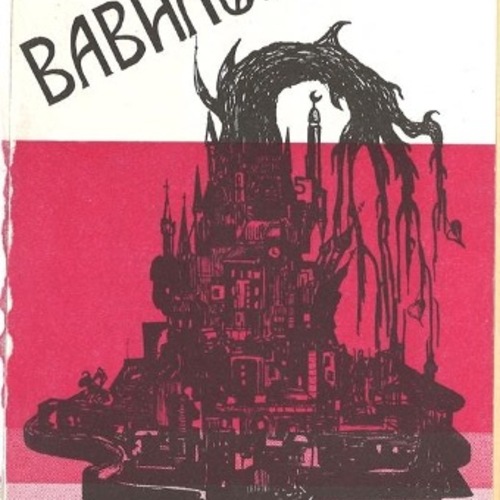
Babylon (online) Vavilon (.ru)
Vavilon, or Babylon, began as a loose group of young poets brought together by Dmitry Kuz'min in 1988. In the post-Soviet years, the group's almanac and then webside became a driving forces behind some of the most innovative poetry of the 1990s.
Romantics and Fascists
Kuryokhin explains his definition of fascism and his distinction between mainstream postmodernism and a postmodernism of protest.
"What is Concealed Will Be Revealed." Kuryokhin's and Dugin's Post-Ironic Political Campaign in Saint Petersburg
An episode from Dugin's political campaign in Saint Petersburg, in which Sergey Kuryokhin and Aleksandr Dugin make fun of liberal democracy (and Yeltsin’s referendum) on Russian TV.
"Only the Wildest and Craziest": Kurekhin's Neo-Avant-Garde on Radio-1, Petrograd
An episode of Kuryokhin’s radio program “Vasha liubimaia sobaka” (aka “Nasha malenkaia rybka,” aka “Russkii liudoed”).
Limonov Becomes a Post-Soviet Nationalist Rock Star
During an “encounter” with the émigré writer Eduard Limonov broadcasted from the concert hall in the Ostankino TV studios in Moscow (a common genre during perestroika), a young neformal in the audience suggests to create a subculture made up of young “limonovians.”
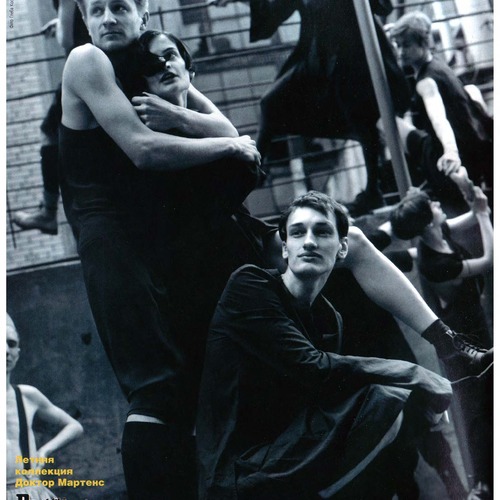
Fascist Fashion Between Counterculture and Mainstream
Images from a photo shoot from the Polushkin Brothers’ collection Fash-Fashion–alluding to both queer and fascist aesthetics–is used as an ad for the popular brand Dr. Martens in the lifestyle magazine Ptiuch and as a model for a nascent National Bolshevik countercultural aesthetics in the pages of the newly founded political newspaper Limonka.
The World Made of Plastic Has Won
Egor Letov performs his song “Moia oborona” (My defense), during his “concert in the hero city Leningrad,” part of Grazhdanskaia oborona’s 1994 tour Russkii proryv (Russian breakthrough).
Let's Go To War!
The model, writer, singer, and TV personality Natalia Medvedeva (Limonov’s third wife) performs her song “Poedem na voinu!” (Let’s go to war!), a countercultural hymn romanticizing war, violence, and rebellion.
Transilvania is Bothering You (On Radio 101 FM)
The cult radio program Transilvania bespokoit (Transilvania is bothering you) creates an alternative musical canon and produces a new nationalist counterpublic.

Novikov's New Russian Classicism: Pop Culture, Fashion, and Totalitarianism
Timur Novikov’s essay and manifesto “The New Russian Classicism.”
Lenin Was a Mushroom
An excerpt from the famous episode of the TV show Piatoe koleso in which the experimental musician and performer Sergey Kuryokhin argued and almost convinced Soviet audiences that "Lenin was a mushroom."
ASSA, motion picture
Scene of Viktor Tsoi performing his rock-anthem "Changes!" (“Peremen!”) during the last seven minutes of Sergei Solov’ev’s 1987 film Assa. Kino's cinematic performance became a defining mass-cultural event that legitimized Soviet rock music as a product of the official mainstream collaborating with the Soviet underground rock movement, crowning Tsoi as USSR's ultimate rock star, and promoting rock music as a legitimate artform for the late-Soviet audience.
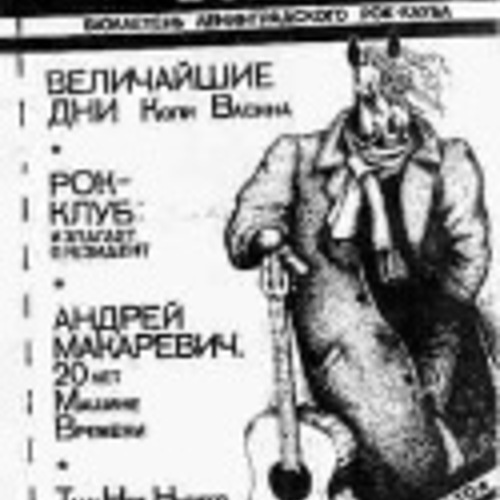
Roksi Music Journal (Samizdat) (Vol. 15, 1990.)
The final print issue of the Leningrad-based samizdat rock journal Roksi, which was
founded in 1977 by members of the rock band Aquarium and the future president
of the Leningrad Rock Club. Considered to be the first rock publication in the
Soviet Union, which was subject to raids by the KGB, Roksi eventually
became the official newsletter of the LRC, and thus legitimized by the state
apparatus.
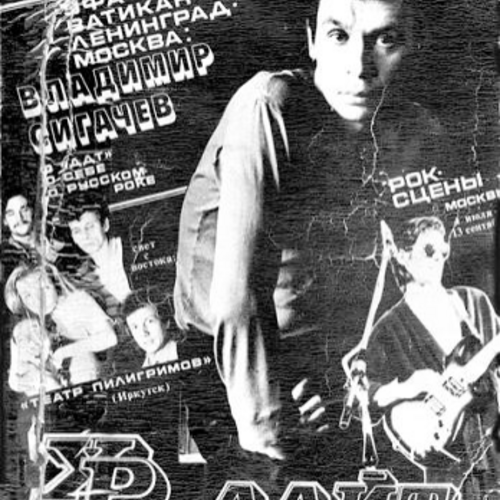
Urlait Music Journal (Samizdat) 1985-1992
Moscow's samizdat music journal, which followed in the footsteps of Lenigrad's Roksi while forging a new journalistic style. The journal positioned itself to in many ways reject the Leningrad scene. Despite Moscow-based bands generally leaning towards a more avant-garde, art-rock aesthetic, Urlait made a point to promote so-called "national rock." According to Urlait's founder I. Smirnov, bands like DDT, DK, and Oblachnyi Krai (Yuri Loza) were said to be "oriented towards national problems, in opposition to estrada and the confluence of Western and domestic cultural traditions."
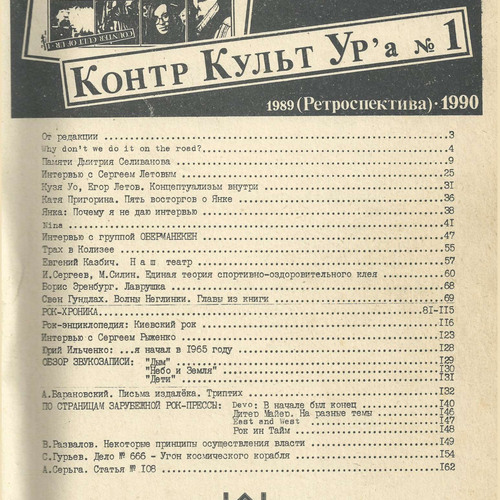
Kontr Kult Ur'a Music Journal (Samizdat) 1989-1991
Kontr Kult Ur'a was envisioned as an ideological reincarnation of Urlait, which was deemed by the new editorial board as "cult-like" and "radically positioned." The journal also was one of the first samizdat rock zines in Moscow and Leningrad to prominently feature and promote Siberian punk rock, including Egor Letov, Civil Defence, and Yanka.
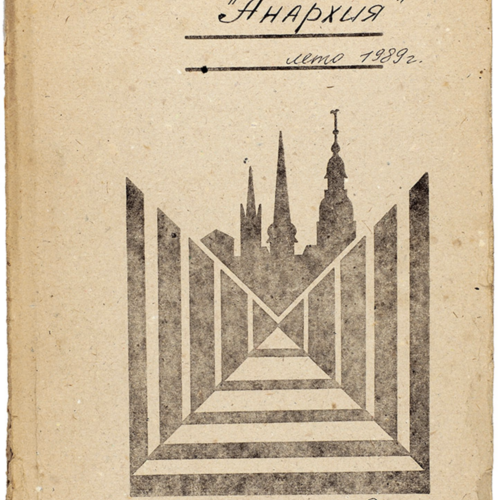
Anarkhia Music Journal (Samizdat)
According to rock historican Alexander Kushnir, Tiumen's samizdat music zine Anarkhia served as "the Bible of western Siberian punk rock," standing in opposition to the other Soviet rock samizdat publications with its strict affinity to punk as its central aesthetic ideology.
Tusovka Music Journal (Samizdat)
A central zine of the Siberian underground music community. One of Tusovka's central feats was duping the KGB into allowing the continuation of its publication and dissemination. Before the first issue went to print, the journal's founder Valerii Murzin took the bold step of delivering the pre-print manuscript of the journal to his local KGB office, in this way guaranteeing the publication's survival.