Search
Events: Collapse Of The Ussr
13 Results
Alexei Uchitel's 1992 documentary film Posldenii Geroi.
Made with the collaboration of Tsoi's widow Marianna Tsoi, the film includes scenes from Viktor Tsoi's funeral and chronicles the mass mourning of the late musician, and the perestroika era by proxy.
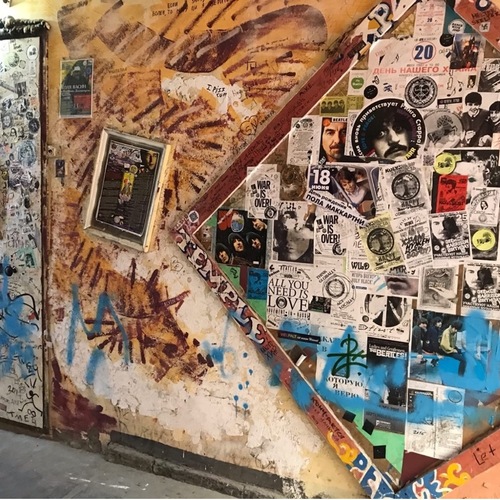
Kolia Vasin’s petition for the “John Lennon Church of Rock-n-Roll” (Khram Rok-n-rolla imeni Dzhona Lennona.) in St. Petersburg (April 1992).
An official petition for the establishment of the so-called "John Lennon Church of Rock-n-Roll" in St. Petersburg, conceived by the self-described "Beatlelologist" Kolia Vasin, a major personality in and driver behind the formation of Leningrad's rock music community.
Soviet identity and Jewish Emigration on KVN
An excerpt from the 1992 season of the amateur variety improv competition show, KVN, in which an Israeli team of recent Russian émigrés competes against former compatriots in Moscow
The Future of Crimea
Campaign documents surrounding the 1991–92 referenda on the independence of Crimea.
"Stalin, Beria, Gulag!": the Natsboly Go Against Gaidar and Mikhalkov
Two of the early direct actions organized by the young members of the NBP that combined self-martyrdom and totalitarian styob.
Transilvania is Bothering You (On Radio 101 FM)
The cult radio program Transilvania bespokoit (Transilvania is bothering you) creates an alternative musical canon and produces a new nationalist counterpublic.
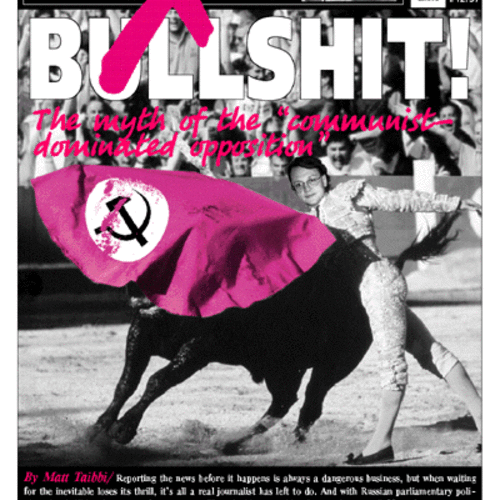
the eXile: Bespredel for Expats
A selection of articles from the English-language magazine the eXile, which combined gonzo journalism and styob and provided unique reporting on post-Soviet Russia, while at the same time fetishizing the 1990s lawlessness or bespredel and the Westerners’ exploitation of Russia (sexual and otherwise) that it itself denounced and condemned.
Stalin, Beria, Gulag: Natsboly against Gaidar and Mikhalkov
Two of the early direct actions organized by the young members of the NBP that combined self-martyrdom and totalitarian styob.
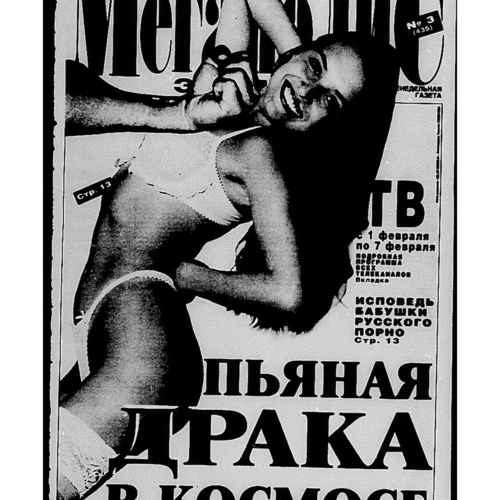
Megapolis-Ekspress: Urban Exoticism and National Pride
Igor Dudinsky takes over the magazine Megapolis-ekspress and turns it into an extreme and surreal parody of the lowest and most excessively sensationalist forms of Western tabloids.
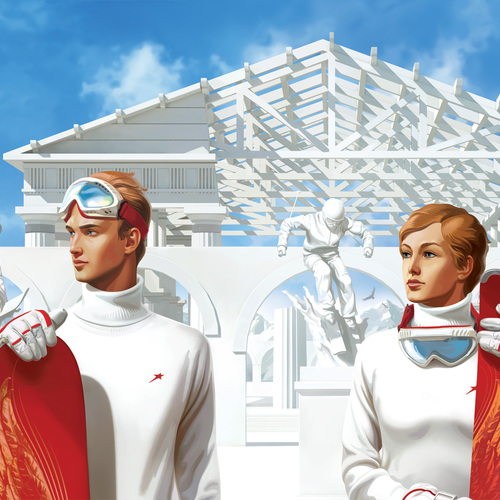
Novikov's New Russian Classicism: Pop Culture, Fashion, and Totalitarianism
Timur Novikov’s essay and manifesto “The New Russian Classicism.”
The Glasnost Booth on the last October Revolution anniversary in the USSR
“Glas naroda [The People’s Voice]”– a booth installed in the middle of town, into which random people can enter and speak their minds. Episode from the Kremlin, on USSR’s last anniversary of the October Revolution, in 1991.
Parfenov’s Namedni as memory-work in the 1990s
Namedni [Recently], Parfenov's project about recent history, was one of the most successful shows of the 1990s. Eschewing big narrative arcs, the show highlighted the past as a collection of memory sites– in this case, the origin of the New Russian in 1991.
Loss of the Soviet Nation at KVN
The Winter 1992 opening broadcast of the amateur variety and improv contest show KVN, filmed just a few months after the dissolution of the USSR, with former Soviet university teams lamenting the rise of national borders around them