Search
Thematic Tags: Culture
36 Results
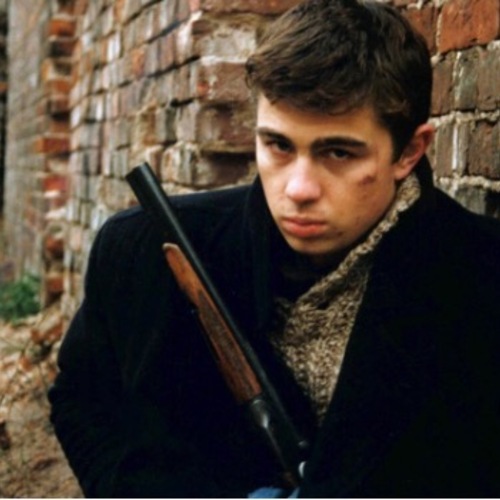
Brother. Motion Picture. Dir. Aleksei Balabanov (Excerpts)
Aleksei Balabanov's cult crime drama, which made its title character, the loveable killer Danila Bagrov into a youth idol and a national emblem of post-Soviet masculinity
Brother 2. Motion Picture. Dir. Aleksei Balabanov (Excerpts)
A sequel of the original Brother, which is partially set in the United States, where national hero Danila Bagrov avenges his friend's death, while reflecting Russo-American cultural differences
TaMtAm Rock Club documentary by German television (1993)
The first and until 1994 the only Western-style rock club in Russia, which was founded in 1991 by cellist Vsevolod (Seva) Gakkel (Akvarium) after he visited the famous music club CBGB in New York. The club specialized in punk rock specifically, providing the budding underground punk scene in Russia a much-needed performance venue and cultural legitimacy. Some have accused Gakkel's establishment for breeding far-right nationalist sentiments among Russia's youth subcultures (or at least providing them with a physical organizational platform) in the early 1990s. The fact that a German television production company took interest in TaMtAm is also a testament to punk as a truly transnational movement after fall of the Berlin Wall.
A Conservative Revolutionary Avant-Garde
“The New against the Old,” a programmatic article by Aleksandr Dugin from the first issue of Limonka, the official newspaper of Eduard Limonov’s National Bolshevik Party (NBP), radical political organization/countercultural movement.
An Armed Paradise
An article by Aleksey Tsvetkov, anarchist writer and associate director of Limonka who temporarily turned the newspaper to a postmodern art project of sorts.
“Rise, you cursed people!”: The Aesthetics of Limonka
A cover of Limonka from 1997 displaying a collage by Aleksandr Lebedev-Frontov.
The Russian (Extreme Version of) MTV
Selection from the music TV show Drëma, which aired on TV-6 in 1997-98 before being shut down because of its provocative content. Hosted by Vladimir Epifantsev and Anfisa Chekhova. An early (quite experimental) example of pop culture in post-Soviet Russia.
Romantics and Fascists
Kuryokhin explains his definition of fascism and his distinction between mainstream postmodernism and a postmodernism of protest.
"What is Concealed Will Be Revealed." Kuryokhin's and Dugin's Post-Ironic Political Campaign in Saint Petersburg
An episode from Dugin's political campaign in Saint Petersburg, in which Sergey Kuryokhin and Aleksandr Dugin make fun of liberal democracy (and Yeltsin’s referendum) on Russian TV.
Limonov Becomes a Post-Soviet Nationalist Rock Star
During an “encounter” with the émigré writer Eduard Limonov broadcasted from the concert hall in the Ostankino TV studios in Moscow (a common genre during perestroika), a young neformal in the audience suggests to create a subculture made up of young “limonovians.”
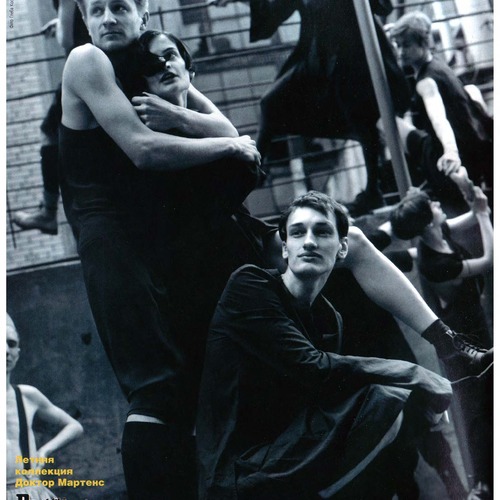
Fascist Fashion Between Counterculture and Mainstream
Images from a photo shoot from the Polushkin Brothers’ collection Fash-Fashion–alluding to both queer and fascist aesthetics–is used as an ad for the popular brand Dr. Martens in the lifestyle magazine Ptiuch and as a model for a nascent National Bolshevik countercultural aesthetics in the pages of the newly founded political newspaper Limonka.
The World Made of Plastic Has Won
Egor Letov performs his song “Moia oborona” (My defense), during his “concert in the hero city Leningrad,” part of Grazhdanskaia oborona’s 1994 tour Russkii proryv (Russian breakthrough).
Let's Go To War!
The model, writer, singer, and TV personality Natalia Medvedeva (Limonov’s third wife) performs her song “Poedem na voinu!” (Let’s go to war!), a countercultural hymn romanticizing war, violence, and rebellion.
"Stalin, Beria, Gulag!": the Natsboly Go Against Gaidar and Mikhalkov
Two of the early direct actions organized by the young members of the NBP that combined self-martyrdom and totalitarian styob.
Transilvania is Bothering You (On Radio 101 FM)
The cult radio program Transilvania bespokoit (Transilvania is bothering you) creates an alternative musical canon and produces a new nationalist counterpublic.
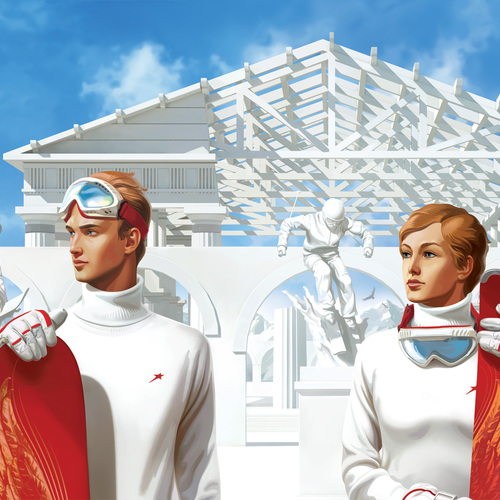
Novikov's New Russian Classicism: Pop Culture, Fashion, and Totalitarianism
Timur Novikov’s essay and manifesto “The New Russian Classicism.”
Lenin Was a Mushroom
An excerpt from the famous episode of the TV show Piatoe koleso in which the experimental musician and performer Sergey Kuryokhin argued and almost convinced Soviet audiences that "Lenin was a mushroom."
Stalin, Beria, Gulag: Natsboly against Gaidar and Mikhalkov
Two of the early direct actions organized by the young members of the NBP that combined self-martyrdom and totalitarian styob.
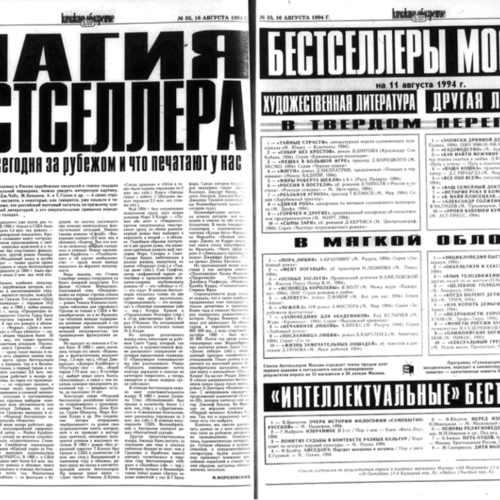
Bestsellers of Moscow
Post-Soviet Russia's first bestseller lists, compiled by the weekly industry newspaper Knizhnoe obozrenie and published from late 1993 through 1998.
Soviet Engineers become Post-Soviet Aristocrats on TV
Chto? Gde? Kogda? (What? Where? When?) goes through an aristocratic overhaul and becomes an "intellectual casino'
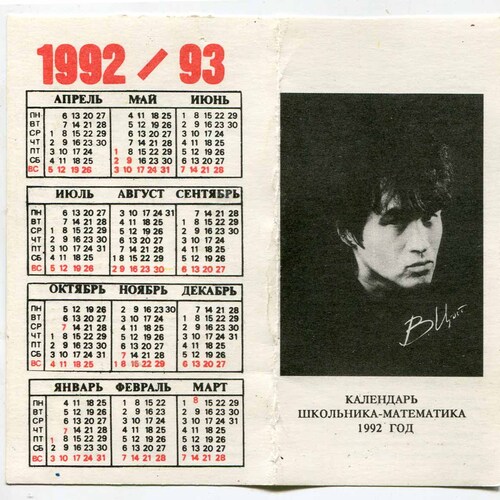
1992-1993 School math calendar
1992-1993 Math calendar intended for a secondary school student with a photograph of Viktor Tsoi, leader of the rock band Kino on its front cover.
Lyube performing "Atas" during a televised concert on January 1, 1990
The rock band, which Vladimir Putin would later count as among his "favorites," performing on late-Soviet television on the cusp of rock stardom.
Lyube "Stop Fooling Around, America!" (Ne Valiai Duraka, Amerika!) music video
Music video for the fourth track on Lyube’s second studio album Who Said We Lived Poorly? (Kto skazal, chto my plokho zhili?), which was released in 1992. Written from the perspective of the Russo-Soviet “common man,” while using folk vernacular, the song explores questions of Alaska’s historical and territorial integrity – lamenting its sale to the United States and demanding its return while celebrating Russia’s national character.
Lyube "Stop Fooling Around, America!" (Ne Valiai Duraka, Amerika!) music video
Music video for the fourth track on Lyube’s second studio album Who Said We Lived Poorly? (Kto skazal, chto my plokho zhili?), which was released in 1992. Written from the perspective of the Russo-Soviet “common man,” while using folk vernacular, the song explores questions of Alaska’s historical and territorial integrity – lamenting its sale to the United States and demanding its return while celebrating Russia’s national character.
Referendum 1993: the "Yes Yes No Yes" campaign
Da, Da, Net, Da- Agitational propaganda for the 1993 referndum, "Yes, yes, no, yes"- note the slogan at the end, "we are building a new Russia!"
The Making of an Anti-Bourgeois Hero
Excerpt from an early episode (the second) of a new version of the popular talk show Vzgliad, co-hosted by Aleksandr Liubimov and Sergey Bodrov Jr., which aired weekly on the TV channel ORT in 1996-1999.
"Only the Wildest and Craziest": Kurekhin's Neo-Avant-Garde on Radio-1, Petrograd
An episode of Kuryokhin’s radio program “Vasha liubimaia sobaka” (aka “Nasha malenkaia rybka,” aka “Russkii liudoed”).
A Man Who Keeps Up with the Times
A piece on David Bowie, focusing on the star’s bisexuality, in the glossy color gay magazine Мальчишник
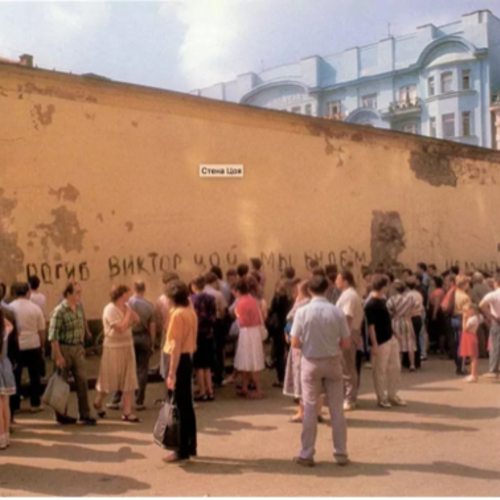
"Tsoi's Wall" on Arbat
A wall of fan graffiti dedocated to the late Soviet rock star Viktor Tsoi on Moscow's famous Arbat Street.
Interview with Sergei Bodrov Jr. (1997) (selections)
Interview with actor Sergei Bodrov Jr., who famously played the loveable gangster Danila Bagrov in Aleksei Balabanov’s films Brother and Brother 2, becoming a post-Soviet cultural icon.
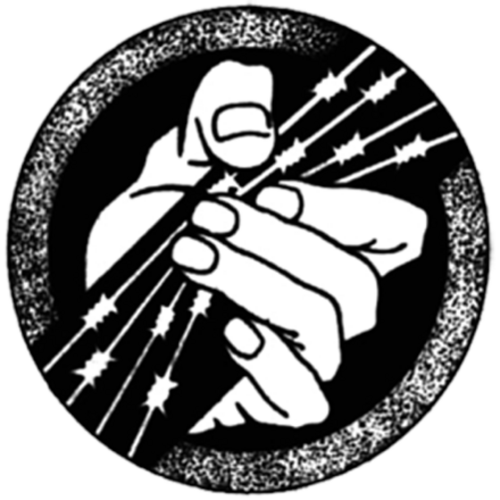
Rok Protiv Terrora Music Festival. April 6, 1991, Moscow.
A not-for-profit charitable concert that took place at Moscow's Kryl'ia Sovetov Stadium on April 6, 1991, concieved by the Garik Sukachev, the leader of the rock band Brigada S. Intially the event was meant to be an act of protest against police brutality, but grew to include all forms of state organized terror: political, social, and moral. The festival received organizational support from VID, Komsomolskaya Pravda and the Fili Cultural Center. Fourteen Soviet rock bands took part in the festival.
The First (Home-Made) Post-Soviet Independent TV
The Saint Petersburg “New Artists” stage a meeting of the committee “anti-state of emergency” on their “Pirate Television,” declaring their support of Yeltsin against the group of communist hardliners who led the coup d’etat against Gorbachev on August 19, 1991.
Loss of the Soviet Nation at KVN
The Winter 1992 opening broadcast of the amateur variety and improv contest show KVN, filmed just a few months after the dissolution of the USSR, with former Soviet university teams lamenting the rise of national borders around them
Soviet identity and Jewish Emigration on KVN
An excerpt from the 1992 season of the amateur variety improv competition show, KVN, in which an Israeli team of recent Russian émigrés competes against former compatriots in Moscow
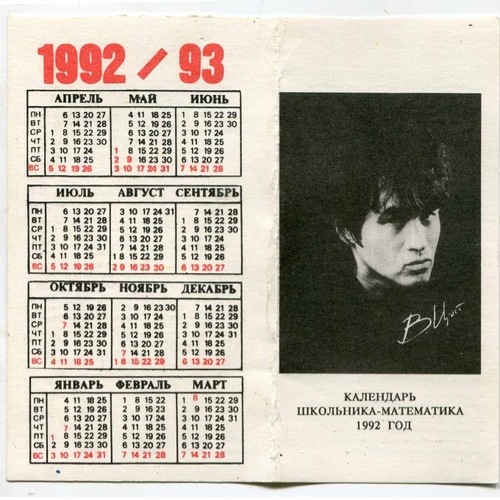
1992-1993 Math calendar intended for a secondary school student with a photograph of Viktor Tsoi, frontman of the rock band Kino on its front cover.
Serving as a testament to the meteoric rise in popularity and the widespread influence of rock music culture on the everyday lives of the newly post-Soviet citizens, this 1992/1993 math calendar, intended for schoolchildren set to master the concepts of algebra and geometry, cements the shift of public opinion about the position and status of rock musicians in Soviet/post-Soviet society from that of ideologically nefarious loafers to newly minted fallen heroes and teenage idols. The recently deceased Tsoi is inscribed in this artifact as an officially sanctioned role model for Russian youth, whose death is emblematic of the fading old regime, and whose music is a fully commercialized consumer product.
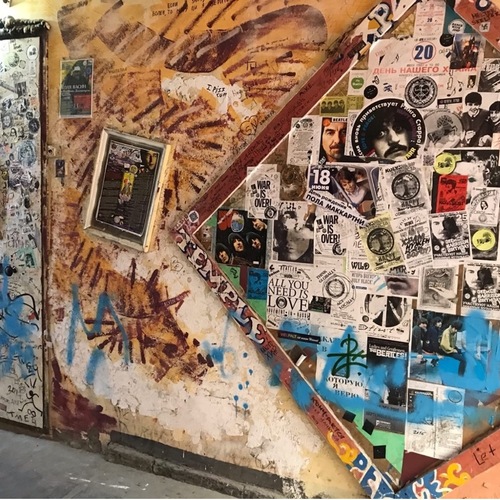
Kolia Vasin’s petition for the “John Lennon Church of Rock-n-Roll” (Khram Rok-n-rolla imeni Dzhona Lennona.) in St. Petersburg (April 1992).
An official petition for the establishment of the so-called "John Lennon Church of Rock-n-Roll" in St. Petersburg, conceived by the self-described "Beatlelologist" Kolia Vasin, a major personality in and driver behind the formation of Leningrad's rock music community.