Search
Thematic Tags: Counterculture
16 Results
TaMtAm Rock Club documentary by German television (1993)
The first and until 1994 the only Western-style rock club in Russia, which was founded in 1991 by cellist Vsevolod (Seva) Gakkel (Akvarium) after he visited the famous music club CBGB in New York. The club specialized in punk rock specifically, providing the budding underground punk scene in Russia a much-needed performance venue and cultural legitimacy. Some have accused Gakkel's establishment for breeding far-right nationalist sentiments among Russia's youth subcultures (or at least providing them with a physical organizational platform) in the early 1990s. The fact that a German television production company took interest in TaMtAm is also a testament to punk as a truly transnational movement after fall of the Berlin Wall.
A Conservative Revolutionary Avant-Garde
“The New against the Old,” a programmatic article by Aleksandr Dugin from the first issue of Limonka, the official newspaper of Eduard Limonov’s National Bolshevik Party (NBP), radical political organization/countercultural movement.
An Armed Paradise
An article by Aleksey Tsvetkov, anarchist writer and associate director of Limonka who temporarily turned the newspaper to a postmodern art project of sorts.
“Rise, you cursed people!”: The Aesthetics of Limonka
A cover of Limonka from 1997 displaying a collage by Aleksandr Lebedev-Frontov.
The Russian (Extreme Version of) MTV
Selection from the music TV show Drëma, which aired on TV-6 in 1997-98 before being shut down because of its provocative content. Hosted by Vladimir Epifantsev and Anfisa Chekhova. An early (quite experimental) example of pop culture in post-Soviet Russia.
Romantics and Fascists
Kuryokhin explains his definition of fascism and his distinction between mainstream postmodernism and a postmodernism of protest.
"What is Concealed Will Be Revealed." Kuryokhin's and Dugin's Post-Ironic Political Campaign in Saint Petersburg
An episode from Dugin's political campaign in Saint Petersburg, in which Sergey Kuryokhin and Aleksandr Dugin make fun of liberal democracy (and Yeltsin’s referendum) on Russian TV.
Limonov Becomes a Post-Soviet Nationalist Rock Star
During an “encounter” with the émigré writer Eduard Limonov broadcasted from the concert hall in the Ostankino TV studios in Moscow (a common genre during perestroika), a young neformal in the audience suggests to create a subculture made up of young “limonovians.”
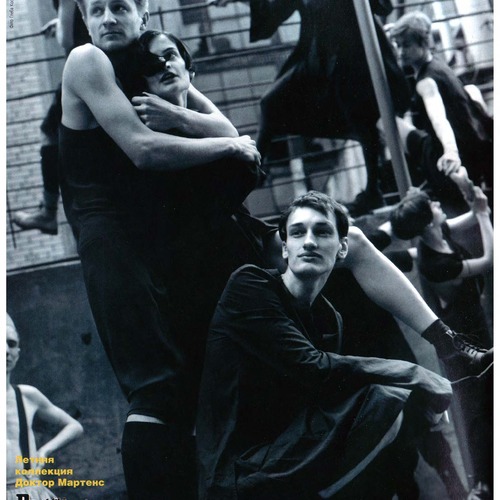
Fascist Fashion Between Counterculture and Mainstream
Images from a photo shoot from the Polushkin Brothers’ collection Fash-Fashion–alluding to both queer and fascist aesthetics–is used as an ad for the popular brand Dr. Martens in the lifestyle magazine Ptiuch and as a model for a nascent National Bolshevik countercultural aesthetics in the pages of the newly founded political newspaper Limonka.
The World Made of Plastic Has Won
Egor Letov performs his song “Moia oborona” (My defense), during his “concert in the hero city Leningrad,” part of Grazhdanskaia oborona’s 1994 tour Russkii proryv (Russian breakthrough).
Let's Go To War!
The model, writer, singer, and TV personality Natalia Medvedeva (Limonov’s third wife) performs her song “Poedem na voinu!” (Let’s go to war!), a countercultural hymn romanticizing war, violence, and rebellion.
"Stalin, Beria, Gulag!": the Natsboly Go Against Gaidar and Mikhalkov
Two of the early direct actions organized by the young members of the NBP that combined self-martyrdom and totalitarian styob.
Transilvania is Bothering You (On Radio 101 FM)
The cult radio program Transilvania bespokoit (Transilvania is bothering you) creates an alternative musical canon and produces a new nationalist counterpublic.
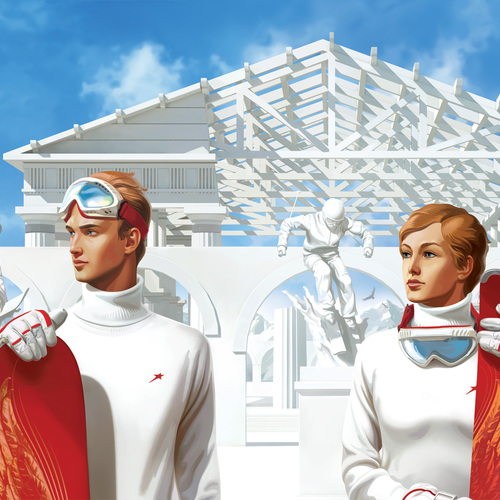
Novikov's New Russian Classicism: Pop Culture, Fashion, and Totalitarianism
Timur Novikov’s essay and manifesto “The New Russian Classicism.”
Lenin Was a Mushroom
An excerpt from the famous episode of the TV show Piatoe koleso in which the experimental musician and performer Sergey Kuryokhin argued and almost convinced Soviet audiences that "Lenin was a mushroom."
Stalin, Beria, Gulag: Natsboly against Gaidar and Mikhalkov
Two of the early direct actions organized by the young members of the NBP that combined self-martyrdom and totalitarian styob.