Search
Geographic Foci: Soviet Union
21 Results
Ekho Moskvy - 20 August 1991
Live coverage of the GKChP putsch in August 1991 from the Echo of Moscow radio station. Demonstrates the chaos of the moment, the putschists' failure to control their message, and the power of the newly independent media.
The Russian (Extreme Version of) MTV
Selection from the music TV show Drëma, which aired on TV-6 in 1997-98 before being shut down because of its provocative content. Hosted by Vladimir Epifantsev and Anfisa Chekhova. An early (quite experimental) example of pop culture in post-Soviet Russia.
A Conservative Revolutionary Avant-Garde
“The New against the Old,” a programmatic article by Aleksandr Dugin from the first issue of Limonka, the official newspaper of Eduard Limonov’s National Bolshevik Party (NBP), radical political organization/countercultural movement.
An Armed Paradise
An article by Aleksey Tsvetkov, anarchist writer and associate director of Limonka who temporarily turned the newspaper to a postmodern art project of sorts.
“Rise, you cursed people!”: The Aesthetics of Limonka
A cover of Limonka from 1997 displaying a collage by Aleksandr Lebedev-Frontov.
The Making of an Anti-Bourgeois Hero
Excerpt from an early episode (the second) of a new version of the popular talk show Vzgliad, co-hosted by Aleksandr Liubimov and Sergey Bodrov Jr., which aired weekly on the TV channel ORT in 1996-1999.
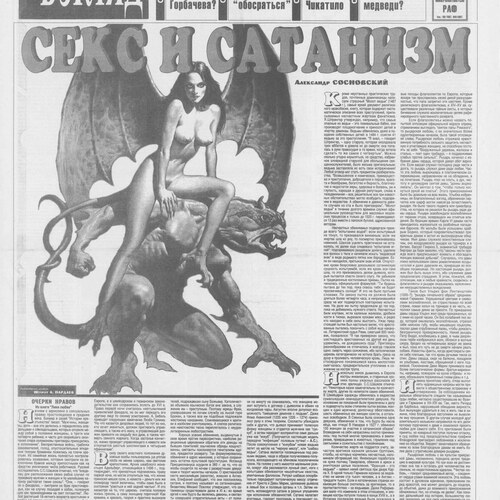
Novyi Vzgliad: Violence, Political Irony, and National Pride
Novyi Vzgliad authors write some of the most scandalous and incendiary political commentaries of the 1990s, producing new forms of political irony. Iaroslav Mogutin and Eduard Limonov turn violence into a paradoxical source of identity. The main artifact here–an article by Mogutin–exemplifies this process.
Romantics and Fascists
Kuryokhin explains his definition of fascism and his distinction between mainstream postmodernism and a postmodernism of protest.
"What is Concealed Will Be Revealed." Kuryokhin's and Dugin's Post-Ironic Political Campaign in Saint Petersburg
An episode from Dugin's political campaign in Saint Petersburg, in which Sergey Kuryokhin and Aleksandr Dugin make fun of liberal democracy (and Yeltsin’s referendum) on Russian TV.
"Only the Wildest and Craziest": Kurekhin's Neo-Avant-Garde on Radio-1, Petrograd
An episode of Kuryokhin’s radio program “Vasha liubimaia sobaka” (aka “Nasha malenkaia rybka,” aka “Russkii liudoed”).
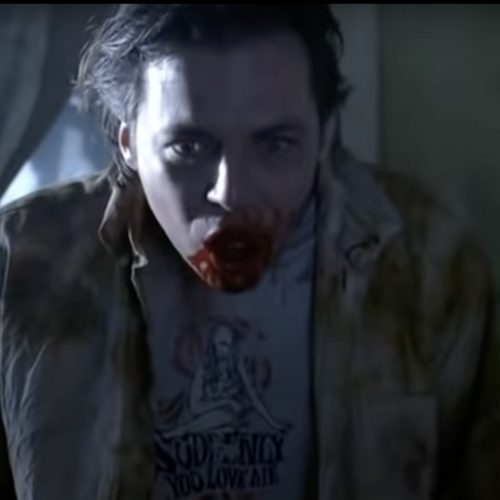
Mumiy Troll's Breakthrough “Utekai” (Take Off) Becomes the Song of the Year 1997
Video and lyrics of Mumiy Troll’s 1997 breakthrough song “Utekai” (Beat it) displaying the combination of surrealism, dark humor, and provincial romanticism that comes to shape the band’s trademark style.
"Stalin, Beria, Gulag!": the Natsboly Go Against Gaidar and Mikhalkov
Two of the early direct actions organized by the young members of the NBP that combined self-martyrdom and totalitarian styob.
Transilvania is Bothering You (On Radio 101 FM)
The cult radio program Transilvania bespokoit (Transilvania is bothering you) creates an alternative musical canon and produces a new nationalist counterpublic.
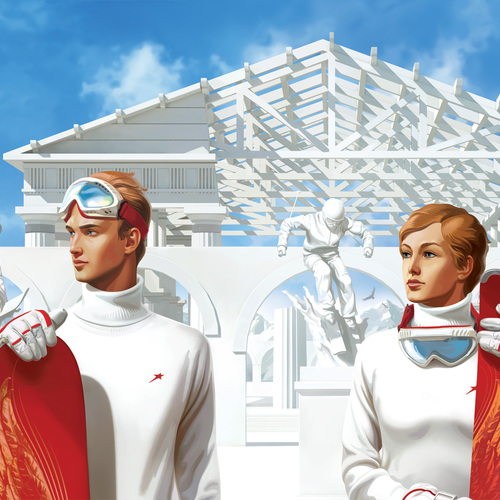
Novikov's New Russian Classicism: Pop Culture, Fashion, and Totalitarianism
Timur Novikov’s essay and manifesto “The New Russian Classicism.”
Lenin Was a Mushroom
An excerpt from the famous episode of the TV show Piatoe koleso in which the experimental musician and performer Sergey Kuryokhin argued and almost convinced Soviet audiences that "Lenin was a mushroom."
Stalin, Beria, Gulag: Natsboly against Gaidar and Mikhalkov
Two of the early direct actions organized by the young members of the NBP that combined self-martyrdom and totalitarian styob.
The post-Soviet people’s show, Pole Chudes
A clip from the most-watched entertainment show of the 1990s, "Pole Chudes [Field of Miracles],” which renders the post-Soviet narod of regular folks, engaged in a free-flowing relationship with capitalism and Russia’s central television
Top Secret: Investigative Journalism and True Crime During Perestroika
Sovershenno sekretno, the first privately owned periodical in Soviet Russia since 1917, showcased a combination of transparency and sensationalism that became a distinguishing feature of journalistic writing in the post-Soviet period.
The First Article on Prostitution in the Soviet Union
"The White Dance" by Evgeny Dodolev broke a major taboo of Soviet press, by doing a report on the existence of foreign-currency prostitutes in the USSR. Dodolev would then go on to be a part of the Vzgliad team, as well as the creator of 1990s "Novyi vzgliad"
"Moscovskii komsomolets," 19-21 November, 1986
Limonov Becomes a Post-Soviet Nationalist Rock Star
During an “encounter” with the émigré writer Eduard Limonov broadcasted from the concert hall in the Ostankino TV studios in Moscow (a common genre during perestroika), a young neformal in the audience suggests to create a subculture made up of young “limonovians.”
"The Mysteries of the Century": Post-Truth and Mystical Nazism on Russian TV
An episode from the TV program “Tainy veka” (The mysteries of the century), hosted by Iurii Vorobevskii and Aleksandr Dugin. One of the first examples of post-truth on Russian television.