9 artifacts
A Conservative Revolutionary Avant-Garde
“The New against the Old,” a programmatic article by Aleksandr Dugin from the first issue of Limonka, the official newspaper of Eduard Limonov’s National Bolshevik Party (NBP), radical political organization/countercultural movement.
An Armed Paradise
An article by Aleksey Tsvetkov, anarchist writer and associate director of Limonka who temporarily turned the newspaper to a postmodern art project of sorts.
“Rise, you cursed people!”: The Aesthetics of Limonka
A cover of Limonka from 1997 displaying a collage by Aleksandr Lebedev-Frontov.
Eduard Limonov: It’s Me, Eddy, Glagol Press.
Glagol Press (Moscow) 1991 edition of Eduard Limonov’s It’s Me, Eddy.
Top Secret: Investigative Journalism and True Crime During Perestroika
Sovershenno sekretno, the first privately owned periodical in Soviet Russia since 1917, showcased a combination of transparency and sensationalism that became a distinguishing feature of journalistic writing in the post-Soviet period.
Limonov Becomes a Post-Soviet Nationalist Rock Star
During an “encounter” with the émigré writer Eduard Limonov broadcasted from the concert hall in the Ostankino TV studios in Moscow (a common genre during perestroika), a young neformal in the audience suggests to create a subculture made up of young “limonovians.”
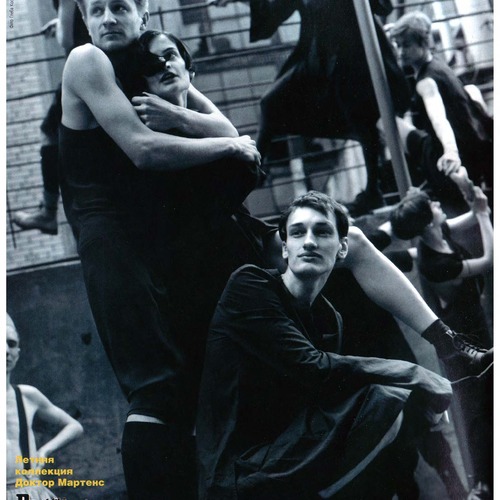
Fascist Fashion Between Counterculture and Mainstream
Images from a photo shoot from the Polushkin Brothers’ collection Fash-Fashion–alluding to both queer and fascist aesthetics–is used as an ad for the popular brand Dr. Martens in the lifestyle magazine Ptiuch and as a model for a nascent National Bolshevik countercultural aesthetics in the pages of the newly founded political newspaper Limonka.
The World Made of Plastic Has Won
Egor Letov performs his song “Moia oborona” (My defense), during his “concert in the hero city Leningrad,” part of Grazhdanskaia oborona’s 1994 tour Russkii proryv (Russian breakthrough).
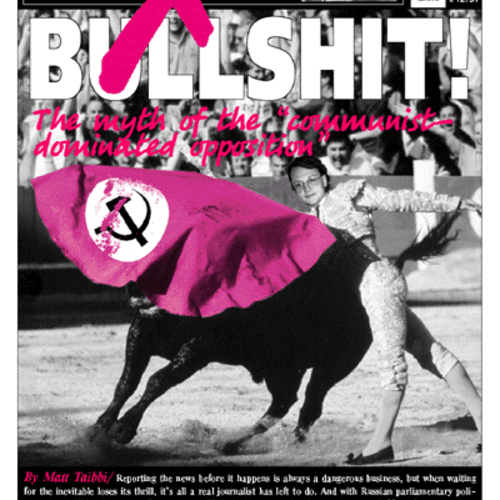
the eXile: Bespredel for Expats
A selection of articles from the English-language magazine the eXile, which combined gonzo journalism and styob and provided unique reporting on post-Soviet Russia, while at the same time fetishizing the 1990s lawlessness or bespredel and the Westerners’ exploitation of Russia (sexual and otherwise) that it itself denounced and condemned.