Entertainment (Video)
Soviet technical intelligentsia learns Reaganomics on the Chto? Gde? Kogda? gameshow
Chto? Gde? Kogda? [What? Where? When?], a long-running high-brow quiz show for the late Soviet technical intelligentsia, debates the economic principles of Soviet private enterprise in the heat of Perestroika’s economic reforms in 1988
The Creation of Adam (1993, dir. Iu. Pavlov)
Scene from 1993 Russian feature film with gay themes
Soviet Nostalgia– Old Songs About the Most important
The most popular Soviet nostalgia project of the 1990s- "Starye pesni o glavnom [Old Songs About the Most Important"
Parfenov’s Namedni as memory-work in the 1990s
Namedni [Recently], Parfenov's project about recent history, was one of the most successful shows of the 1990s. Eschewing big narrative arcs, the show highlighted the past as a collection of memory sites– in this case, the origin of the New Russian in 1991.
The post-Soviet people’s show, Pole Chudes
A clip from the most-watched entertainment show of the 1990s, "Pole Chudes [Field of Miracles],” which renders the post-Soviet narod of regular folks, engaged in a free-flowing relationship with capitalism and Russia’s central television
Konstantin Ernst's "Matador"
A clip from the art show "Matador," created by VID's junior partner, Konstantin Ernst, in 1990, and then remained his project as Ernst rose up and took VID's helm. This particular clip is from the show on Contemporary Art. It has a remarkably joyously elitist feel that is consistent with the "new Russian" ethos of ViD.
Primetime hypnotic tele-healing seances with Kashpirovskii
Anatolii Kashpirovskii, the psychic and guru of Perestroika era's "new thinking" uses the power of suggestion to heal the Soviet people from all ailments physical and spiritual
Egoist
Music video for Boris Moiseev's song "Egoist"
Chumak sends morning healing vibes to Perestroika audiences
A healing seance with TV-psychic Allan Chumak in 1989, during the morning newscast, “120 Minutes.” Works on people, their drinking water and their creams.
Kino’s last concert (Luzhniki Stadium, Moscow)
Footage of a live Kino concert at Moscow's Luzhniki Stadium on June 24, 1990, roughly a month and half prior to frontman Viktor Tsoi's death in a car accident in rural Latvia. The footage shows the band at the very height of its popularity, as well as offering an unencumbered look at a country in transition: a heavy and conspicuous Soviet police detail is assigned to the event, while audience members wave both the Soviet flag and the Russian tricolor banner.
Auktsyon’s performance at the 8th Leningrad Rock Club Festival
Live performance of the rock band Auktsyon at the Leningrad Rock Club. As an art-jazz-rock collective, Auktsyon was a genre-blending musical and performance phenomenon within the Leningrad underground, which distinguished itself from other bands with both its longevity and stylistic variation, gradually increasing antiestablishment content in its music throughout the post-Soviet period, while maintaining a layer of ideological ambiguity.
Yahha, documentary film
Rashid Nugmanov's course project for Sergei Solov'ev's workshop at VGIK, which included some of the first film footage of the everyday life of the Leningrad rock music scene.
List'ev's Russian Liberals on "Chas Pik"
An excerpt from a compilation of most memorable moments with Vladislav LIst'ev and his Russian liberal guests on "Chas Pik," aired in the week after his murder
Loss of the Soviet Nation at KVN
The Winter 1992 opening broadcast of the amateur variety and improv contest show KVN, filmed just a few months after the dissolution of the USSR, with former Soviet university teams lamenting the rise of national borders around them
Interview with Viktor Tsoi and Natalia Razlogova. Conducted by Sergei Sholokhov at the Golden Duke Film Festival in Odessa, 1988
This eight-minute interview, which took place on a cruise ship chartered for Odessa’s Golden Duke Film Festival in September 1988, depicts rock musician Viktor Tsoi and film critic Natalia Razlogova speaking to a journalist about the insurmountable generational tensions that inhabit the Soviet film industry. Tsoi was attending the festival to promote the film The Needle, where he played the lead role. The interview is significant highlighting the aesthetic and ideological crisis of the Soviet film industry in the last Soviet decade.
Nautilus Pompilius performing "Last Letter" (Poslednee Pis'mo: Gudbai Amerika)
A televised performance of Nautilus Pomplius's cult song lamenting the frustrated hopes of Perestroika-era Westernization, which was further popularized by its prominent position in Aleksei Balabanov's popular gangster drama Brother 2 (2000), inscribing it into the post-Soviet cultural and cinematic discourse as a sort of antidote to Viktor Tsoi's "Changes!" at the end of S. Solov'ev's ASSA.
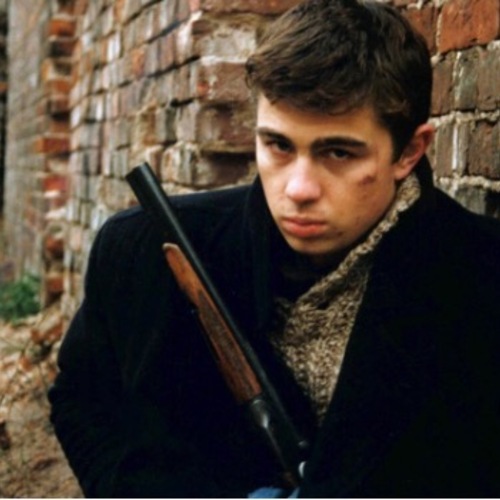
Brother. Motion Picture. Dir. Aleksei Balabanov (Excerpts)
Aleksei Balabanov's cult crime drama, which made its title character, the loveable killer Danila Bagrov into a youth idol and a national emblem of post-Soviet masculinity
Brother 2. Motion Picture. Dir. Aleksei Balabanov (Excerpts)
A sequel of the original Brother, which is partially set in the United States, where national hero Danila Bagrov avenges his friend's death, while reflecting Russo-American cultural differences
Gagarin (1994), directed by Alexei Kharitidi and the Moscow Animation studio “Pilot”
"Gagarin", the Oscar-nominated cartoon, directed by Alexei Kharitidi and the Moscow Animation studio “Pilot”

TaMtAm Rock Club documentary by German television (1993)
The first and until 1994 the only Western-style rock club in Russia, which was founded in 1991 by cellist Vsevolod (Seva) Gakkel (Akvarium) after he visited the famous music club CBGB in New York. The club specialized in punk rock specifically, providing the budding underground punk scene in Russia a much-needed performance venue and cultural legitimacy. Some have accused Gakkel's establishment for breeding far-right nationalist sentiments among Russia's youth subcultures (or at least providing them with a physical organizational platform) in the early 1990s. The fact that a German television production company took interest in TaMtAm is also a testament to punk as a truly transnational movement after fall of the Berlin Wall.
Yeltsin's Orderly (Sanitar Yeltsina)
Delo Muryleva. Smert' za kvartiry (The Murylev case. Death for Apartments). First episode of the crime show Kriminal'naia Rossiia (NTV, 1995-2002, with various later versions on TVS, Pervyi kanal, and others)
The Russian (Extreme Version of) MTV
Selection from the music TV show Drëma, which aired on TV-6 in 1997-98 before being shut down because of its provocative content. Hosted by Vladimir Epifantsev and Anfisa Chekhova. An early (quite experimental) example of pop culture in post-Soviet Russia.
The Making of an Anti-Bourgeois Hero
Excerpt from an early episode (the second) of a new version of the popular talk show Vzgliad, co-hosted by Aleksandr Liubimov and Sergey Bodrov Jr., which aired weekly on the TV channel ORT in 1996-1999.
Soviet identity and Jewish Emigration on KVN
An excerpt from the 1992 season of the amateur variety improv competition show, KVN, in which an Israeli team of recent Russian émigrés competes against former compatriots in Moscow
Soviet Engineers become Post-Soviet Aristocrats on TV
Chto? Gde? Kogda? (What? Where? When?) goes through an aristocratic overhaul and becomes an "intellectual casino'
Boris Moiseev: Egoist
Music video for song by pop-music artist Boris Moiseev
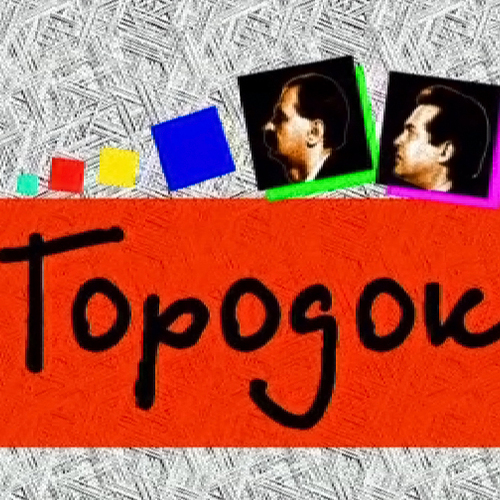
Gorodok [Little Town]: 1993-2012
title screen, "Little Town"/"Gorodok" by Iurii Stoyanov and Ilya Oleinikov, 1996
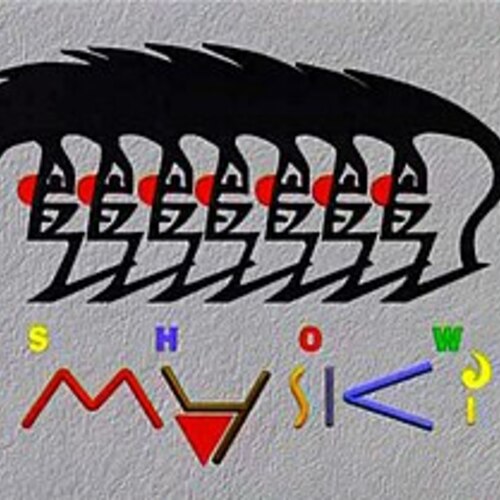
Georgii Deliev, Mask Show (Маски Шоу), 1991-2006.
title screen, "Maski-Show"/"Maski-Show", 1991 by Georgi Deliev, showing a stylized image of multiple people in clown make-up.
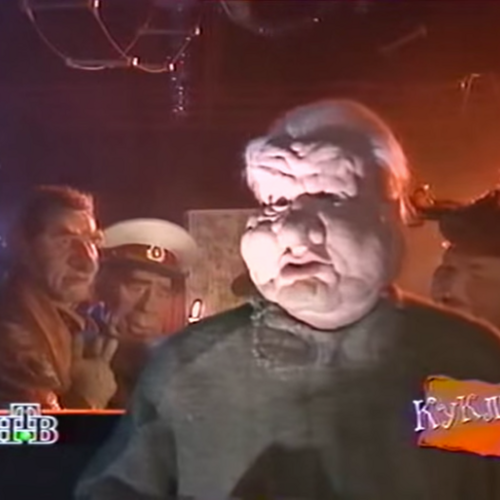
Kukly ["Dolls'], still from episode 2 “The Old New Year” (01/07/1995) featuring the first appearance of Boris Yelstin’s puppet on the show.
Still from Dolls"/"Kukly", 1994-2002, an influential political satire showing several politicians as puppets.
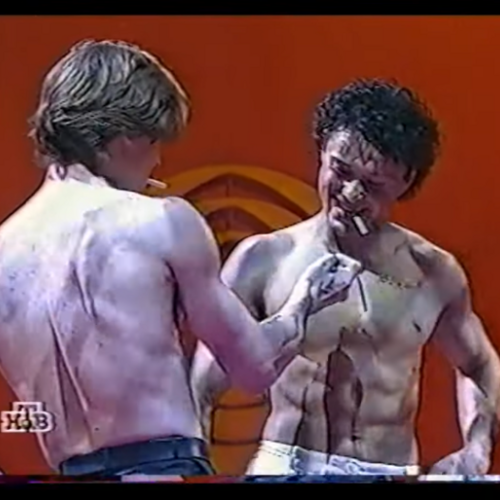
Still from the television show “About It” with host Elena Khanga, Episode “Homosexuality”, 1998
Image of two shirtless men lighting cigarettes in the course of a dance performance illustrating homosexuality
Svetlana Baskova captures the surreal, deeply violent, and grotesque essence of the 1990s and the Chechen wars in her cult trash movie, Zelenyi slonik (The little green elephant, 1999).
An excerpt from Svetlana Baskova’s film Zelenyi slonik (The little green elephant, 1999).