Artifacts
1986
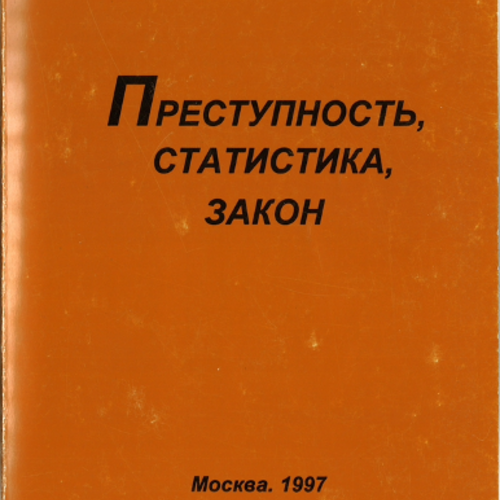
Russian Crime Statistics, 1980–1996
Nothing characterized the everyday experience of the urban Russian 1990s like crime; as shown in this first comprehensive statistical study of the 1990s, crime was just as bad as everyone had known. But the numbers also reveal some unexpected trends.
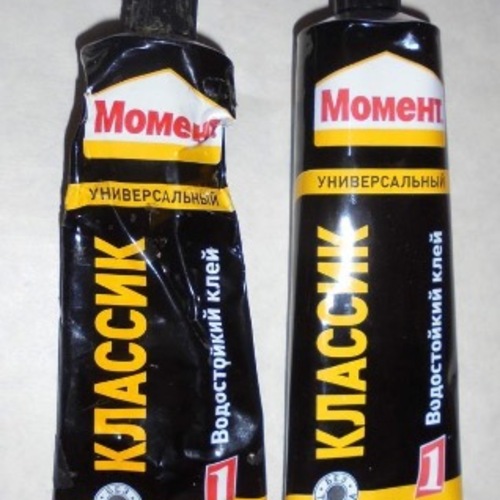
Klei-Moment
Made by the German Henkel company, Moment glue was a staple of post-Soviet hobbyists. It also became one of the prefered drugs among the post-Soviet youth. The brand name became synonymous with huffing itself.
AIDS: More Questions than Answers
Late-Soviet mainstream-press article about the AIDS epidemic (from the newspaper Литературная газета)
“Dictatorship of Conscience”
Play by Mikhail Shatrov that opened at the Lenin Komsomol Theather in Moscow, Feb. 1986
Perestroika Women Speak to US Women
A clip from one of many Perestroika-era televised conversations between American and Soviet "regular people," in which they find common ground with the help of long-time Soviet propagandist and future star of liberal post-Soviet TV, Vladimir Pozner
Artifact 00002
Tatiana Samolis, "Ochishchenie," Pravda
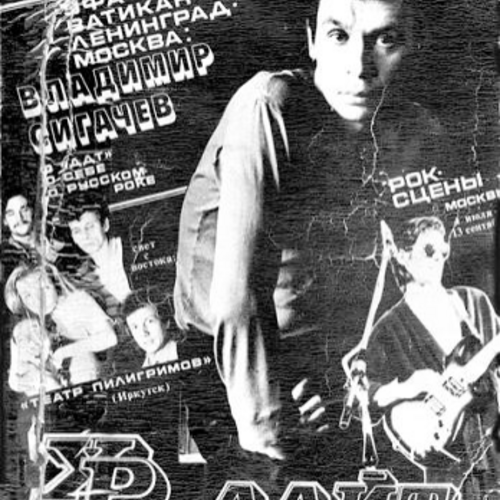
Urlait Music Journal (Samizdat) 1985-1992
Moscow's samizdat music journal, which followed in the footsteps of Lenigrad's Roksi while forging a new journalistic style. The journal positioned itself to in many ways reject the Leningrad scene. Despite Moscow-based bands generally leaning towards a more avant-garde, art-rock aesthetic, Urlait made a point to promote so-called "national rock." According to Urlait's founder I. Smirnov, bands like DDT, DK, and Oblachnyi Krai (Yuri Loza) were said to be "oriented towards national problems, in opposition to estrada and the confluence of Western and domestic cultural traditions."
Tusovka Music Journal (Samizdat)
A central zine of the Siberian underground music community. One of Tusovka's central feats was duping the KGB into allowing the continuation of its publication and dissemination. Before the first issue went to print, the journal's founder Valerii Murzin took the bold step of delivering the pre-print manuscript of the journal to his local KGB office, in this way guaranteeing the publication's survival.
Band Survey from the Leningrad Rock Club completed by Sergei Kuryokhin of Pop Mekhanika
An official rock club survey in which Sergei Kuryokhin utlilizes the late-Soviet aesthetic of stiob and performative socialism to underscore the club's dependence on the KGB
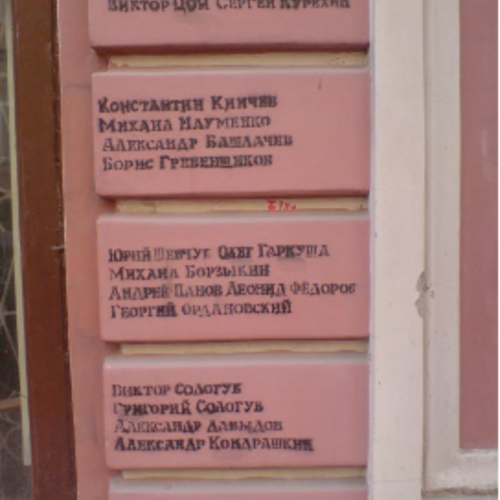
Leningrad Rock Club
A wall of graffiti in the courtyard of the Leningrad Rock Club (1981-1991) on 13 Rubinshteyna Street in Leningrad (St. Petersburg), which featured fan street art dedicated to USSR's most revered rock-music collectives. When the wall was painted over in 2010 by the bulding's new proprietor, this caused a public outcry from both rock fans and the many surviving musicians from that era, who sought to preserve the LRC's legacy and designmate the wall and the building a historical landmark.
The First Article on Prostitution in the Soviet Union
"The White Dance" by Evgeny Dodolev broke a major taboo of Soviet press, by doing a report on the existence of foreign-currency prostitutes in the USSR. Dodolev would then go on to be a part of the Vzgliad team, as well as the creator of 1990s "Novyi vzgliad"
"Moscovskii komsomolets," 19-21 November, 1986
The World Made of Plastic Has Won
Egor Letov performs his song “Moia oborona” (My defense), during his “concert in the hero city Leningrad,” part of Grazhdanskaia oborona’s 1994 tour Russkii proryv (Russian breakthrough).
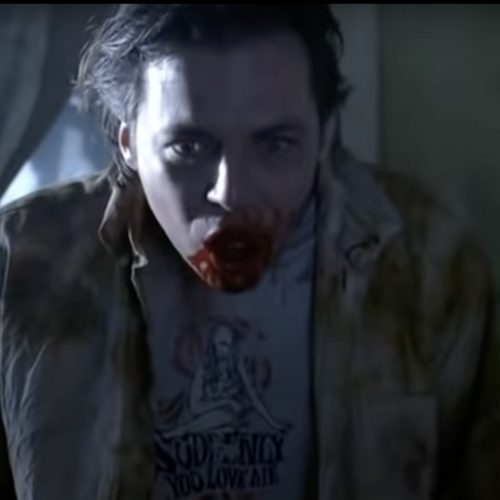
Mumiy Troll's Breakthrough “Utekai” (Take Off) Becomes the Song of the Year 1997
Video and lyrics of Mumiy Troll’s 1997 breakthrough song “Utekai” (Beat it) displaying the combination of surrealism, dark humor, and provincial romanticism that comes to shape the band’s trademark style.