Search
Thematic Tags: Rock Music
19 Results
Yahha, documentary film
Rashid Nugmanov's course project for Sergei Solov'ev's workshop at VGIK, which included some of the first film footage of the everyday life of the Leningrad rock music scene.
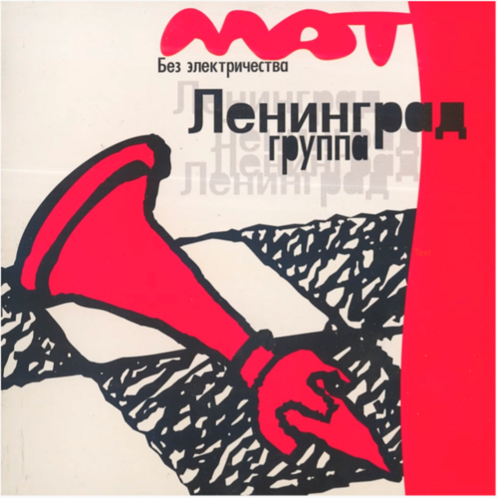
Mat bez elektrichestva. (Profanity without electricity). A ska-punk-rock album by Leningrad. (Cover art and excerpts)
The second studio rock/ska album by the legendary St. Petersburg band Leningrad. With its heavy use of profanity, the album etablished Sergei Shnurov as the band's unequivocal frontman and placed Leningrad on the map as a new and influential direction in post-Soviet rock music.
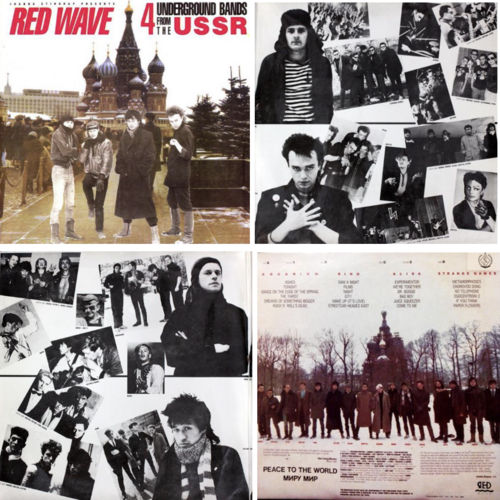
Red Wave: 4 Underground Bands from the USSR
A split double album, recorded and produced by Joanna Stingray, which was the first release of Russian rock music in the west. The album, totaling 15,000 copies, features compositions from four Leningrad-based rock bands: Aquarium, Kino, Alisa, and Strange Games (Strannye Igry). Stingray hoped to popularize Soviet rock music in the West in a direct affront to existing Cold War policies.
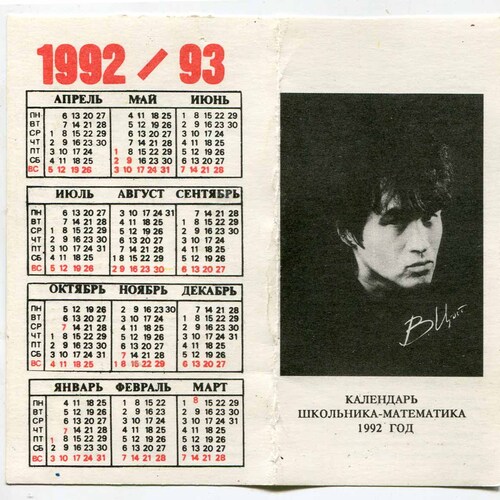
1992-1993 School math calendar
1992-1993 Math calendar intended for a secondary school student with a photograph of Viktor Tsoi, leader of the rock band Kino on its front cover.
Alexei Uchitel's 1992 documentary film Posldenii Geroi.
Made with the collaboration of Tsoi's widow Marianna Tsoi, the film includes scenes from Viktor Tsoi's funeral and chronicles the mass mourning of the late musician, and the perestroika era by proxy.
Musical Ring (Музыкальный Ринг). Television program. Musical guest: Sergei Kuryokhin and Pop-Mekhanika. (February 1, 1987.)
Making its debut in 1984, Musical Ring was a Perestroika-era Soviet television program, dedicated to showcasing new musical talent and fostering a live audience Q&A. This 1987 segment features composer and avant-garde jazz pianist Sergei Kuryokhin and his band Pop Mekhanika. Throughout the episode Kuryokhin artfully wields the postmodern rhetorical weapon of styob, imbuing formal musical discourse with farce, an artistic and communicative device that became one a defining mode of expression during perestroika and the early post-Soviet period.

Rok Protiv Terrora Music Festival. April 6, 1991, Moscow.
A not-for-profit charitable concert that took place at Moscow's Kryl'ia Sovetov Stadium on April 6, 1991, concieved by the Garik Sukachev, the leader of the rock band Brigada S. Intially the event was meant to be an act of protest against police brutality, but grew to include all forms of state organized terror: political, social, and moral. The festival received organizational support from VID, Komsomolskaya Pravda and the Fili Cultural Center. Fourteen Soviet rock bands took part in the festival.
Band Survey from the Leningrad Rock Club completed by Sergei Kuryokhin of Pop Mekhanika
An official rock club survey in which Sergei Kuryokhin utlilizes the late-Soviet aesthetic of stiob and performative socialism to underscore the club's dependence on the KGB
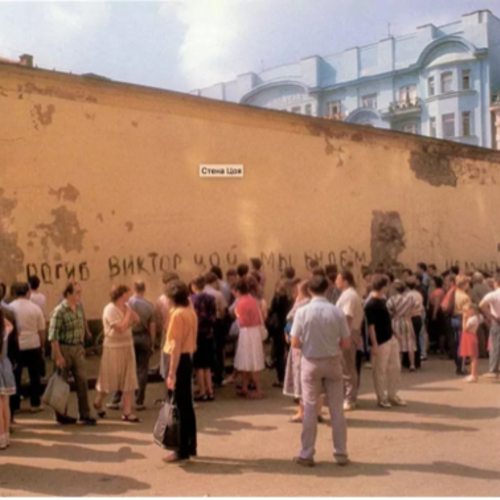
"Tsoi's Wall" on Arbat
A wall of fan graffiti dedocated to the late Soviet rock star Viktor Tsoi on Moscow's famous Arbat Street.
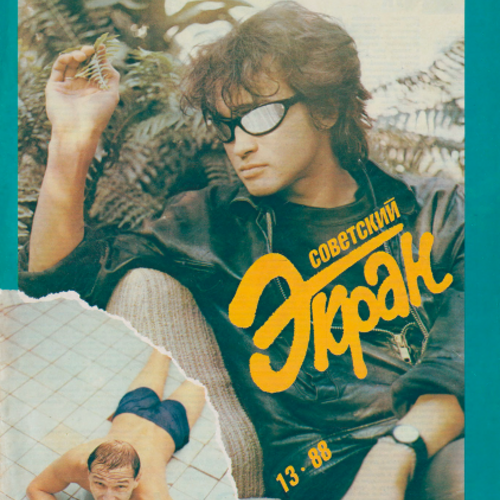
Sovetskii Ekran with Tsoi on cover
The cover image from volume 13 (1988) depicts Viktor Tsoi of Kino and Petr Mamonov of the Moscow-based rockband Zvuki Mu. Both artists appeared in Rashid Nugmanov 1988 film The Needle (Igla, 1988), which cemented Tsoi’s rock stardom and firmly established
Mamonov as a serious actor. He went on to star in Pavel Lungin’s drama Taxi Blues (Taksi Bliuz, 1990), which was released to international acclaim and became one of the classic examples of the perestroika-era chernukha aesthetic.
Nautilus Pompilius performing "Last Letter" (Poslednee Pis'mo: Gudbai Amerika)
A televised performance of Nautilus Pomplius's cult song lamenting the frustrated hopes of Perestroika-era Westernization, which was further popularized by its prominent position in Aleksei Balabanov's popular gangster drama Brother 2 (2000), inscribing it into the post-Soviet cultural and cinematic discourse as a sort of antidote to Viktor Tsoi's "Changes!" at the end of S. Solov'ev's ASSA.
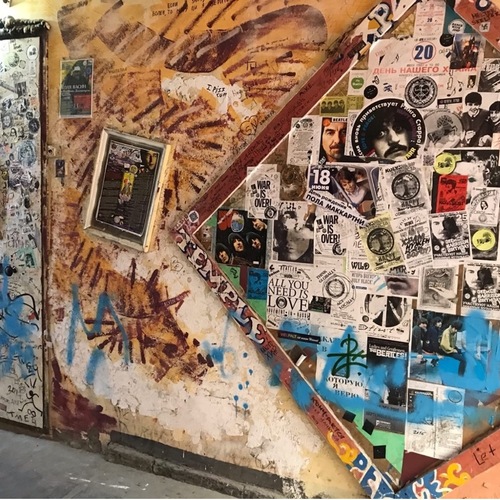
Kolia Vasin’s petition for the “John Lennon Church of Rock-n-Roll” (Khram Rok-n-rolla imeni Dzhona Lennona.) in St. Petersburg (April 1992).
An official petition for the establishment of the so-called "John Lennon Church of Rock-n-Roll" in St. Petersburg, conceived by the self-described "Beatlelologist" Kolia Vasin, a major personality in and driver behind the formation of Leningrad's rock music community.
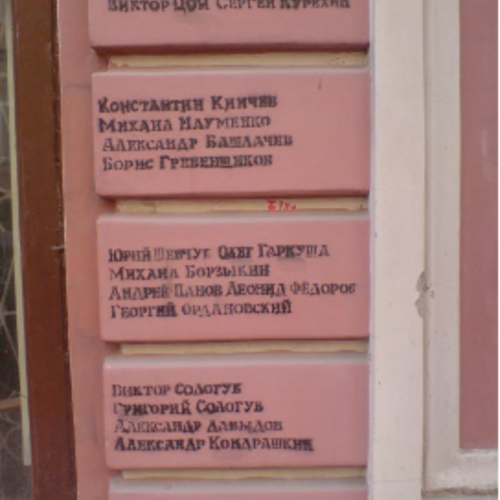
Leningrad Rock Club
A wall of graffiti in the courtyard of the Leningrad Rock Club (1981-1991) on 13 Rubinshteyna Street in Leningrad (St. Petersburg), which featured fan street art dedicated to USSR's most revered rock-music collectives. When the wall was painted over in 2010 by the bulding's new proprietor, this caused a public outcry from both rock fans and the many surviving musicians from that era, who sought to preserve the LRC's legacy and designmate the wall and the building a historical landmark.
ASSA, motion picture
Scene of Viktor Tsoi performing his rock-anthem "Changes!" (“Peremen!”) during the last seven minutes of Sergei Solov’ev’s 1987 film Assa. Kino's cinematic performance became a defining mass-cultural event that legitimized Soviet rock music as a product of the official mainstream collaborating with the Soviet underground rock movement, crowning Tsoi as USSR's ultimate rock star, and promoting rock music as a legitimate artform for the late-Soviet audience.
Roksi Music Journal (Samizdat) (Vol. 15, 1990.)
The final print issue of the Leningrad-based samizdat rock journal Roksi, which was
founded in 1977 by members of the rock band Aquarium and the future president
of the Leningrad Rock Club. Considered to be the first rock publication in the
Soviet Union, which was subject to raids by the KGB, Roksi eventually
became the official newsletter of the LRC, and thus legitimized by the state
apparatus.
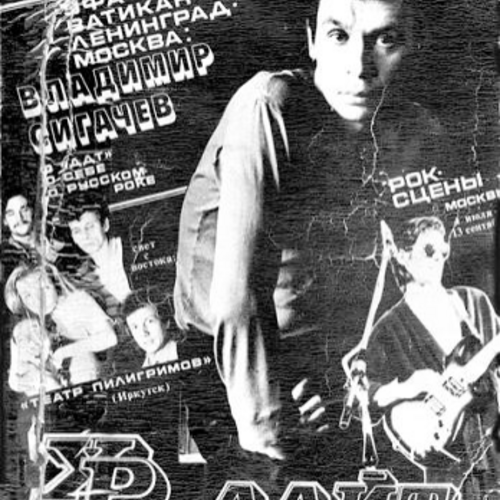
Urlait Music Journal (Samizdat) 1985-1992
Moscow's samizdat music journal, which followed in the footsteps of Lenigrad's Roksi while forging a new journalistic style. The journal positioned itself to in many ways reject the Leningrad scene. Despite Moscow-based bands generally leaning towards a more avant-garde, art-rock aesthetic, Urlait made a point to promote so-called "national rock." According to Urlait's founder I. Smirnov, bands like DDT, DK, and Oblachnyi Krai (Yuri Loza) were said to be "oriented towards national problems, in opposition to estrada and the confluence of Western and domestic cultural traditions."
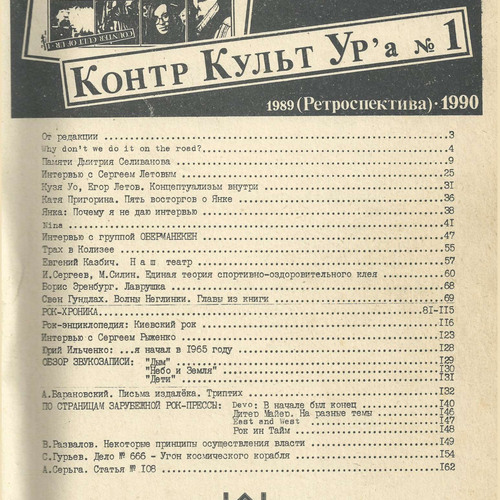
Kontr Kult Ur'a Music Journal (Samizdat) 1989-1991
Kontr Kult Ur'a was envisioned as an ideological reincarnation of Urlait, which was deemed by the new editorial board as "cult-like" and "radically positioned." The journal also was one of the first samizdat rock zines in Moscow and Leningrad to prominently feature and promote Siberian punk rock, including Egor Letov, Civil Defence, and Yanka.
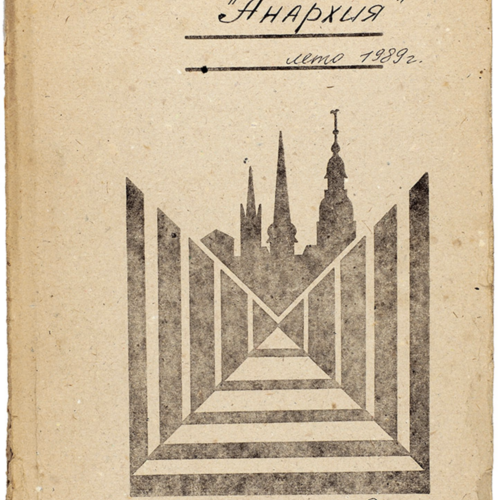
Anarkhia Music Journal (Samizdat)
According to rock historican Alexander Kushnir, Tiumen's samizdat music zine Anarkhia served as "the Bible of western Siberian punk rock," standing in opposition to the other Soviet rock samizdat publications with its strict affinity to punk as its central aesthetic ideology.
Tusovka Music Journal (Samizdat)
A central zine of the Siberian underground music community. One of Tusovka's central feats was duping the KGB into allowing the continuation of its publication and dissemination. Before the first issue went to print, the journal's founder Valerii Murzin took the bold step of delivering the pre-print manuscript of the journal to his local KGB office, in this way guaranteeing the publication's survival.