Search
Thematic Tags: Post Soviet
18 Results
Petrovich the Soviet everyman survives post-Soviet Russia at Kommersant
A collection of "Petrovich" cartoons at Russia’s ‘first business newspaper,’ Kommersant, drawn by Andrei Bil’zho. They depict a hapless and repulsive comic personage, born and raised in the Soviet era and now trying to get used to the realia of post-Soviet capitalism.
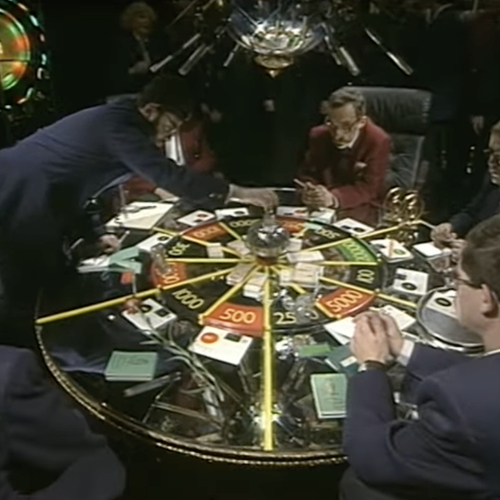
The Raspberry blazer as the uniform of the New Russian
The origins and the meaning of the raspberry blazer as the iconic dresscode of New Russians in the early 1990s
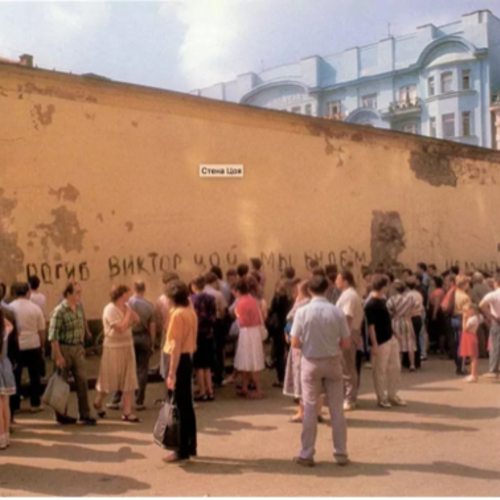
"Tsoi's Wall" on Arbat
A wall of fan graffiti dedocated to the late Soviet rock star Viktor Tsoi on Moscow's famous Arbat Street.
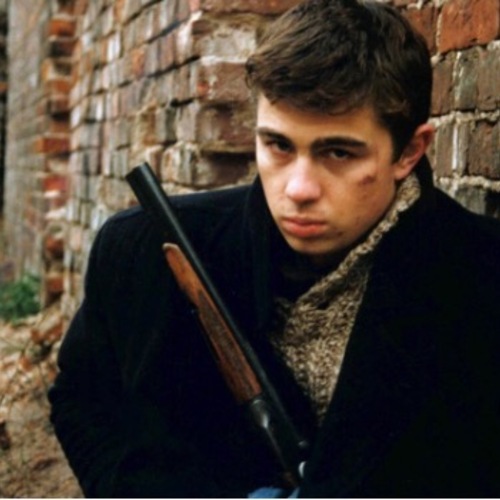
Brother. Motion Picture. Dir. Aleksei Balabanov (Excerpts)
Aleksei Balabanov's cult crime drama, which made its title character, the loveable killer Danila Bagrov into a youth idol and a national emblem of post-Soviet masculinity
Brother 2. Motion Picture. Dir. Aleksei Balabanov (Excerpts)
A sequel of the original Brother, which is partially set in the United States, where national hero Danila Bagrov avenges his friend's death, while reflecting Russo-American cultural differences
Interview with Sergei Bodrov Jr. (1997) (selections)
Interview with actor Sergei Bodrov Jr., who famously played the loveable gangster Danila Bagrov in Aleksei Balabanov’s films Brother and Brother 2, becoming a post-Soviet cultural icon.
Konstantin Ernst's "Matador"
A clip from the art show "Matador," created by VID's junior partner, Konstantin Ernst, in 1990, and then remained his project as Ernst rose up and took VID's helm. This particular clip is from the show on Contemporary Art. It has a remarkably joyously elitist feel that is consistent with the "new Russian" ethos of ViD.
"Politburo" versus the specter of communism, during the 1993 political crisis
A clip from "Politburo," a weekly commentary show from Aleksandr Politkovsky (a Vzgliad alum). This show takes place just prior to May 1, and just after the 1993 Referendum, as well as Rutskoi's first salvo in the "Kompromat Wars," regarding 11 suitcases of materials documenting Yeltsin's corruption. Here, Politkovsky is happy to return the favor to Rutskoy. The show ends with anti-communist chiastushki for Mayday.
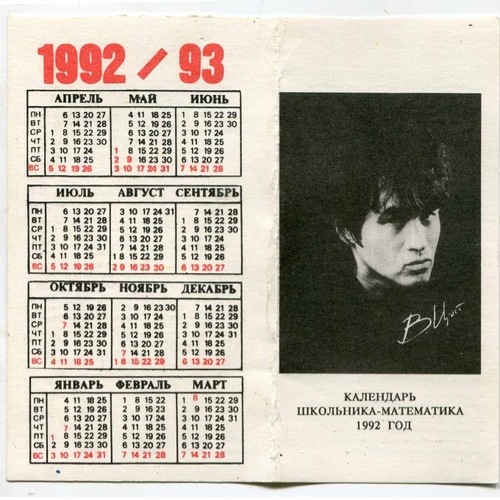
1992-1993 Math calendar intended for a secondary school student with a photograph of Viktor Tsoi, frontman of the rock band Kino on its front cover.
Serving as a testament to the meteoric rise in popularity and the widespread influence of rock music culture on the everyday lives of the newly post-Soviet citizens, this 1992/1993 math calendar, intended for schoolchildren set to master the concepts of algebra and geometry, cements the shift of public opinion about the position and status of rock musicians in Soviet/post-Soviet society from that of ideologically nefarious loafers to newly minted fallen heroes and teenage idols. The recently deceased Tsoi is inscribed in this artifact as an officially sanctioned role model for Russian youth, whose death is emblematic of the fading old regime, and whose music is a fully commercialized consumer product.
Ernst’s “Russian Project” as cultural therapy for the post-Soviet Russian masses
Konstantin Ernst’s series of social advertisements extolling Russia’s shared values and national identity at a time of seeming social crisis in the mid-1990s
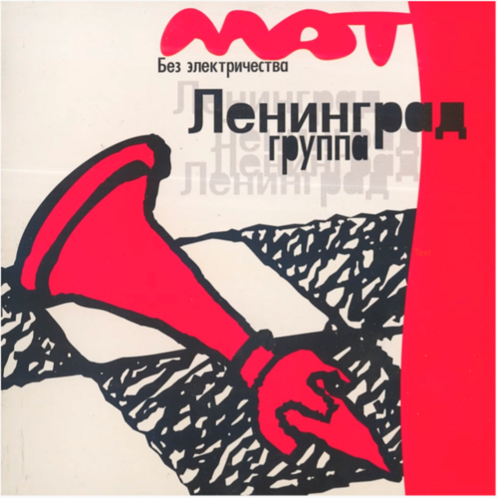
Mat bez elektrichestva. (Profanity without electricity). A ska-punk-rock album by Leningrad. (Cover art and excerpts)
The second studio rock/ska album by the legendary St. Petersburg band Leningrad. With its heavy use of profanity, the album etablished Sergei Shnurov as the band's unequivocal frontman and placed Leningrad on the map as a new and influential direction in post-Soviet rock music.
Loss of the Soviet Nation at KVN
The Winter 1992 opening broadcast of the amateur variety and improv contest show KVN, filmed just a few months after the dissolution of the USSR, with former Soviet university teams lamenting the rise of national borders around them
The post-Soviet people’s show, Pole Chudes
A clip from the most-watched entertainment show of the 1990s, "Pole Chudes [Field of Miracles],” which renders the post-Soviet narod of regular folks, engaged in a free-flowing relationship with capitalism and Russia’s central television
Referendum 1993: the "Yes Yes No Yes" campaign
Da, Da, Net, Da- Agitational propaganda for the 1993 referndum, "Yes, yes, no, yes"- note the slogan at the end, "we are building a new Russia!"
"We Are Building Communism! / We Are Building a New Russia!"
Billboard for Peresvet Trading Firm in Moscow, playing off of an existing Soviet billboard just above it
"New Russians" at Kommersant
Series of articles from the nascent Kommersant Daily in late 1992-early 1993, assessing and explaining the nature of its target audience, the “New Russians”
The Glasnost Booth on the last October Revolution anniversary in the USSR
“Glas naroda [The People’s Voice]”– a booth installed in the middle of town, into which random people can enter and speak their minds. Episode from the Kremlin, on USSR’s last anniversary of the October Revolution, in 1991.

TaMtAm Rock Club documentary by German television (1993)
The first and until 1994 the only Western-style rock club in Russia, which was founded in 1991 by cellist Vsevolod (Seva) Gakkel (Akvarium) after he visited the famous music club CBGB in New York. The club specialized in punk rock specifically, providing the budding underground punk scene in Russia a much-needed performance venue and cultural legitimacy. Some have accused Gakkel's establishment for breeding far-right nationalist sentiments among Russia's youth subcultures (or at least providing them with a physical organizational platform) in the early 1990s. The fact that a German television production company took interest in TaMtAm is also a testament to punk as a truly transnational movement after fall of the Berlin Wall.