Search
Thematic Tags: Music
10 Results
Yahha, documentary film
Rashid Nugmanov's course project for Sergei Solov'ev's workshop at VGIK, which included some of the first film footage of the everyday life of the Leningrad rock music scene.
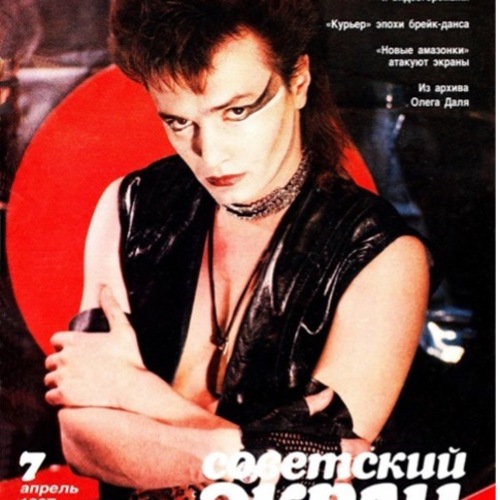
Sovetskii Ekran with K. Kinchev on the cover
Popular film magazines like Soviet Screen (Sovetskii Ekran), were instrumental in establishing rock musicians as cultural icons. Volume 7 (1987) publication places Konstantin Kinchev, frontman of the Leningrad band Alisa, on the cover of its “youth issue” (molodezhnyi vypusk) in an effort to promote the Valerii Ogorodnikov’s film The Burglar (Vzlomshchik, 1987) in which Kinchev plays the lead role.
"Only the Wildest and Craziest": Kurekhin's Neo-Avant-Garde on Radio-1, Petrograd
An episode of Kuryokhin’s radio program “Vasha liubimaia sobaka” (aka “Nasha malenkaia rybka,” aka “Russkii liudoed”).
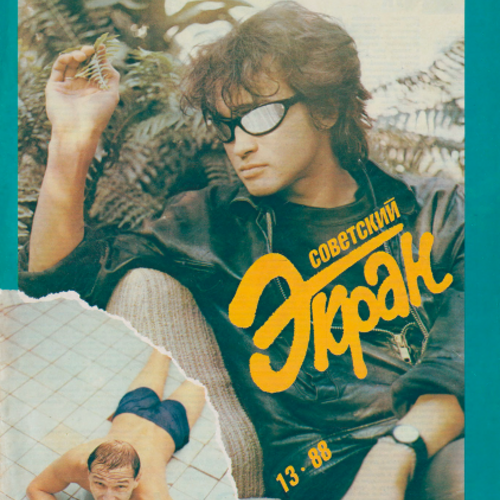
Sovetskii Ekran with Tsoi on cover
The cover image from volume 13 (1988) depicts Viktor Tsoi of Kino and Petr Mamonov of the Moscow-based rockband Zvuki Mu. Both artists appeared in Rashid Nugmanov 1988 film The Needle (Igla, 1988), which cemented Tsoi’s rock stardom and firmly established
Mamonov as a serious actor. He went on to star in Pavel Lungin’s drama Taxi Blues (Taksi Bliuz, 1990), which was released to international acclaim and became one of the classic examples of the perestroika-era chernukha aesthetic.
Nautilus Pompilius performing "Last Letter" (Poslednee Pis'mo: Gudbai Amerika)
A televised performance of Nautilus Pomplius's cult song lamenting the frustrated hopes of Perestroika-era Westernization, which was further popularized by its prominent position in Aleksei Balabanov's popular gangster drama Brother 2 (2000), inscribing it into the post-Soviet cultural and cinematic discourse as a sort of antidote to Viktor Tsoi's "Changes!" at the end of S. Solov'ev's ASSA.
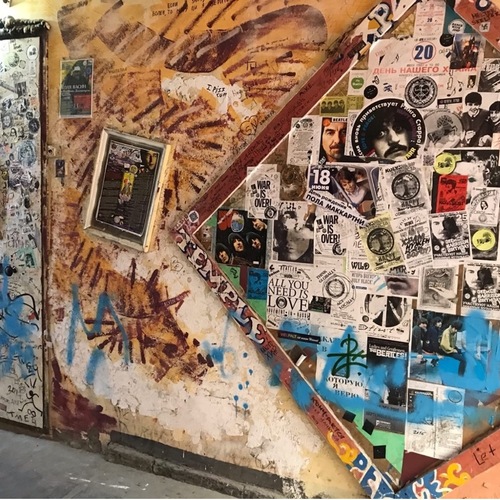
Kolia Vasin’s petition for the “John Lennon Church of Rock-n-Roll” (Khram Rok-n-rolla imeni Dzhona Lennona.) in St. Petersburg (April 1992).
An official petition for the establishment of the so-called "John Lennon Church of Rock-n-Roll" in St. Petersburg, conceived by the self-described "Beatlelologist" Kolia Vasin, a major personality in and driver behind the formation of Leningrad's rock music community.
Roksi Music Journal (Samizdat) (Vol. 15, 1990.)
The final print issue of the Leningrad-based samizdat rock journal Roksi, which was
founded in 1977 by members of the rock band Aquarium and the future president
of the Leningrad Rock Club. Considered to be the first rock publication in the
Soviet Union, which was subject to raids by the KGB, Roksi eventually
became the official newsletter of the LRC, and thus legitimized by the state
apparatus.
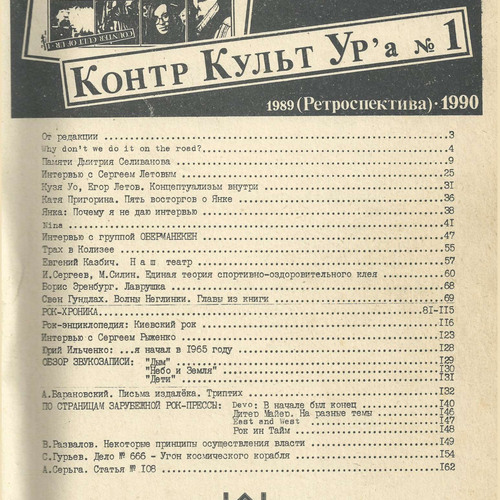
Kontr Kult Ur'a Music Journal (Samizdat) 1989-1991
Kontr Kult Ur'a was envisioned as an ideological reincarnation of Urlait, which was deemed by the new editorial board as "cult-like" and "radically positioned." The journal also was one of the first samizdat rock zines in Moscow and Leningrad to prominently feature and promote Siberian punk rock, including Egor Letov, Civil Defence, and Yanka.
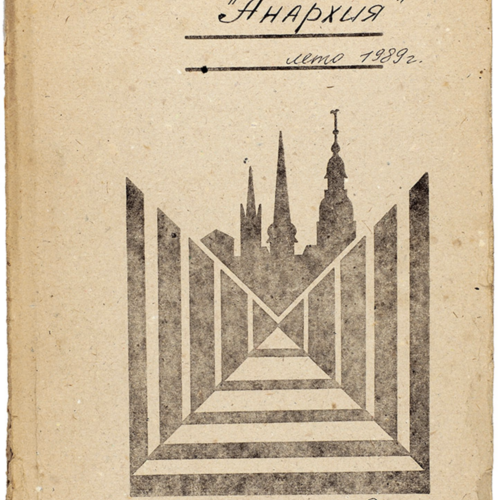
Anarkhia Music Journal (Samizdat)
According to rock historican Alexander Kushnir, Tiumen's samizdat music zine Anarkhia served as "the Bible of western Siberian punk rock," standing in opposition to the other Soviet rock samizdat publications with its strict affinity to punk as its central aesthetic ideology.
Tusovka Music Journal (Samizdat)
A central zine of the Siberian underground music community. One of Tusovka's central feats was duping the KGB into allowing the continuation of its publication and dissemination. Before the first issue went to print, the journal's founder Valerii Murzin took the bold step of delivering the pre-print manuscript of the journal to his local KGB office, in this way guaranteeing the publication's survival.