Search
Thematic Tags: Journalism
8 Results
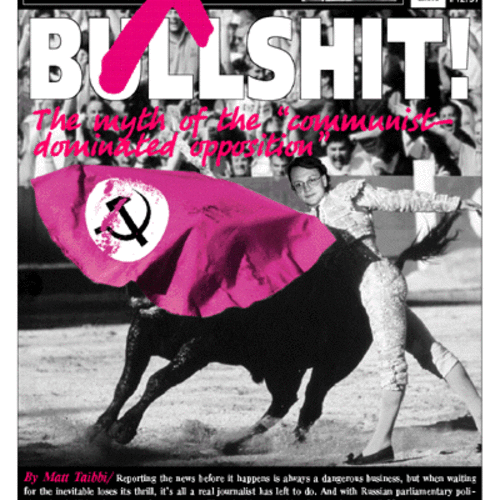
the eXile: Bespredel for Expats
A selection of articles from the English-language magazine the eXile, which combined gonzo journalism and styob and provided unique reporting on post-Soviet Russia, while at the same time fetishizing the 1990s lawlessness or bespredel and the Westerners’ exploitation of Russia (sexual and otherwise) that it itself denounced and condemned.
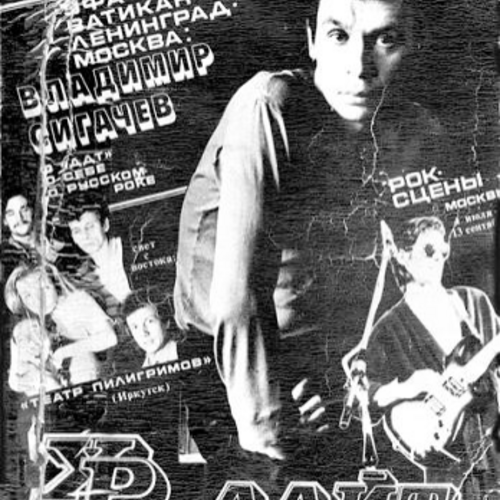
Urlait Music Journal (Samizdat) 1985-1992
Moscow's samizdat music journal, which followed in the footsteps of Lenigrad's Roksi while forging a new journalistic style. The journal positioned itself to in many ways reject the Leningrad scene. Despite Moscow-based bands generally leaning towards a more avant-garde, art-rock aesthetic, Urlait made a point to promote so-called "national rock." According to Urlait's founder I. Smirnov, bands like DDT, DK, and Oblachnyi Krai (Yuri Loza) were said to be "oriented towards national problems, in opposition to estrada and the confluence of Western and domestic cultural traditions."
Top Secret: Investigative Journalism and True Crime During Perestroika
Sovershenno sekretno, the first privately owned periodical in Soviet Russia since 1917, showcased a combination of transparency and sensationalism that became a distinguishing feature of journalistic writing in the post-Soviet period.
Putting the "Spotlight" on an experimental three-hour line for Soviet luxury clothes
Prozhektor Perestroiki [Perestroika's Spotlight], a glasnost-era televised investigative journalism project, investigates a three-hour line for luxury clothes at the recently opened Luxe Fashion Center, where the reporters discover the problem of supply and demand in the USSR.
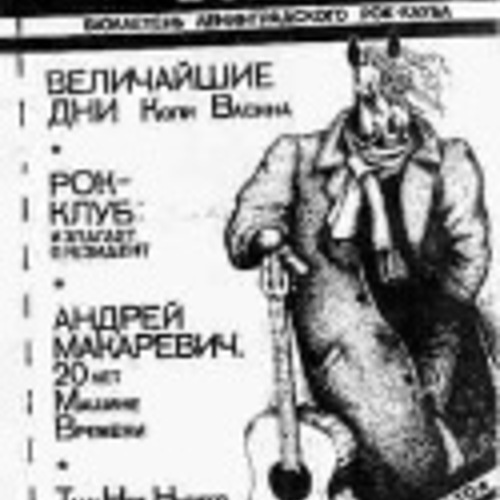
Roksi Music Journal (Samizdat) (Vol. 15, 1990.)
The final print issue of the Leningrad-based samizdat rock journal Roksi, which was
founded in 1977 by members of the rock band Aquarium and the future president
of the Leningrad Rock Club. Considered to be the first rock publication in the
Soviet Union, which was subject to raids by the KGB, Roksi eventually
became the official newsletter of the LRC, and thus legitimized by the state
apparatus.
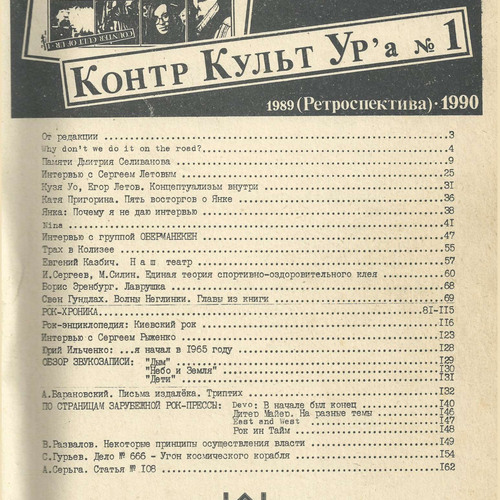
Kontr Kult Ur'a Music Journal (Samizdat) 1989-1991
Kontr Kult Ur'a was envisioned as an ideological reincarnation of Urlait, which was deemed by the new editorial board as "cult-like" and "radically positioned." The journal also was one of the first samizdat rock zines in Moscow and Leningrad to prominently feature and promote Siberian punk rock, including Egor Letov, Civil Defence, and Yanka.
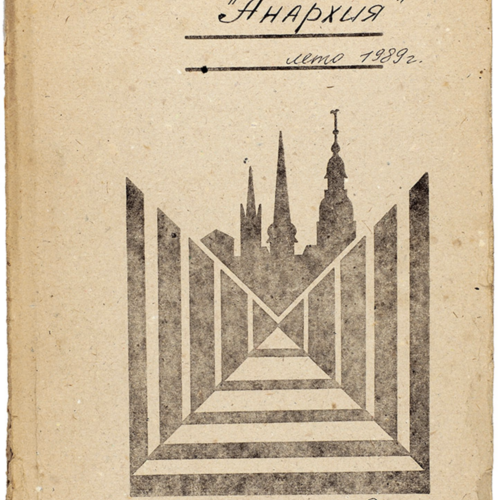
Anarkhia Music Journal (Samizdat)
According to rock historican Alexander Kushnir, Tiumen's samizdat music zine Anarkhia served as "the Bible of western Siberian punk rock," standing in opposition to the other Soviet rock samizdat publications with its strict affinity to punk as its central aesthetic ideology.
Tusovka Music Journal (Samizdat)
A central zine of the Siberian underground music community. One of Tusovka's central feats was duping the KGB into allowing the continuation of its publication and dissemination. Before the first issue went to print, the journal's founder Valerii Murzin took the bold step of delivering the pre-print manuscript of the journal to his local KGB office, in this way guaranteeing the publication's survival.