Search
Thematic Tags: Cinema
9 Results
Svetlana Baskova captures the surreal, deeply violent, and grotesque essence of the 1990s and the Chechen wars in her cult trash movie, Zelenyi slonik (The little green elephant, 1999).
An excerpt from Svetlana Baskova’s film Zelenyi slonik (The little green elephant, 1999).
Interview with Viktor Tsoi and Natalia Razlogova. Conducted by Sergei Sholokhov at the Golden Duke Film Festival in Odessa, 1988
This eight-minute interview, which took place on a cruise ship chartered for Odessa’s Golden Duke Film Festival in September 1988, depicts rock musician Viktor Tsoi and film critic Natalia Razlogova speaking to a journalist about the insurmountable generational tensions that inhabit the Soviet film industry. Tsoi was attending the festival to promote the film The Needle, where he played the lead role. The interview is significant highlighting the aesthetic and ideological crisis of the Soviet film industry in the last Soviet decade.
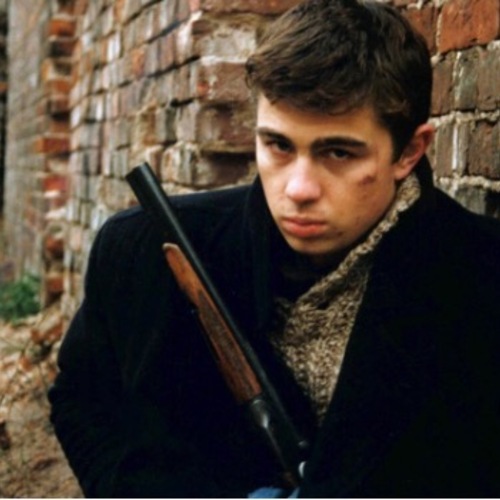
Brother. Motion Picture. Dir. Aleksei Balabanov (Excerpts)
Aleksei Balabanov's cult crime drama, which made its title character, the loveable killer Danila Bagrov into a youth idol and a national emblem of post-Soviet masculinity
Brother 2. Motion Picture. Dir. Aleksei Balabanov (Excerpts)
A sequel of the original Brother, which is partially set in the United States, where national hero Danila Bagrov avenges his friend's death, while reflecting Russo-American cultural differences
Interview with Sergei Bodrov Jr. (1997) (selections)
Interview with actor Sergei Bodrov Jr., who famously played the loveable gangster Danila Bagrov in Aleksei Balabanov’s films Brother and Brother 2, becoming a post-Soviet cultural icon.
ASSA, motion picture
Scene of Viktor Tsoi performing his rock-anthem "Changes!" (“Peremen!”) during the last seven minutes of Sergei Solov’ev’s 1987 film Assa. Kino's cinematic performance became a defining mass-cultural event that legitimized Soviet rock music as a product of the official mainstream collaborating with the Soviet underground rock movement, crowning Tsoi as USSR's ultimate rock star, and promoting rock music as a legitimate artform for the late-Soviet audience.
Yahha, documentary film
Rashid Nugmanov's course project for Sergei Solov'ev's workshop at VGIK, which included some of the first film footage of the everyday life of the Leningrad rock music scene.
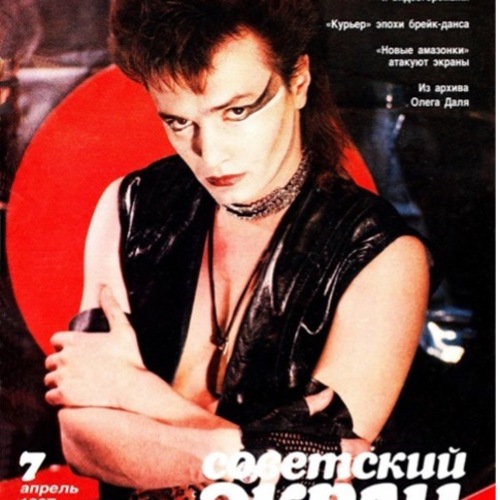
Sovetskii Ekran with K. Kinchev on the cover
Popular film magazines like Soviet Screen (Sovetskii Ekran), were instrumental in establishing rock musicians as cultural icons. Volume 7 (1987) publication places Konstantin Kinchev, frontman of the Leningrad band Alisa, on the cover of its “youth issue” (molodezhnyi vypusk) in an effort to promote the Valerii Ogorodnikov’s film The Burglar (Vzlomshchik, 1987) in which Kinchev plays the lead role.
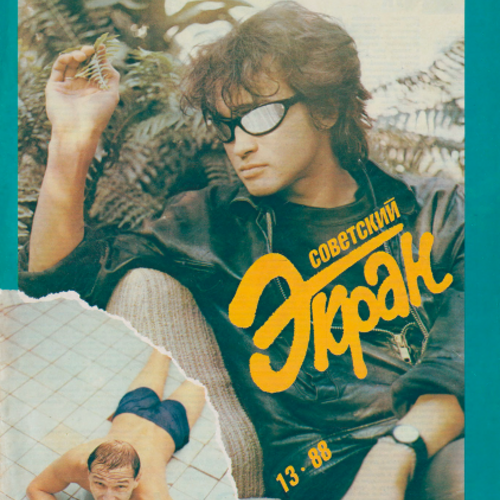
Sovetskii Ekran with Tsoi on cover
The cover image from volume 13 (1988) depicts Viktor Tsoi of Kino and Petr Mamonov of the Moscow-based rockband Zvuki Mu. Both artists appeared in Rashid Nugmanov 1988 film The Needle (Igla, 1988), which cemented Tsoi’s rock stardom and firmly established
Mamonov as a serious actor. He went on to star in Pavel Lungin’s drama Taxi Blues (Taksi Bliuz, 1990), which was released to international acclaim and became one of the classic examples of the perestroika-era chernukha aesthetic.