Search
Thematic Tags: Soviet Underground
4 Results
TaMtAm Rock Club documentary by German television (1993)
The first and until 1994 the only Western-style rock club in Russia, which was founded in 1991 by cellist Vsevolod (Seva) Gakkel (Akvarium) after he visited the famous music club CBGB in New York. The club specialized in punk rock specifically, providing the budding underground punk scene in Russia a much-needed performance venue and cultural legitimacy. Some have accused Gakkel's establishment for breeding far-right nationalist sentiments among Russia's youth subcultures (or at least providing them with a physical organizational platform) in the early 1990s. The fact that a German television production company took interest in TaMtAm is also a testament to punk as a truly transnational movement after fall of the Berlin Wall.
Auktsyon’s performance at the 8th Leningrad Rock Club Festival
Live performance of the rock band Auktsyon at the Leningrad Rock Club. As an art-jazz-rock collective, Auktsyon was a genre-blending musical and performance phenomenon within the Leningrad underground, which distinguished itself from other bands with both its longevity and stylistic variation, gradually increasing antiestablishment content in its music throughout the post-Soviet period, while maintaining a layer of ideological ambiguity.
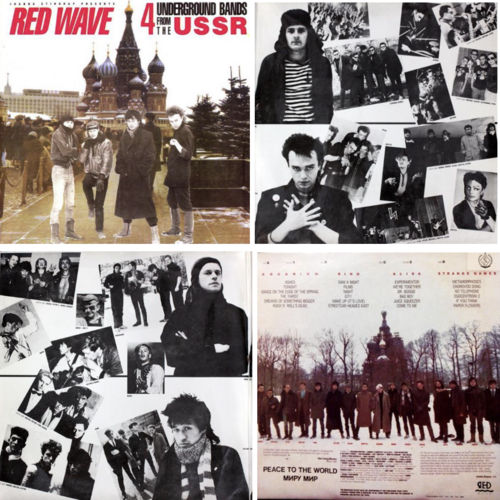
Red Wave: 4 Underground Bands from the USSR
A split double album, recorded and produced by Joanna Stingray, which was the first release of Russian rock music in the west. The album, totaling 15,000 copies, features compositions from four Leningrad-based rock bands: Aquarium, Kino, Alisa, and Strange Games (Strannye Igry). Stingray hoped to popularize Soviet rock music in the West in a direct affront to existing Cold War policies.
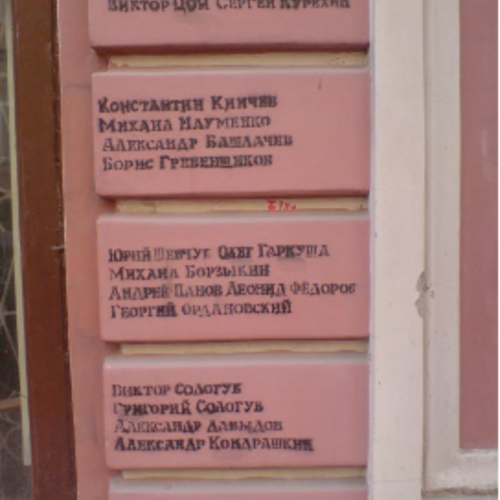
Leningrad Rock Club
A wall of graffiti in the courtyard of the Leningrad Rock Club (1981-1991) on 13 Rubinshteyna Street in Leningrad (St. Petersburg), which featured fan street art dedicated to USSR's most revered rock-music collectives. When the wall was painted over in 2010 by the bulding's new proprietor, this caused a public outcry from both rock fans and the many surviving musicians from that era, who sought to preserve the LRC's legacy and designmate the wall and the building a historical landmark.