Search
Thematic Tags: Leningrad Rock Club
10 Results
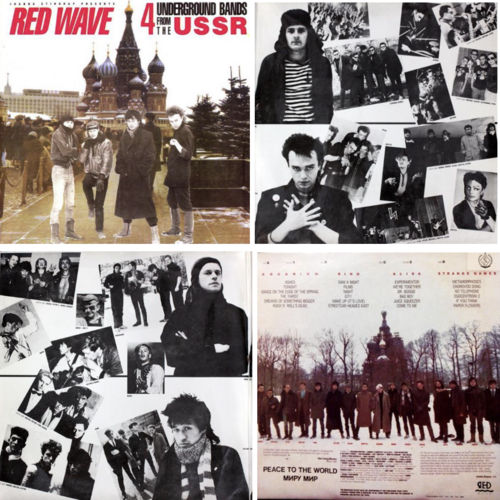
Red Wave: 4 Underground Bands from the USSR
A split double album, recorded and produced by Joanna Stingray, which was the first release of Russian rock music in the west. The album, totaling 15,000 copies, features compositions from four Leningrad-based rock bands: Aquarium, Kino, Alisa, and Strange Games (Strannye Igry). Stingray hoped to popularize Soviet rock music in the West in a direct affront to existing Cold War policies.
Auktsyon’s performance at the 8th Leningrad Rock Club Festival
Live performance of the rock band Auktsyon at the Leningrad Rock Club. As an art-jazz-rock collective, Auktsyon was a genre-blending musical and performance phenomenon within the Leningrad underground, which distinguished itself from other bands with both its longevity and stylistic variation, gradually increasing antiestablishment content in its music throughout the post-Soviet period, while maintaining a layer of ideological ambiguity.
Yahha, documentary film
Rashid Nugmanov's course project for Sergei Solov'ev's workshop at VGIK, which included some of the first film footage of the everyday life of the Leningrad rock music scene.
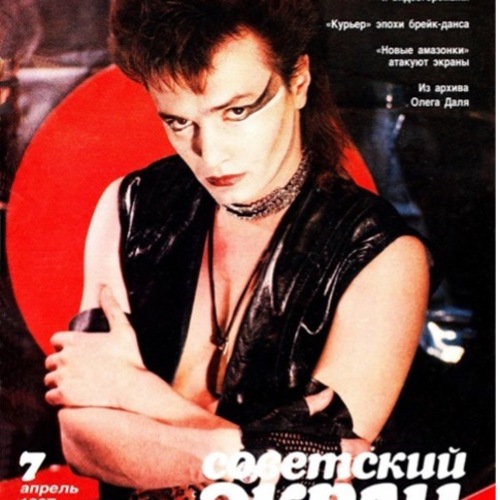
Sovetskii Ekran with K. Kinchev on the cover
Popular film magazines like Soviet Screen (Sovetskii Ekran), were instrumental in establishing rock musicians as cultural icons. Volume 7 (1987) publication places Konstantin Kinchev, frontman of the Leningrad band Alisa, on the cover of its “youth issue” (molodezhnyi vypusk) in an effort to promote the Valerii Ogorodnikov’s film The Burglar (Vzlomshchik, 1987) in which Kinchev plays the lead role.
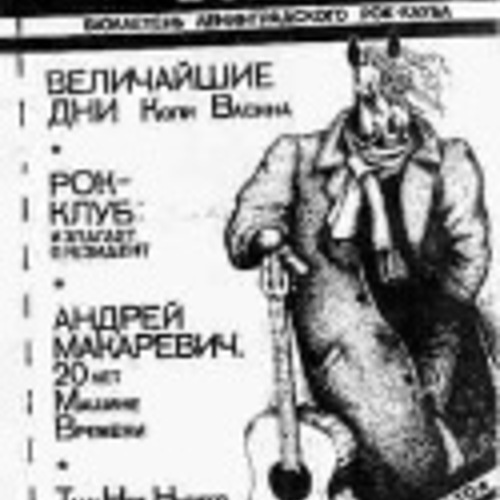
Roksi Music Journal (Samizdat) (Vol. 15, 1990.)
The final print issue of the Leningrad-based samizdat rock journal Roksi, which was
founded in 1977 by members of the rock band Aquarium and the future president
of the Leningrad Rock Club. Considered to be the first rock publication in the
Soviet Union, which was subject to raids by the KGB, Roksi eventually
became the official newsletter of the LRC, and thus legitimized by the state
apparatus.
Band Survey from the Leningrad Rock Club completed by Sergei Kuryokhin of Pop Mekhanika
An official rock club survey in which Sergei Kuryokhin utlilizes the late-Soviet aesthetic of stiob and performative socialism to underscore the club's dependence on the KGB

TaMtAm Rock Club documentary by German television (1993)
The first and until 1994 the only Western-style rock club in Russia, which was founded in 1991 by cellist Vsevolod (Seva) Gakkel (Akvarium) after he visited the famous music club CBGB in New York. The club specialized in punk rock specifically, providing the budding underground punk scene in Russia a much-needed performance venue and cultural legitimacy. Some have accused Gakkel's establishment for breeding far-right nationalist sentiments among Russia's youth subcultures (or at least providing them with a physical organizational platform) in the early 1990s. The fact that a German television production company took interest in TaMtAm is also a testament to punk as a truly transnational movement after fall of the Berlin Wall.
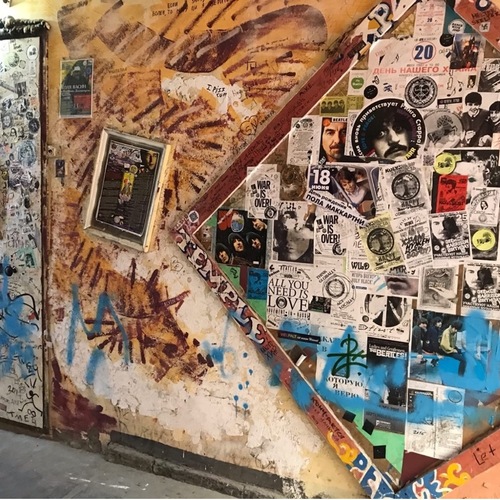
Kolia Vasin’s petition for the “John Lennon Church of Rock-n-Roll” (Khram Rok-n-rolla imeni Dzhona Lennona.) in St. Petersburg (April 1992).
An official petition for the establishment of the so-called "John Lennon Church of Rock-n-Roll" in St. Petersburg, conceived by the self-described "Beatlelologist" Kolia Vasin, a major personality in and driver behind the formation of Leningrad's rock music community.
Musical Ring (Музыкальный Ринг). Television program. Musical guest: Sergei Kuryokhin and Pop-Mekhanika. (February 1, 1987.)
Making its debut in 1984, Musical Ring was a Perestroika-era Soviet television program, dedicated to showcasing new musical talent and fostering a live audience Q&A. This 1987 segment features composer and avant-garde jazz pianist Sergei Kuryokhin and his band Pop Mekhanika. Throughout the episode Kuryokhin artfully wields the postmodern rhetorical weapon of styob, imbuing formal musical discourse with farce, an artistic and communicative device that became one a defining mode of expression during perestroika and the early post-Soviet period.
ASSA, motion picture
Scene of Viktor Tsoi performing his rock-anthem "Changes!" (“Peremen!”) during the last seven minutes of Sergei Solov’ev’s 1987 film Assa. Kino's cinematic performance became a defining mass-cultural event that legitimized Soviet rock music as a product of the official mainstream collaborating with the Soviet underground rock movement, crowning Tsoi as USSR's ultimate rock star, and promoting rock music as a legitimate artform for the late-Soviet audience.