Search
Organizations: Vid
18 Results
The Glasnost Booth on the last October Revolution anniversary in the USSR
“Glas naroda [The People’s Voice]”– a booth installed in the middle of town, into which random people can enter and speak their minds. Episode from the Kremlin, on USSR’s last anniversary of the October Revolution, in 1991.
Lenin Was a Mushroom
An excerpt from the famous episode of the TV show Piatoe koleso in which the experimental musician and performer Sergey Kuryokhin argued and almost convinced Soviet audiences that "Lenin was a mushroom."
"Politburo" versus the specter of communism, during the 1993 political crisis
A clip from "Politburo," a weekly commentary show from Aleksandr Politkovsky (a Vzgliad alum). This show takes place just prior to May 1, and just after the 1993 Referendum, as well as Rutskoi's first salvo in the "Kompromat Wars," regarding 11 suitcases of materials documenting Yeltsin's corruption. Here, Politkovsky is happy to return the favor to Rutskoy. The show ends with anti-communist chiastushki for Mayday.
Konstantin Ernst's "Matador"
A clip from the art show "Matador," created by VID's junior partner, Konstantin Ernst, in 1990, and then remained his project as Ernst rose up and took VID's helm. This particular clip is from the show on Contemporary Art. It has a remarkably joyously elitist feel that is consistent with the "new Russian" ethos of ViD.
One on One with Vladimir Zhirinovskii and Boris Nemtsov
Aleksandr Liubimov’s talk show One on One staged debates between public figures who disagreed strongly with each other. When nationalist provocateur Vladimir Zhirinovskii and liberal reformer Boris Nemtsov met on air in as the First Chechen War was just beginning, sparks—and piece of the set—flew.
List'ev's Russian Liberals on "Chas Pik"
An excerpt from a compilation of most memorable moments with Vladislav LIst'ev and his Russian liberal guests on "Chas Pik," aired in the week after his murder
The post-Soviet people’s show, Pole Chudes
A clip from the most-watched entertainment show of the 1990s, "Pole Chudes [Field of Miracles],” which renders the post-Soviet narod of regular folks, engaged in a free-flowing relationship with capitalism and Russia’s central television
Loss of the Soviet Nation at KVN
The Winter 1992 opening broadcast of the amateur variety and improv contest show KVN, filmed just a few months after the dissolution of the USSR, with former Soviet university teams lamenting the rise of national borders around them
Vzgliad at GKChP
Clips of Vzgliad's reports during GKChP in 1991. These include being holed up in the White House (the RSFSR parliament) alongside its defenders and celebrities, such as Mstislav Rostropovich.
"Tema" Talk Show- Racism in Russia
A clip from the talk show "Tema [Theme]," List'ev's major post-Soviet project after the 1991 end of Vzgliad. This particular episode is dedicated to the theme of racism in Russia. Includes Dzheims Lloidovich Patterson, the grown up boy from the classic Stalin-era film, "Circus"
"Tema" Talk Show- Racism in Russia
A clip from the talk show "Tema [Theme]," List'ev's major post-Soviet project after the 1991 end of Vzgliad. This particular episode is dedicated to the theme of racism in Russia. Includes Dzheims Lloidovich Patterson, the grown up boy from the classic Stalin-era film, "Circus"
The Making of an Anti-Bourgeois Hero
Excerpt from an early episode (the second) of a new version of the popular talk show Vzgliad, co-hosted by Aleksandr Liubimov and Sergey Bodrov Jr., which aired weekly on the TV channel ORT in 1996-1999.

Rok Protiv Terrora Music Festival. April 6, 1991, Moscow.
A not-for-profit charitable concert that took place at Moscow's Kryl'ia Sovetov Stadium on April 6, 1991, concieved by the Garik Sukachev, the leader of the rock band Brigada S. Intially the event was meant to be an act of protest against police brutality, but grew to include all forms of state organized terror: political, social, and moral. The festival received organizational support from VID, Komsomolskaya Pravda and the Fili Cultural Center. Fourteen Soviet rock bands took part in the festival.
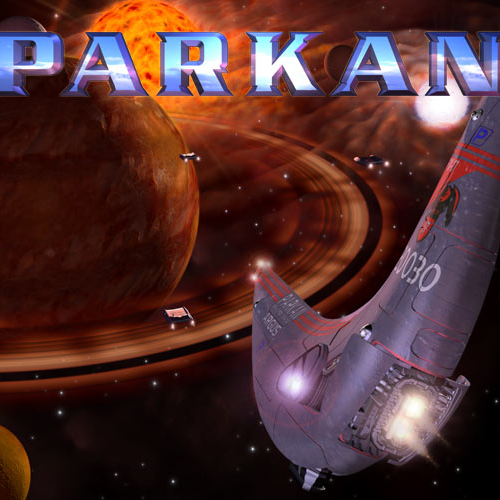
Parkan: Chronicles of an Empire
Parkan is a cult video game for its immense ambitions. A multi-genre game, Parkan tried to encompass space exploration, adventure, planetary landings and alien diplomacy a decade before Western AAA blockbusters like "Mass Effect" (2007) succeeded at commercializing similar aims.
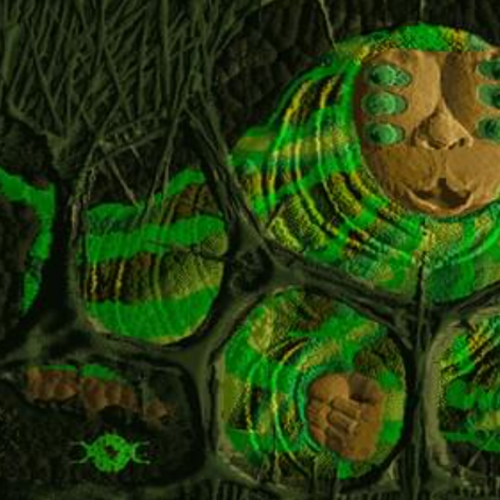
Vangers: One for the Road
Vangers: One for the Road, a cult video game merging the racing and role-playing genres, introduced Russia's game designers to independently minded gamers.
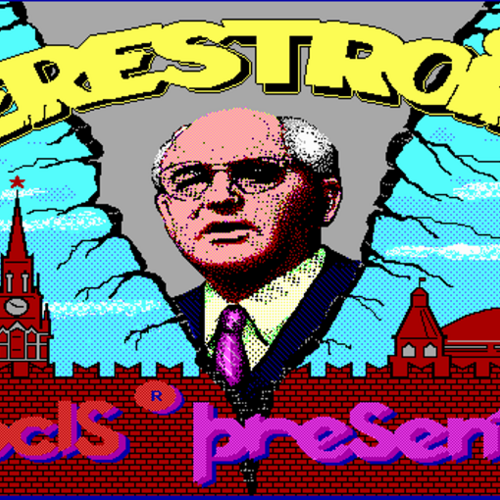
Perestroika by Nikita Skripkin and Locis (1998-1990)
Perestroika, the perestroika-themed puzzle game heralded a new weird age for Russian gaming, in the inexplicable attempt to represent the on-going political turmoil via the reductive means of traversing colorful islands to prosperity.
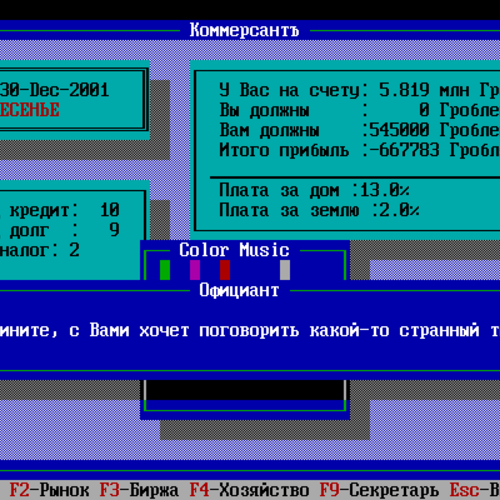
Kommersant’ by Vladimir Kharchenko and Rada Ltd, 1991.
The Ukranian video game attempted to represent the rough transition to capitalism via a detailed, simulationist interface.

The logo for the "Dendy" Entertainment Console by Ivan Maximov.
The logo of an young, anthropomorphic elephant giving the victory sign with his left hand announced Russia''s first game console, which became enormously popular between 1992 and 1996.